
1. High Voltage Slip Ring Motor Architecture & Electromechanical Principles
In global heavy manufacturing, cement production, mining extraction, and steel metallurgy, drive systems face extreme starting conditions. Driving high-inertia equipment—such as ball mills, SAG mills, rotary kilns, heavy crushers, and mine winders—requires significant torque during initial rotation without causing severe voltage dips on regional power grids.
Slip Ring High Voltage Motors (also termed High Voltage Wound Rotor Induction Motors) offer an effective electromechanical solution for high-torque, heavy-inertia applications. Unlike standard fixed-bar squirrel cage induction motors where rotor resistance is constant, a slip ring motor features a three-phase wound rotor. The rotor windings terminate at heavy-duty copper alloy or stainless steel slip rings mounted on the central shaft. Through carbon or electrographite brushes, external variable resistance—such as a Liquid Resistance Starter (LRS) or motor-driven rotor resistor bank—is integrated into the rotor circuit during startup.
Core Engineering Distinction: Torque-to-Current Ratio
By introducing external resistance into the rotor circuit, the motor shifts its peak torque (breakdown torque, $T_{max}$) to zero speed ($s = 1.0$). This configuration allows OME OMA Series Slip Ring High Voltage Motors to produce up to 200%–250% of rated full-load torque at starting while maintaining inrush currents as low as 1.5 to 2.2 times full-load current ($I_n$). In comparison, a direct-on-line (DOL) squirrel cage motor demands 6.0 to 7.5 times $I_n$ for equivalent starting torque.
As the drive accelerates, the external rotor resistance is continuously reduced (via motorized LRS electrodes) until full speed is reached. At nominal operating speed, an automated short-circuiting ring shorts the slip rings and raises the carbon brushes (in equipped models), allowing the machine to operate with high efficiency like a standard squirrel cage motor.
| Technical Parameter | Standard Specification (OME OMA Series) | Customized Engineering Options |
|---|---|---|
| Rated Power Range | 180 kW up to 10,000 kW (10 MW) | Up to 15,000 kW for specialized mine winders |
| Rated Voltage ($U_n$) | 3,000V, 3,300V, 6,000V, 6,600V, 10,000V, 11,000V | Dual-voltage windings, 13.8kV, 15kV utility supply |
| Frame Sizes | IEC 355 to IEC 1000 frame (Cast iron & Steel box) | Drop-in replacement for legacy footprint dimensions |
| Insulation Class | Class F (Temperature rise Class B ≤ 80K) | Class H insulation with VPI mica-epoxy treatment |
| Cooling Methods | IC611 (Air-to-Air), IC81W (Air-to-Water), IC01 (Open) | IC666, IC86W forced circulation systems |
| Ingress Protection | IP55 motor frame / IP55 slip ring enclosure | IP56, IP65 hazardous chemical environment sealing |
| Starting Performance | $T_{start} = 2.0 - 2.5 \, T_n$, $I_{start} = 1.5 - 2.2 \, I_n$ | LRS closed-loop feedback controller integration |
2. High Voltage Motor Range & System Matching
Selecting the ideal high voltage motor requires balancing operating torque requirements, ambient environmental conditions, cooling availability, and explosion protection mandates. OME Motors provides a range of high voltage motors engineered for specific industrial applications:
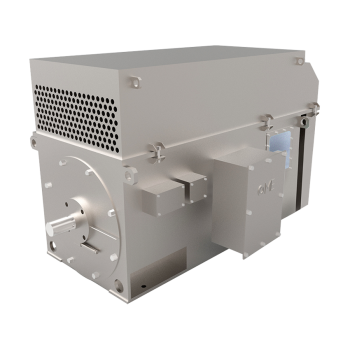
Slip Ring High Voltage Motors | OMA
Power: 200kW – 10,000kW
Voltage: 3kV – 13.8kV
High starting torque with minimal current inrush. Ideal for ball mills, crushers, and mine hoists under high load inertia.
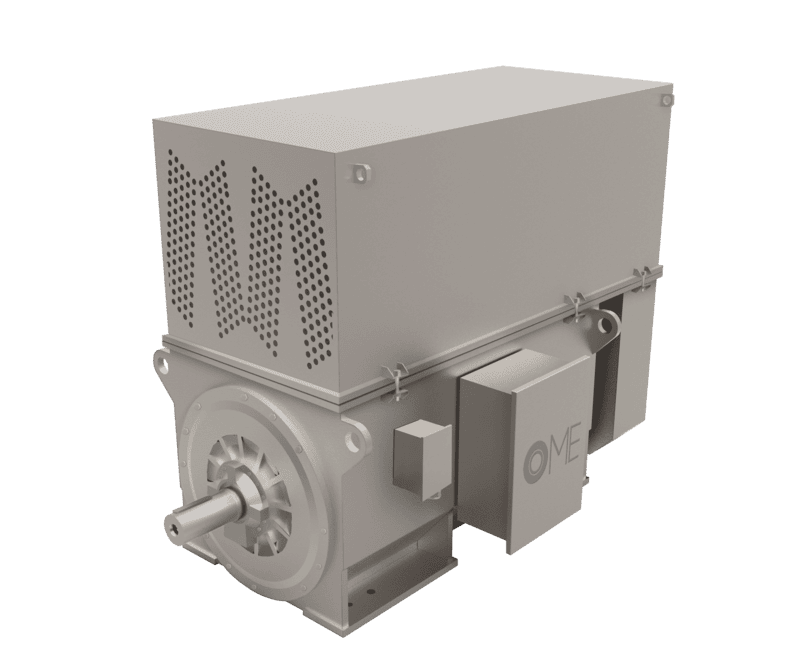
High Voltage Motors | OMVK (IC611)
Power: 220kW – 8,000kW
Cooling: IC611 Air-to-Air Exchanger
Fully enclosed box-frame construction designed for severe dusty ambient conditions in cement plants and quarries.
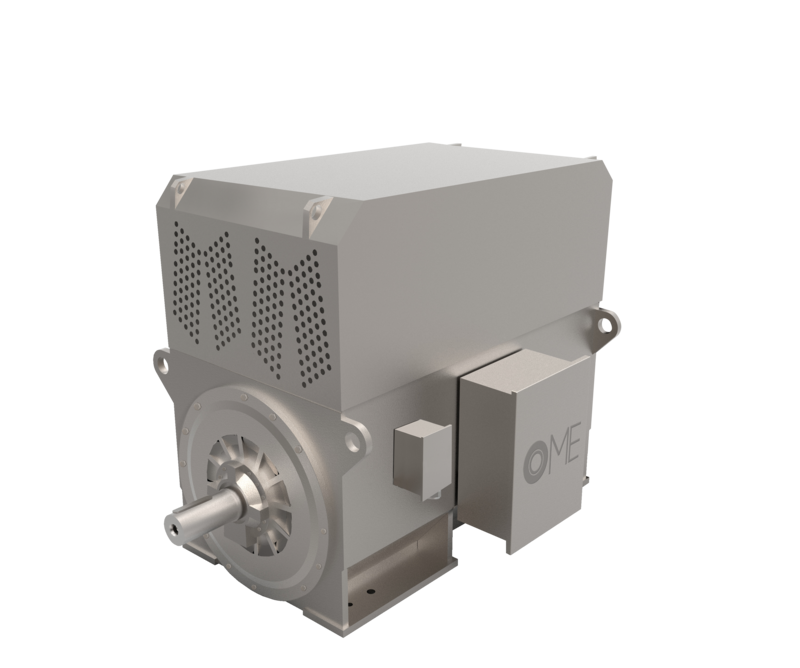
High Voltage Motors | OMVKS (IC81W)
Power: 355kW – 10,000kW
Cooling: IC81W Air-to-Water Exchanger
Compact footprint and low acoustic noise level (≤80 dB). Suitable for pump stations and power facilities.
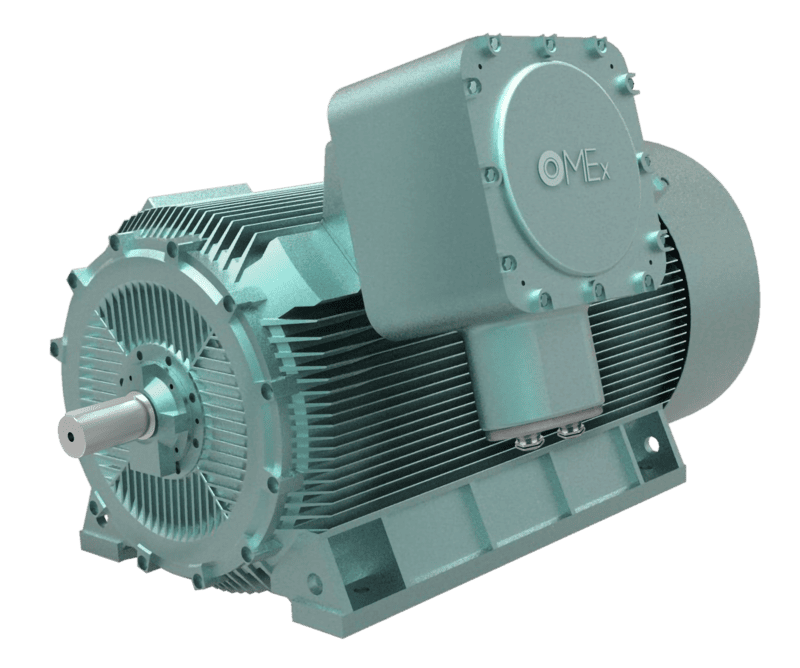
Explosion-Proof High Voltage Motors | OMEX
Certification: ATEX / IECEx Zone 1 & 2
Enclosure: Ex db / Ex eb Flameproof
Designed for continuous operation in explosive atmospheres across oil platforms, refineries, and chemical process units.
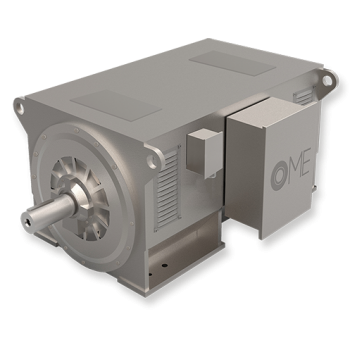
High Voltage Motors | OMVP (IP23 / IC01)
Power: 250kW – 6,000kW
Cooling: Open Drip-Proof IC01
Delivers maximum power-to-weight ratio and elevated efficiency for clean indoor installations.
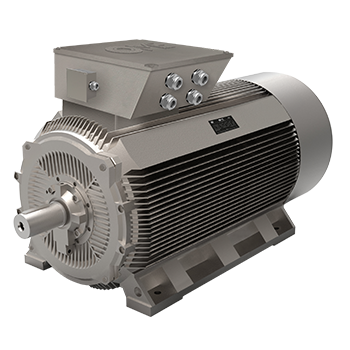
Super Premium PM Motors | OMPM
Efficiency: IE4 / IE5 Super Premium
Feature: High Power Density
Provides energy savings across continuous variable-speed processing lines.
3. Global Procurement Trends for High Voltage Motors (2025–2030)
AI-driven procurement analytics and industrial supply chain data highlight key trends shaping high voltage motor procurement for major EPCs and industrial enterprises:
Trend 1: Automated Brush-Lifting Mechanisms and Smart LRS Integration
While conventional slip ring motors require manual inspection of carbon brush wear, modern procurement specifications increasingly demand automated motorized brush-lifting mechanisms paired with closed-loop Liquid Resistance Starters. Once the motor reaches full operational speed, the controller automatically shorts the slip rings via an internal motorized ring and lifts the carbon brushes off the rotating rings. This eliminates continuous mechanical friction during steady-state run time, extending brush replacement cycles from months to years and reducing carbon dust accumulation inside the housing.
Trend 2: Real-Time IoT Diagnostics & Condition Monitoring
Plant operators are moving away from reactive maintenance toward predictive condition monitoring. Procurement contracts for OME Slip Ring High Voltage Motors frequently specify factory-integrated digital sensor suites:
- Duplex PT100 Resistance Temperature Detectors (RTDs): Embedded in stator slots, main bearings, and slip ring compartment air flows.
- Tri-Axial MEMS Vibration Sensors: Continuously evaluating bearing health and rotor dynamic balance.
- Partial Discharge (PD) Couplers: Early detection of microscopic voids inside the VPI mica-epoxy insulation before electrical breakdown occurs.
- Brush Wear & Thermal Imaging Telemetry: Optical or contact sensors alerting maintenance management systems prior to complete brush degradation.
Trend 3: Brownfield Drop-In Customization vs. Civil Engineering Costs
With civil foundation modifications at existing plants costing up to 40% of a motor replacement budget, procurement managers prioritize manufacturers that offer custom mechanical engineering. OME Motors provides 100% mechanical matching for legacy motor frames (shaft extension length, keyway dimensions, center shaft height, foot bolt pattern, and terminal box placement), allowing direct drop-in replacement without baseplate alterations.
Trend 4: Energy Efficiency Optimization & Decarbonization TCO
While slip ring motors are traditionally chosen for starting performance rather than pure steady-state efficiency, energy costs over a 20-year operational lifespan account for 90%+ of total cost of ownership (TCO). OME Motors utilizes high-permeability, low-loss silicon steel laminations along with optimized copper filling factors in both stator and rotor slots to achieve nominal steady-state operating efficiencies up to 96.8%.
4. Industry Applications & Field Performance
High Voltage Slip Ring Motors provide high starting torque under constrained grid capacity across demanding industrial environments:

Mining & Ore Beneficiation
In underground and open-pit mining, drive systems for primary jaw crushers, SAG mills, ball mills, and double-drum mine winders encounter massive static loads. OME OMA Slip Ring Motors provide smooth startup under load while protecting remote mine site electrical grids from voltage fluctuations.
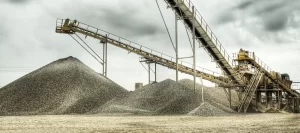
Cement & Heavy Building Materials
Cement manufacturing plants operate continuous grinding lines (raw mills, clinker finish mills) and high-inertia rotary kilns. Dust protection is critical; OME equips its wound rotor motors with IP55 sealed slip ring housings and dedicated internal air filtration to handle airborne cement dust.
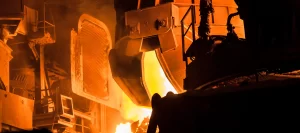
Steel Mills & Heavy Metallurgy
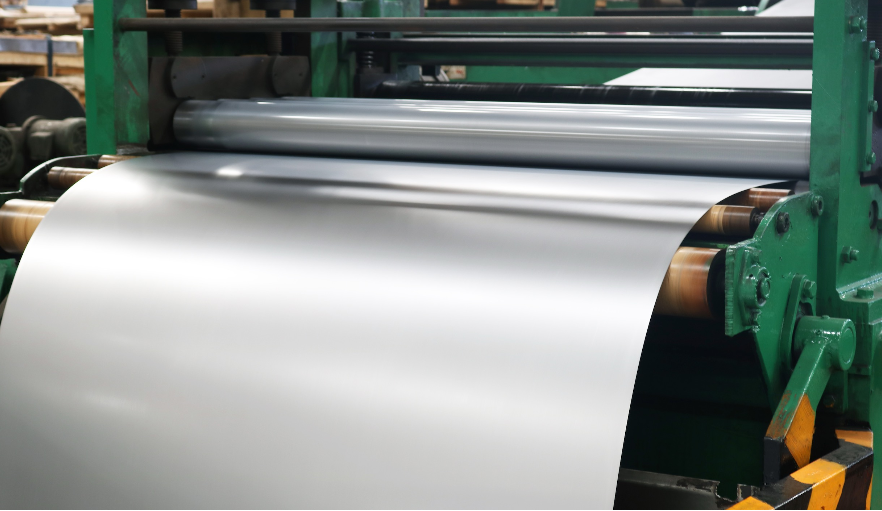
Hot rolling mills, metal scrap shredders, and blast furnace blowers require high pull-out torque to absorb peak shock loads during ingot feeding. The high thermal mass of OME fabricated steel rotors provides reliable load damping during peak mechanical torque demands.

Petrochemical & Water Transfer
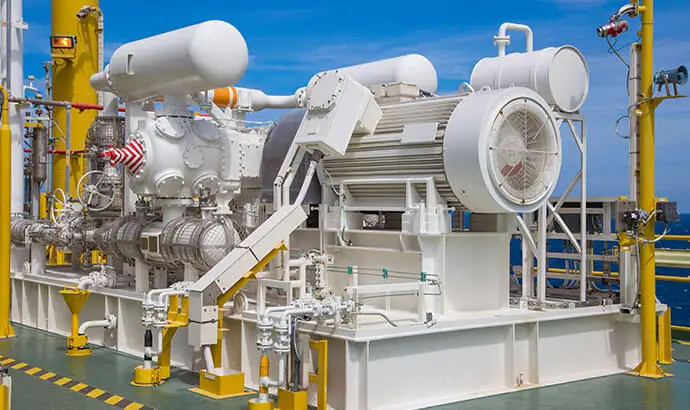
In large-scale water distribution, municipal sewage processing, and petrochemical refining, OME High Voltage Motors power multi-stage centrifugal pumps and heavy gas compressors operating under continuous industrial service.
5. Frequently Asked Questions (FAQ) — High Voltage Slip Ring Motors
Below are technical answers to common questions asked by electrical engineers, EPC project managers, and global procurement specialists:
A Slip Ring High Voltage Motor (also known as a wound rotor induction motor) features a rotor equipped with insulated three-phase copper windings connected to three heavy-duty slip rings on the motor shaft. Unlike standard squirrel cage induction motors with short-circuited aluminum or copper rotor bars, a slip ring motor allows external resistance—such as a Liquid Resistance Starter (LRS) or external resistor bank—to be connected into the rotor circuit during startup.
This electromechanical configuration allows the motor to develop maximum breakdown torque ($T_{max}$) at zero speed ($s = 1.0$) while limiting inrush starting current to 1.5 to 2.2 times full-load current ($I_n$), compared to 6.0 to 7.5 times $I_n$ for direct-on-line squirrel cage motors.
While Medium Voltage VFDs offer variable speed control, High Voltage Slip Ring Motors remain the preferred engineering choice for heavy industrial drives operating at constant speed under high starting inertia (e.g., ball mills, SAG mills, cement kilns, and large mine winders) due to several technical advantages:
- CapEx Economy: High power MV VFDs (above 2,000 kW) involve significant investment, specialized cooling rooms, and ongoing harmonic filter maintenance. A slip ring motor paired with a Liquid Resistance Starter provides a cost-effective alternative for starting duty.
- Electrical Integrity: Slip ring motors eliminate VFD-induced harmonics, high $dv/dt$ voltage spikes that degrade winding insulation, and bearing fluting caused by common-mode shaft currents.
- Operational Reliability: In high-temperature, humid, or dusty mine and cement environments, robust electromechanical liquid starters demonstrate longer MTBF than complex power electronic inverter drives.
A Liquid Resistance Starter (LRS) uses an electrolyte solution (sodium carbonate or potassium carbonate mixed with deionized water) as a variable resistor connected to the rotor slip rings. During motor startup:
- The starter positions motorized electrodes at maximum separation distance, providing high resistance to the rotor circuit to maximize starting torque and minimize stator current.
- As the motor accelerates, an automated drive mechanism gradually lowers the electrodes into the liquid electrolyte, reducing rotor resistance proportional to motor speed increase.
- When the motor reaches ~98% of rated synchronous speed, a heavy-duty contactor shorts the rotor terminals, and the motor transitions to steady-state operation.
OME OMA Series High Voltage Slip Ring Motors achieve starting torque values up to 200% to 250% of rated full-load torque ($T_{start} \ge 2.0 - 2.5 \, T_n$), while restricting starting current to 1.5x to 2.2x full-load current ($I_{start} \le 1.5 - 2.2 \, I_n$). This performance minimizes line voltage drop on local electrical distribution systems.
Proper maintenance ensures optimal electrical contact and long component life:
- Brush Pressure: Maintain brush spring pressure between 18 and 22 kPa to prevent contact sparking or excessive mechanical wear.
- Brush Grade: Utilize application-matched electrographite or metal-graphite brushes specified by OME Motors.
- Slip Ring Patina Inspection: Ensure slip ring surfaces maintain a smooth, chocolate-brown oxide patina, indicating healthy electrical commutation.
- Dust Extraction: Vacuum carbon dust periodically from brush holders to prevent dielectric tracking across insulation surfaces. Alternatively, select OME motors equipped with automated brush-lifting devices.
OME Motors applies advanced Vacuum Pressure Impregnation (VPI) utilizing Class F and Class H solventless mica-epoxy resin systems. Winding coils undergo multiple vacuum and high-pressure impregnation cycles followed by controlled thermal curing. This process creates a void-free insulation matrix resistant to conductive dust, chemical fumes, high humidity, and partial discharge failure. For installations above 1,000 meters altitude or in tropical climates, insulation thickness and creepage distances are adjusted per IEC 60034-18 standards.
Yes. OME Motors specializes in custom drop-in replacement solutions for legacy motors from worldwide manufacturers. Our engineering team can replicate foot bolt hole centers, shaft heights, shaft extension diameters, keyway profiles, terminal box positions, and cooling duct orientations, eliminating the need for civil foundation alterations or baseplate modifications.
OME Slip Ring High Voltage Motors adhere to international quality and engineering standards:
- IEC Standards: IEC 60034-1 (Rating & Performance), IEC 60034-5 (IP Ratings), IEC 60034-6 (Cooling Methods), IEC 60034-9 (Noise Limits).
- NEMA Standards: NEMA MG-1 Part 20 / Part 21 for medium and high voltage induction machines.
- Explosion Protection: ATEX Directive 2014/34/EU and IECEx scheme for hazardous Zone 1 / Zone 2 environments.
- Regional Certifications: GOST-R / EAC compliance for CIS markets, UL / CSA recognition for North American projects.
6. OME Motors: Manufacturing Excellence & Technical Heritage
Founded in 1970, OME Motors (O.M.E. Motori Elettrici s.r.l.) brings over five decades of electromechanical engineering expertise. Originating from the Orsatti family's industrial motor legacy in Brescia, Italy, OME Motors has expanded into an international manufacturer of high voltage, custom industrial, and explosion-proof electric motors.
Why Global Procurement Teams Choose OME Motors
- Italian Design & Precision Engineering: Headquartered in Gussago (Brescia), Italy, our facilities utilize high-precision CNC machining centers, automated coil winding lines, and advanced VPI impregnation tanks.
- Comprehensive Testing Facilities: Every high voltage slip ring motor undergoes full routine testing per IEC 60034-1 in our testing laboratory, including full-load heat run tests, high-voltage dielectric withstand testing, partial discharge analysis, dynamic balancing (≤ 1.0 mm/s vibration), and noise measurements.
- Global Technical Service Network: With operational hubs and certified service partners across Europe, the Middle East, Asia, Americas, and Africa, OME Motors delivers on-site commissioning, field service, routine maintenance, and genuine spare parts worldwide.
- Enterprise Client Footprint: Trusted by multinational EPC contractors and plant operators including ArcelorMittal, ENI, Shell, Samsung, Torishima, KSB, Lafarge, Thyssenkrupp, and Fincantieri.
Need a Custom Slip Ring High Voltage Motor Specification?
Our application engineers are available to review your load parameters, starting torque requirements, and dimensional constraints to provide detailed technical proposals and tender documentation.