
1. The Critical Role of Petrochemical Industry Electric Motors
In downstream oil refining, upstream gas processing, and complex petrochemical synthesis, Petrochemical Industry Electric Motors serve as the foundational muscle powering unceasing, continuous-duty operations. From high-pressure hydrocrackers, fluidized catalytic cracking units (FCCU), and ethylene crackers to raw crude oil transfer pumps and gas re-compression trains, electric motors operate under some of the world's most unforgiving ambient and mechanical conditions.
Unlike standard industrial environments, petrochemical plants present a dangerous combination of hazardous explosive atmospheres (flammable gases, vapors, and mist), aggressive chemical corrosion (hydrogen sulfide, ammonia, chlorine, saline moisture in coastal refineries), thermal extremes (desert ambient temperatures exceeding +55°C), and demanding mechanical duties (high radial/thrust loads, severe VFD voltage spikes, and continuous 24/7/365 operation without unscheduled downtime).
Information Gain Insight: The Real Cost of Unplanned Shutdowns
In a typical 200,000 barrel-per-day refinery, an unforced shutdown of a primary feed pump motor or wet-gas compressor motor can cost plant operators upwards of $250,000 to $1,000,000 per day in lost yield, flared feedstocks, and emergency maintenance. Therefore, selecting Petrochemical Industry Electric Motors is not merely a component purchasing decision—it is a strategic risk-mitigation discipline focused on Mean Time Between Failures (MTBF), explosion protection integrity, and Total Cost of Ownership (TCO).
Modern petrochemical procurement teams must balance strict international safety standards—such as ATEX Directive 2014/34/EU, IECEx scheme rules, NEC 500/505, and API 541 / API 547—with global decarbonization imperatives. Selecting electric motors engineered specifically for petrochemical duty guarantees compliance while capturing significant energy savings across multi-megawatt operational footprints.
2. Key Technical Selection Criteria for Petrochemical Motors
When specifying electric motors for petrochemical applications, electrical engineers and EPC project managers must evaluate several interrelated technical parameters:
A. Hazardous Area Classification & Explosion Protection Types
Petrochemical plant zones are strictly categorized based on the frequency and duration of the occurrence of an explosive atmosphere:
- Zone 1 / Class I, Division 1: Atmospheres where flammable gas or vapor is likely to occur in normal operation. Motors must feature Flameproof enclosures (Ex d / Ex db) capable of containing internal explosions without igniting surrounding gas, or Pressurized enclosures (Ex p / Ex px / Ex py).
- Zone 2 / Class I, Division 2: Atmospheres where flammable gas is not likely to occur during normal operation, and if it does, will exist for a short period only. Motors typically utilize Increased Safety (Ex e / Ex eb) or Non-Sparking / Restricted Breathing design (Ex nA / Ex ec).
- Gas Group Compatibility: Motors must be rated for specific gas groups. While Group IIA (Propane) and Group IIB (Ethylene) cover many petrochemical tasks, hydrogen-rich processes (hydrotreating, steam methane reforming) require Group IIC or Group IIB + H2 flameproof protection.
B. Thermal Reserve & Insulation System Longevity
Due to high ambient temperatures in global chemical hubs (Middle East, Gulf Coast, Southeast Asia), petrochemical electric motors require superior thermal insulation. Utilizing Class H insulation with Class B temperature rise (80 K limit) provides a thermal safety margin of 25°C to 30°C. This thermal reserve extends winding insulation life exponentially according to the Montsinger Rule, where operating 10°C below max rating doubles insulation lifespan.
C. Structural Rigidity & Corrosive Environment Protection
Cast iron (FC250/GG25 or ductile iron GG40) or fabricated heavy-gauge steel frame constructions are mandatory to withstand mechanical shocks, piping strain, and vibrational resonance. Paint systems must meet ISO 12944 C5-M (Marine/Offshore Heavy Industrial) specifications, utilizing epoxy-polyamide zinc-rich primers and polyurethane topcoats resistant to acid rain, caustic sprays, and solar ultraviolet degradation.
3. OME Motors Recommended Product Portfolio for Petrochemical Plants
OME Motors offers a complete range of low, medium, and high-voltage electric motors engineered specifically for petrochemical applications. Manufactured in Italy under stringent ISO 9001 and ISO 14001 quality systems, our motors combine European technical design with rugged components.
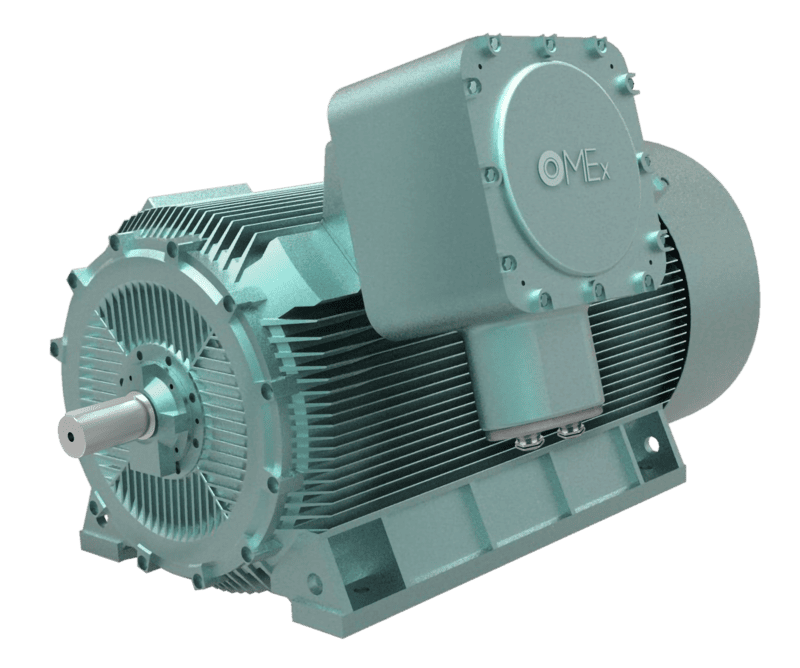
OMEX Series – High Voltage Explosion-Proof Motors
The flagship OMEX high-voltage explosion-proof series is engineered for high-capacity refinery drives including main feedstock pumps, gas reinjection compressors, and heavy blowers operating in Zone 1 and Zone 2 hazardous areas.
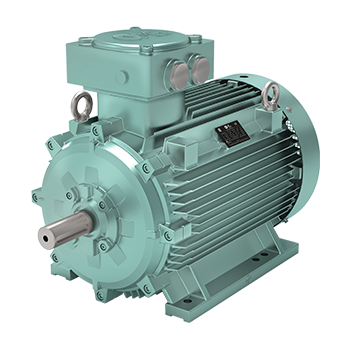
OMEX LV Series – Low Voltage Flameproof Motors
Designed for low-voltage pump skids, chemical agitators, mixers, and cooling tower fans. Heavy cast-iron construction ensures complete containment of internal ignitions without deformation.
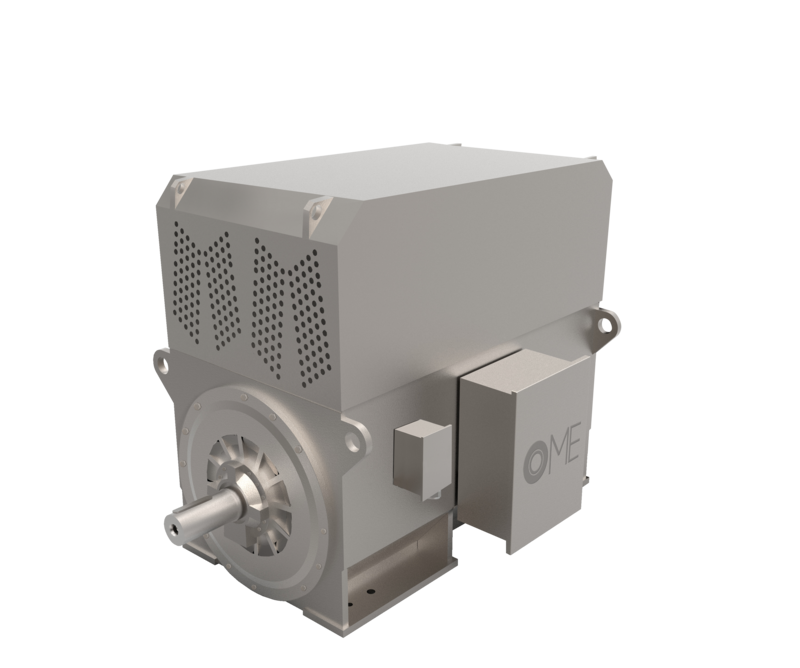
OMVKS Series – High Voltage Water-Cooled Motors (IC81W)
Equipped with air-to-water heat exchangers, OMVKS motors excel in hot ambient refinery environments where ambient air cooling is inefficient or where noise abatement (< 80 dBA) is mandatory.
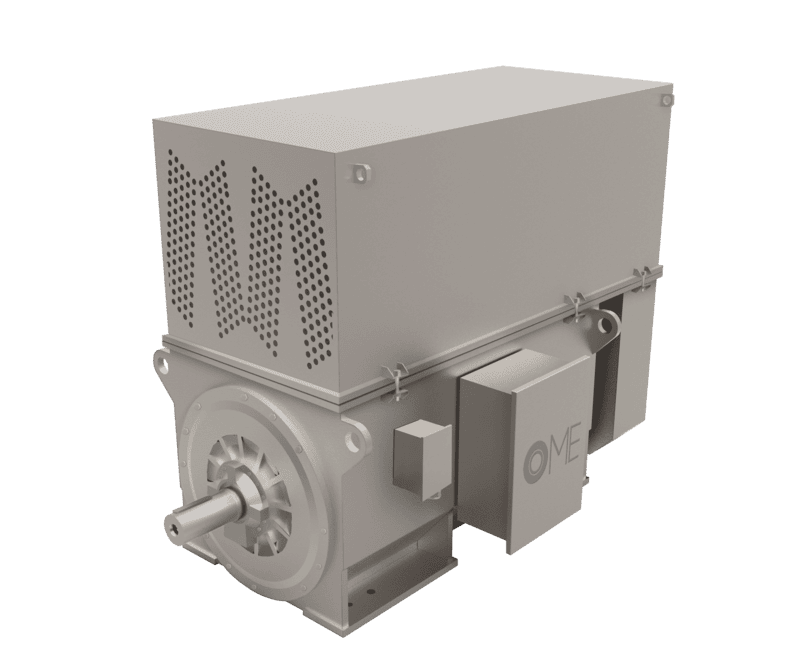
OMVK Series – High Voltage Air-to-Air Cooled Motors (IC611)
Features a modular top-mounted air-to-air heat exchanger. Highly suitable for remote pipeline pumping stations and gas processing facilities requiring low maintenance and robust cooling self-sufficiency.
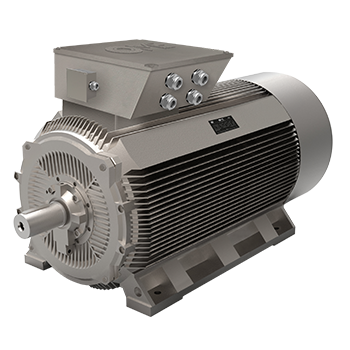
OMPM Series – Permanent Magnet Synchronous Motors (IE4 / IE5)
Delivering ultra-high efficiency even at partial loads and low speeds. Eliminates rotor copper losses, making it ideal for variable-speed polymer extruders, dosing pumps, and energy-conscious chemical plants.
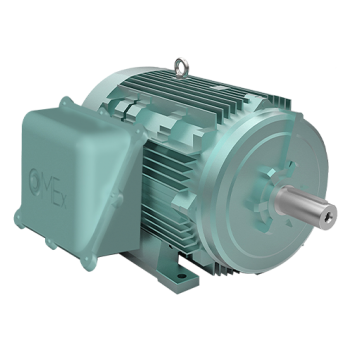
OMNEX Series – Explosion-Proof NEMA Standard Motors
Specifically designed to NEMA MG-1 and IEEE 841 standards for North American procurement specifications, Canadian offshore installations, and American EPC downstream projects globally.
4. Global Petrochemical Electric Motor Procurement & Technology Trends
As the global energy transition accelerates, petrochemical operators are changing how they evaluate, procure, and operate electric motor assets. The following five key trends are redefining the industry landscape:
1. Transition to Variable Frequency Drives (VFD) & Inverter-Duty Insulation
Up to 70% of energy consumed in chemical processing is used by electric motor-driven pump and compressor systems. Installing Variable Frequency Drives (VFDs) enables precise flow control without throttling valves, saving 20% to 50% in electricity. However, VFD voltage spikes (high dv/dt switching) and common-mode shaft currents can ruin motor insulation and bearing races. Modern petrochemical motors must incorporate reinforced Class H corona-resistant insulation, insulated non-drive-end (NDE) bearings, and grounding rings to ensure VFD longevity.
2. AI-Powered Predictive Maintenance & Condition Monitoring
AI-driven predictive maintenance platforms are replacing periodic manual inspections in smart refineries. Modern petrochemical electric motors are factory-fitted with integrated smart sensor suites:
- Tri-axial Wireless Vibration Sensors: Continuously monitor overall velocity and envelope spectrum to detect unbalance, misalignment, and early bearing spalling.
- Embedded PT100 RTD Temperature Sensors: Embedded in dual quantities per phase winding and bearing housing to trigger early alarm and trip sequences.
- Magnetic Flux Sensors: Detect rotor bar degradation and stator turn-to-turn short circuits before catastrophe strikes.
3. Decarbonization & Mandatory IE4 / IE5 Efficiency Adoption
With international carbon regulations tightening (EU Ecodesign Regulation 2019/1781, US DOE efficiency mandates), refineries can no longer rely on legacy IE1 or IE2 motors. Transitioning to IE4 (Super Premium Efficiency) and IE5 (Ultra-Premium Efficiency) reduces carbon footprints and pays for itself within 12 to 18 months of continuous duty.
4. Clean Hydrogen & Green Ammonia Compatibility
As refineries retrofit facilities for blue/green hydrogen production and ammonia synthesis, electric motors must comply with Gas Group IIC (Hydrogen) flameproof requirements. Group IIC flame paths require narrower flame clearances and higher mechanical shock resistance due to hydrogen's rapid flame speed and low ignition energy (0.017 mJ).
5. Prefabricated Modular Skid Systems
EPC contractors increasingly request complete, pre-tested electromechanical skids—combining motor, baseplate, flexible coupling, forced-cooling units, and terminal boxes—to compress field installation schedules and minimize site hot-work permits.
5. Engineering Advancements in Flameproof & Explosion-Proof Drives
OME Motors continuously advances electromechanical engineering to meet harsh petrochemical challenges:
| Engineering Domain | Standard Industrial Design | OME Petrochemical Custom Engineering |
|---|---|---|
| Enclosure Flamepath | Flat ground joints, standard tolerances | Precision CNC-milled labyrinth & spigot flame joints; 100% pressure-tested cast structures. |
| Stator Vacuum Impregnation | Dip & bake varnish varnish system | Double-cycle Vacuum Pressure Impregnation (VPI) with solventless epoxy resin for moisture & gas resistance. |
| Bearing Assembly | Standard deep-groove ball bearings | Heavy-duty re-greasable SKF/FAG bearings with labyrinth seals, insulated NDE housing, and automatic grease feeders. |
| Terminal Box Safety | Single standard terminal box | Separated high-voltage Ex d terminal box with auxiliary Ex e boxes for RTD/Heater connections; pressure-resistant phase barriers. |
| Corrosion Resistance | C2 / C3 standard industrial paint | ISO 12944 C5-M / CX offshore multipass epoxy-polyurethane paint system withstands 1,500+ hours salt spray test. |
6. Why Global EPC Contractors & Refineries Choose OME Motors
Founded on a legacy dating back to 1970 with Elettrotecnica H. Orsatti, OME Motors (O.M.E. Motori Elettrici s.r.l.) combines traditional Italian manufacturing craftsmanship with modern engineering intelligence.
A. Heritage & Engineering Depth
With over 50 years of dedicated electromechanical experience, OME Motors operates state-of-the-art production facilities in Gussago and Nuvolera (Brescia, Italy). Our history is built on custom engineering—we don't just supply off-the-shelf catalog units; we engineer motors tailored to your exact mechanical, thermal, and electrical parameters.
B. Rigorous Global Certification Portfolio
Operating in international oil and gas markets requires flawless compliance credentials. OME Motors maintains a complete certification portfolio issued by accredited third-party notified bodies (CESI, INERIS, TÜV, UL, CSA):
- ATEX Directive 2014/34/EU: Equipment Group II, Categories 2G and 3G (Zone 1 and Zone 2).
- IECEx Scheme: International certification for Ex db, Ex eb, Ex ec protection across global jurisdictions.
- UL & CSA Compliance: Recognized for Class I Div 1 and Class I Div 2 installations across North America.
- GOST R / EAC Ex: Full compliance for Eurasian Customs Union oil facilities.
- ISO 9001, ISO 14001, ISO 45001: Certified quality management, environmental protection, and occupational safety.
C. Trusted by Industry Giants
OME Motors is an approved supplier for leading international energy producers, chemical companies, and EPC contractors, including Eni, Shell, TotalErg, Mobil, KSB, Samsung, ArcelorMittal, Solvay, Fincantieri, and Thyssenkrupp.
Global Service & Factory Acceptance Testing (FAT)
Every high-voltage and specialized petrochemical motor undergoes rigorous Factory Acceptance Testing (FAT) at our Italian test stations. Tests include full-load temperature rise runs, vibration spectrum analysis, partial discharge measurements, high-potential dielectric testing, and overspeed verification. Our global service network provides on-site commission support, spare parts management, and emergency field service worldwide.
7. Frequently Asked Questions (FAQ) – Petrochemical Electric Motors
Ex d (Flameproof/Explosion-Proof): The motor enclosure is designed to withstand an internal gas explosion without rupturing, and the machined flame joints cool escaping hot gases so they cannot ignite the surrounding explosive atmosphere in Zone 1 or Zone 2.
Ex e (Increased Safety): Used primarily in Zone 2, this protection method prevents internal arcs, sparks, or excessive surface temperatures through strict electrical design margins, enhanced insulation clearance, and controlled surface temperatures, but does not rely on pressure containment.
American Petroleum Institute (API) standards represent the benchmark for heavy-duty refinery motors. API 541 covers form-wound squirrel-cage induction motors rated 500 hp and larger for critical refinery service, requiring rigid frame vibration limits, insulated bearing housings, extended fatigue life, and comprehensive testing. API 547 covers general-purpose form-wound motors (250 to 3000 hp). OME Motors manufactures custom high-voltage drives compliant with both API standards.
Standard electric motor nameplates assume a maximum ambient temperature of +40°C. Operating in desert ambient temperatures (e.g., +50°C to +60°C in Middle Eastern refineries) requires derating the motor's power output or engineering a larger frame size with Class H insulation utilized at Class B thermal rise limit. OME Motors performs exact thermal calculations during quotation to ensure full rated output without overheating.
Variable Frequency Drives create common-mode voltages that discharge through motor bearings, causing fluting and premature bearing failure. OME Motors protects VFD-driven petrochemical motors by installing insulated ceramic or resin-coated Non-Drive-End (NDE) bearings, internal micro-fiber grounding rings on the drive end, and VPI-treated corona-resistant winding wire (suitable for high pulse voltages up to 2.8 kV).
Yes. OME Motors specializes in 1-to-1 drop-in replacement solutions for obsolete legacy motors (including non-standard foot dimensions, shaft heights, flange configurations, and terminal box locations). Our engineering team can replicate existing physical footprints to eliminate costly piping or baseplate modifications during refinery turnarounds.
Every OME petrochemical motor is supplied with a comprehensive QA/QC data book containing: EU Declaration of Conformity, ATEX/IECEx Certificates of Conformity, Factory Acceptance Test (FAT) Reports, 3.1 Material Traceability Certificates for structural components, Painting Inspection Reports (ISO 12944), Mechanical Outline Drawings, and detailed Installation, Operation & Maintenance (IOM) Manuals.
8. Petrochemical Industry Electric Motor Technical Specification Matrix
The matrix below outlines key engineering specifications across OME Motors' petrochemical product lines:
| Series | Voltage Range | Output Power | Hazardous Zone | Cooling Method | Protection Class |
|---|---|---|---|---|---|
| OMEX LV | 230V – 690V | 0.75 kW – 375 kW | Zone 1, Zone 2 (Ex db, Ex eb) | IC411 (Self-Ventilated) | IP55 / IP56 / IP66 |
| OMEX HV | 3.3 kV – 11 kV | 160 kW – 20,000 kW | Zone 1, Zone 2 (Ex db, Ex p) | IC511 / IC611 / IC81W | IP55 / IP56 / IP65 |
| OMVK | 3 kV – 13.8 kV | 200 kW – 8,000 kW | Safe Area / Zone 2 (Ex ec) | IC611 (Air-to-Air Exchanger) | IP55 / IP56 |
| OMVKS | 3.3 kV – 11 kV | 250 kW – 10,000 kW | Safe Area / Zone 2 (Ex ec) | IC81W (Air-to-Water Exchanger) | IP55 / IP56 |
| OMNEX | 230V – 4160V (NEMA) | 1 HP – 1500 HP | Class I Div 1 / Div 2 | IC411 / IC611 | NEMA 4X / IP56 |
| OMPM | 400V – 690V | 5.5 kW – 1,000 kW | Zone 2 / Safe Area | IC411 / IC416 (Forced Air) | IP55 / IP65 |
Need Technical Quotation for Your Petrochemical Project?
Contact OME Motors' engineering specialists today to receive detailed technical datasheets, motor sizing calculations, and competitive pricing for your refinery, chemical plant, or pipeline project.