As South America’s primary industrial powerhouse undergoes rapid technical modernization under Brazil’s Neoindustrialização national policy, plant managers and electromechanical engineers face mounting pressure to reduce lifecycle energy consumption, eliminate operational downtime, and increase output density. In heavy industrial operations—ranging from deep-sea oil extraction in the Santos Basin to massive sugar and bioethanol processing facilities in the state of São Paulo—the selection of robust high-speed induction motors is a critical operational variable.
High-speed induction motors (typically operating above standard 3,000/3,600 RPM rotational limits via variable frequency drive integration or specialized high-frequency winding architectures) provide distinct advantages over conventional lower-speed motorized setups coupled to heavy mechanical gearboxes. By eliminating mechanical speed multipliers, direct-coupled high-speed three-phase asynchronous and permanent magnet synchronous motors deliver higher mechanical efficiency, reduced vibration, reduced footprint, and significantly lower maintenance overhead.
Our OEM factory leverages over five decades of Italian and European electromechanical heritage (synthesized with strict adherence to ISO 9001, IEC, NBR/ABNT, and INMETRO standards) to design and export heavy-duty electric motors engineered specifically for Brazil's demanding ambient environments, high humidity conditions, and rigorous voltage specifications (220V/380V/440V 60Hz).
Factory-Direct Exporting Range • Tested for 60Hz Operation • Full Compliance with NBR 17094 & INMETRO Energy Standards
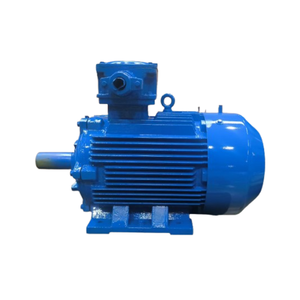
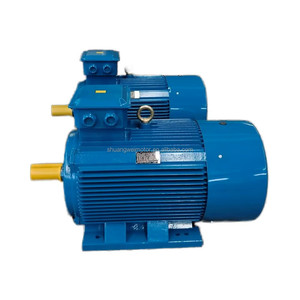
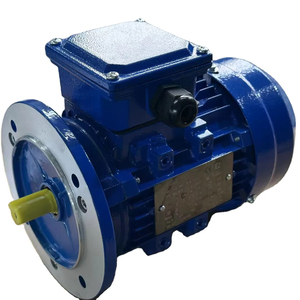
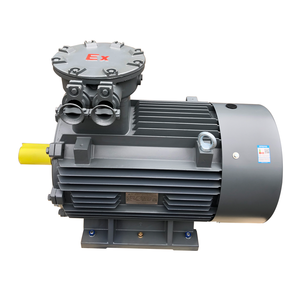
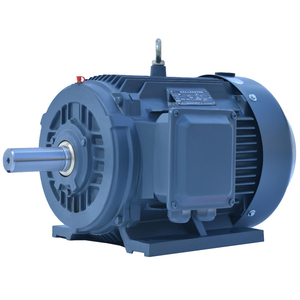
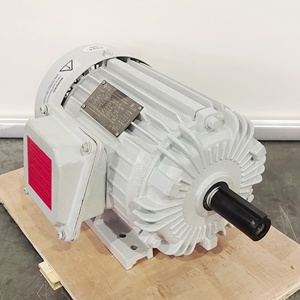
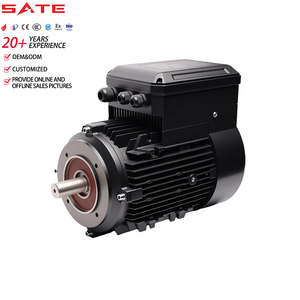
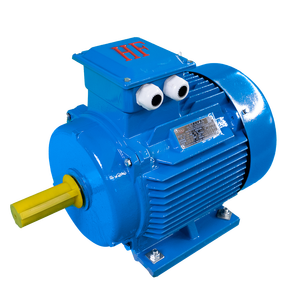
Operating electric motors at high rotational speeds (ranging from 3,000 RPM up to 12,000+ RPM via high-frequency VFD modulation) introduces electromagnetic, thermal, and mechanical stresses that standard low-voltage motors cannot tolerate. When exporting high-speed induction motors to Brazilian industries, structural engineering integrity must be validated against both international IEC standards and local site conditions.
At high angular velocities, minor rotor eccentricities generate exponential centrifugal forces. Our rotors undergo two-plane dynamic balancing down to ISO 1940 Grade G1.0, utilizing machined copper alloy end rings and low-loss silicon steel laminations to prevent bearing wear and acoustic resonance.
High-frequency pulse-width modulation (PWM) from Variable Frequency Drives causes destructive voltage spikes (high du/dt). We utilize Vacuum Pressure Impregnation (VPI) with solventless epoxy resin, double-enameled copper wire, and phase insulation rated to Class H (180°C), preventing partial discharge breakdown.
High-speed shaft rotation induces capacitive common-mode currents across the bearing oil film. To prevent electrical fluting and micro-welding pitting, our high-speed motors above 75kW incorporate insulated NDE bearings or hybrid ceramic ball bearings with high-temperature synthetic grease (Klüber/Mobil).
Using cold-rolled non-oriented silicon steel (M270-35A grade) and 100% high-purity electrolytic copper coils, stator iron losses and rotor copper losses are minimized. This enables compliance with IE4 Super Premium and IE5 Ultra Premium efficiency curve standards under heavy load continuous S1 duty cycles.
Exporting industrial machinery to Brazil requires a detailed understanding of regional economic geography and sector-specific operational environments. High-speed induction motors perform core functions across four major Brazilian industrial ecosystems:
Concentrated heavily in Ribeirão Preto, Piracicaba, and interior São Paulo state, sugar mills rely on high-speed induction motors for centrifugal juice separation pumps, boiler forced-draft fans, and ethanol vapor turbo-compressors. Explosion-proof Exd motors are mandatory in hazardous alcohol distillation halls.
FPSO topside modules operating off the coast of Rio de Janeiro and São Paulo demand flameproof ExdIIBT4 / ExdIIC high-voltage and low-voltage induction motors to drive high-pressure gas reinjection compressors and water injection pumps under aggressive salt-mist corrosion environments.
In the Quadrilátero Ferrífero (Minas Gerais) and Carajás (Pará), high-torque, high-speed motors drive centrifugal slurry pumps, flotation blowers, and ore processing separation machinery exposed to high ambient dust concentrations and heavy vibration loads.
Brazil is the world's premier exporter of eucalyptus pulp. Modern paper mills in Três Lagoas and Telêmaco Borba utilize high-speed direct-drive motors for vacuum exhausters, refiner discs, and high-velocity drying hoods, where energy efficiency directly impacts cost per air-dried ton.
Understanding Brazil’s regulatory framework is paramount for international EPC contractors, machinery exporters, and domestic plant engineers. Electricity prices for Brazilian industrial consumers (regulated under ANEEL tarification schemes) have risen steadily, making electrical motor energy loss one of the largest single lines on plant operating budgets.
1. Transition to Mandatory IE3 / IE4 Minimum Energy Performance Standards (MEPS): Under Portaria Interministerial / INMETRO regulations, Brazil has outlawed the sale of legacy low-efficiency (IE1/IE2) induction motors for standard industrial uses. Current legislation favors IE3 Premium Efficiency and encourages adoption of IE4 Super Premium and IE5 Permanent Magnet systems through tax incentives and green re-equipment financing programs (such as BNDES credit lines for energy-efficient industrial retrofits).
2. Direct-Drive Replacement of Mechanical Gearboxes: Historically, industrial processes requiring high rotational velocity relied on standard 4-pole motors coupled to mechanical speed-increasing gearboxes. Brazilian sugar mills and petrochemical plants are aggressively replacing gearboxes with variable-speed direct-coupled induction or permanent magnet motors. This eliminates gearbox oil leaks, reduces mechanical friction losses by 5% to 12%, and eliminates mechanical backlash.
3. Tropicalization and Environmental Resistance Standards: Due to high average ambient temperatures (often exceeding 40°C in northeastern and center-west Brazil) and relative humidity exceeding 90% in tropical zones, imported motors must feature specialized anti-corrosion marine painting systems (C4 or C5-M classification according to ISO 12944), internal condensation drain valves, and anti-condensation heating elements (space heaters).
Combining the heritage of European electromechanical design with high-capacity direct manufacturing, our factory serves as a strategic exporting partner for Brazilian distributors, original equipment manufacturers (OEMs), and industrial engineering firms.
Every exported motor undergoes rigorous routine and type testing—including full load heat run tests, winding resistance testing, high-potential dielectric breakdown testing, and vibration analysis—in accordance with IEC 60034-1 and NBR 17094 standards prior to sea shipment.
We supply custom shaft extensions (splined, tapered, or oversized keyways), non-standard flange mountings (B3, B5, B14, B35, V1), specialized terminal box positioning (top, left, right), and dual-voltage 60Hz windings (220V/380V/440V/660V) designed to drop directly into Brazilian processing lines.
Our experienced export documentation department manages full container load (FCL) and less-than-container load (LCL) shipments to major Brazilian sea ports, including Port of Santos (São Paulo), Paranaguá (Paraná), Rio de Janeiro, and Suape (Pernambuco), ensuring seamless RADAR custom clearance support.
Our OMEX flameproof series holds international IECEx and ATEX explosion-proof certifications (Ex d, Ex db, Ex eb IIB/IIC T4 Gb), enabling safe deployment in Brazilian offshore platforms, grain storage silos (combustible dust), chemical plants, and bioethanol distilleries.
Answers to common technical, regulatory, and procurement questions regarding importing electric motors into Brazil.
Consult with our senior motor application engineers to request detailed technical datasheets, CAD dimensional models, or a direct factory export price quotation tailored for your facility.