Technical Industry Whitepaper

Explosion-Proof High Voltage Motors Factories & Suppliers in Moscow

Engineering Rigor, EAC Ex/TR CU Certification, and Severe-Duty Thermal Performance for Central Russia's Industrial Energy Sector

Heavy-Duty & Explosion-Proof Motor Portfolio

Premium electrical machinery engineered to meet GOST R, IECEx, and ATEX standards for chemical, oil refining, and power generation plants.
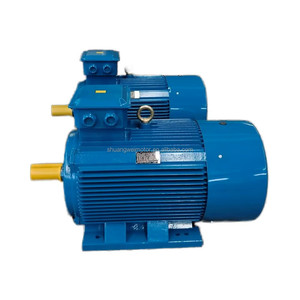
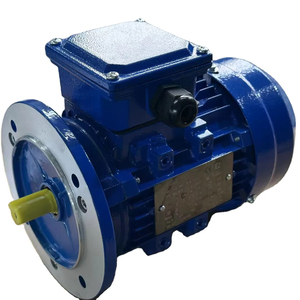
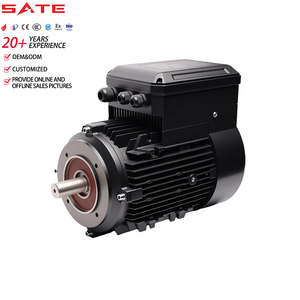
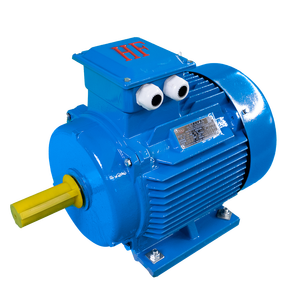
Electric Motor YE3-112M-4 IE3 Electric Motor 4kw

Electric Motor YE3-112M-4 IE3 Premium Efficiency 4kW

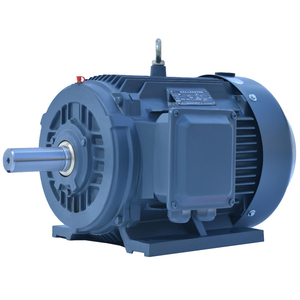
15KW 20HP IE4 Super Premium Efficiency Motor

15KW 20HP IE4 Super Premium Efficiency 3-Phase Motor IP55

IE4 Series Super Premium Efficiency Motor B3/B35/B5

IE4 Series Super Premium Efficiency Motor 2.2kW B3/B35/B5

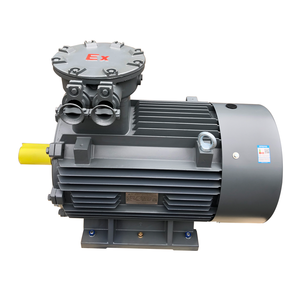
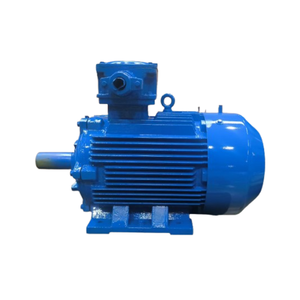
IE3/IE4 ExdIIBT4 Explosion-proof AC Electric Motor

IE3/IE4 ExdIIBT4 Explosion-Proof Industrial Flame Proof Motor

High Efficiency IE4 Electric Motor 7.5kW 10hp 6 Poles

High Efficiency IE4 Electric Motor 7.5kW 10hp 6 Poles 100% Copper

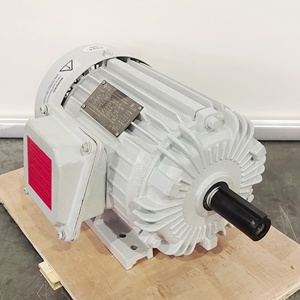
NEMA Premium Efficiency IE4 1 hp Motor

NEMA Premium Efficiency IE4 1hp 230/460V 1800RPM Heavy Duty Motor

IE5 High Efficiency 4kW Integrated Motor

IE5 Ultra Efficiency 4kW Integrated Synchronous Motor 380V

IE4 Permanent Magnet Synchronous Motor IP55

High Efficiency IE4 5kW Permanent Magnet Synchronous Motor IP55

50+
Years Industry Authority
15 kV
Max High Voltage Rating
-60°C
Sub-Zero Thermal Tolerance
EAC Ex
TR CU 012/2011 Compliant

Executive Technical Report: High Voltage Explosion-Proof Motors in Moscow

In the expanding industrial sectors of Moscow and the broader Central Federal District of Russia, the demand for Explosion-Proof High Voltage (HV) Electric Motors has transitioned from standard utility requirements to highly customized, fault-tolerant engineering solutions. Facilities operating within petrochemical refining (such as the Kapotnya Refinery complex), heavy thermal power plants (Mosenergo grids), chemical processing hubs, and gas distribution infrastructure require electric drives that perform flawlessly under continuous duty cycles, high mechanical inertia, and extreme climatic variances.

High-voltage explosion-proof motors—typically designed for nominal grid voltages of 6kV, 6.6kV, and 10kV with power ratings extending up to 25,000 kW—represent the pinnacle of electromechanical engineering. Operating in atmospheres contaminated with flammable gases, vapors, or combustible dusts requires strict adherence to flameproof (Ex d / Ex db), increased safety (Ex e / Ex eb), or non-sparking (Ex nA / Ex ec) protection concepts codified under Eurasian Technical Regulation TR CU 012/2011 and international standards IEC/GOST 31610.

Information Gain Insight: Moscow's industrial procurement framework prioritizes motors equipped with Class H Vacuum Pressure Impregnation (VPI) insulation system with Class B temperature rise reserves. This thermal differential provides an operational margin of up to 45°C, ensuring protection against voltage surges and transient harmonic distortions when paired with medium-voltage Variable Frequency Drives (VFDs).

Technical Architecture & Severe-Duty Engineering Specifications

When evaluating leading suppliers and factories supplying Moscow's enterprise markets, electrical engineers must verify crucial design benchmarks. Explosion-proof high-voltage induction motors (both squirrel-cage and slip-ring wound rotor configurations) utilize specialized structural features to contain internal explosions without propagating flame fronts into hazardous surrounding environments:

  • Flameproof Flamepaths (Ex db): Precision-machined cylindrical, spigot, and flat joint tolerances certified to contain internal explosion pressures up to 15 bar, absorbing kinetic thermal energy before gas release.
  • High-Rigidity Severe-Duty Cast Iron Frame: Fabricated from high-tensile gray iron (FC250/FC300) or reinforced welded steel plate designed to withstand mechanical shock loads during direct-on-line (DOL) high-voltage switching.
  • Dual-Circuit Cooling Systems (IC611 / IC81W / IC411): Heat exchange mechanisms tailored for local environmental ambient ranges. IC611 utilizes air-to-air heat exchangers with external cooling tubes, while IC81W employs closed-loop air-to-water exchangers ideal for indoor compact Moscow pumping stations.
  • Stator Core & 100% Electrolytic Copper Windings: Precision-punched silicon steel laminations with low iron loss (M270-35A grade) and mica-tape insulated 100% pure copper conductors treated with multi-stage epoxy resin VPI.

EAC Ex / TR CU Certified

Full compliance with Eurasian Customs Union safety standards for explosive atmosphere operation in Russia and CIS states.

Climate Execution UHL1

Specially engineered for temperate cold climates down to -60°C with automated space heating and Arctic synthetic lubrication.

VFD Inverter Insulation

Corona-resistant winding insulation with reinforced turn-to-turn mica shielding for MV drive speed regulation.

Localized Application Scenarios in Moscow & Central Industrial Hubs

Moscow serves as the financial, logistical, and technical engineering center for Russia's heavy industrial networks. High voltage explosion-proof motors deployed across local infrastructure projects undergo strict operational vetting:

1. Petrochemical Refining & Gas Processing (e.g., Kapotnya Industrial Zone)

Refineries operating hydrocarbon distillation, catalytic cracking, and hydrogen processing units require Ex db IIC T4 certified high-voltage motors driving heavy centrifugal gas compressors, main oil transfer pumps, and high-pressure boiler feed pumps. Motors operating in hydrogen-enriched environments (Group IIC) demand tighter flame gap tolerances than standard propane/ethylene (Group IIA/IIB) equipment.

2. District Heating & Thermal Power Plants (Mosenergo Network)

Moscow's vast municipal district heating system relies on massive thermal power stations (CHPP/TETs). High-voltage motors (6kV / 10kV) powers large induced draft (ID) fans, forced draft (FD) fans, and main boiler feed pumps. Where coal dust or natural gas supply lines present explosion risks, flameproof motors ensure uninterrupted winter power generation.

3. Water Treatment, Pipeline Transshipment & Municipal Infrastructure

Subterranean pumping complexes and wastewater treatment facilities utilize high-voltage explosion-proof drives to handle massive volumetric flows. Motors with IP65 or IP66 enclosures protect internal windings against moisture ingress, vapor condensation, and chemical aggression typical of municipal water reclamation systems.

Motor Series Voltage Rating Protection Class Cooling Method Target Moscow Industry Application
OMEX Series 6,000V - 10,000V Ex db / Ex eb IIC T4 Gb IC611 / IC81W Hydrocarbon Refining, Hydrogen Processing, Gas Compression
OMVKS Series 3,000V - 10,000V Ex e / Non-Sparking Ex ec IC81W Water-Cooled Compact Indoor Municipal Water Pumping, Power Plant Feed
OMVK Series 6,000V - 11,000V Severe-Duty Heavy Industrial IC611 Air-Air District Heating ID/FD Fans, Mine Ventilation, Steel Mills
YE4 / IE4 PM Series 380V - 660V / Low Voltage IP55 / IP65 Flameproof IC411 Totally Enclosed Auxiliary Chemical Dosing, Continuous Conveyors, VFD Drives

Localized Development Trends & Procurement Dynamics in Moscow

The industrial drive landscape in Russia is undergoing a structural transition driven by two primary imperatives: energy efficiency optimization and supply chain resilience.

Transition to IE3, IE4, and IE5 Efficiency Directives

Industrial electricity tariffs and corporate ESG carbon reduction directives across major Russian energy enterprises (such as Gazprom, Rosneft, and Lukoil) have accelerated the phase-out of legacy IE1 and IE2 motors. High-voltage explosion-proof motors running continuously for 8,760 hours per year consume several times their purchase price in electrical energy annually. Transitioning to IE3 Premium Efficiency and IE4 Super Premium Permanent Magnet Synchronous Motors (PMSM) reduces thermal losses by up to 30%, delivering rapid payback periods for plant operators.

EAC Ex Certification & Localized Engineering Support

Procurement directors in Moscow no longer evaluate suppliers solely on capital expenditure (CAPEX). High priority is placed on suppliers capable of providing direct EAC Ex declaration compliance, comprehensive Russian-language documentation (technical passports, operating manuals to GOST standards), and local engineering support for shaft modifications, terminal box orientations, and RTD temperature monitoring integration (Pt100 sensors embedded in stator windings and bearing housings).

Why Global EPCs & Moscow Industrial Buyers Partner With OME Motors

Backed by over 50 years of Italian electromechanical manufacturing heritage (tracing back to Elettrotecnica H. Orsatti), OME Motors (O.M.E. Motori Elettrici s.r.l.) stands as a premier global manufacturing partner for severe-duty and explosion-proof electric motors.

50+ Years Engineering

European Quality & Precision

Engineered according to rigorous European standards, combining high-grade materials with advanced electromagnetic design for maximum field reliability.

Customization

Bespoke Mechanical Tailoring

Full engineering flexibility to match non-standard center heights, custom shaft dimensions, special flange designs (B3, B5, B35), and localized terminal box placements.

Certification

Global & Regional Compliance

Comprehensive certification coverage including ATEX, IECEx, EAC Ex (TR CU 012/2011), ISO 9001, UL, CSA, and GOST R certifications for international procurement security.

Moscow B2B Procurement FAQ: High Voltage Explosion-Proof Motors

Q What are the mandatory certification requirements for installing explosion-proof HV motors in Moscow facilities?
All explosion-proof electric motors operated within the Russian Federation must hold a valid EAC Ex Certificate of Conformity according to Technical Regulation TR CU 012/2011 ("On safety of equipment intended for use in explosive atmospheres"). International certificates such as IECEx or ATEX serve as technical baseline data but must be supported by EAC Ex documentation issued by an accredited certification body in the Eurasian Economic Union.
Q How do OME Motors handle sub-zero ambient temperatures (-40°C to -60°C) common in Russian winters?
For low-temperature climate executions (UHL1 rating under GOST 15150), motors are outfitted with specialized low-temperature cast steel or ductile iron frames, special silicone-based seals, synthetic Arctic bearing lubricants certified down to -60°C, and automatically energized anti-condensation space heaters inside the stator frame and main terminal box to prevent moisture freezing during standby periods.
Q What is the difference between Ex d (Flameproof) and Ex e (Increased Safety) high voltage motors?
Ex d (Ex db) Flameproof motors are engineered with robust heavy-walled enclosures capable of containing an internal gas explosion without allowing flames to escape into the external atmosphere. Ex e (Ex eb) Increased Safety motors focus on preventing high temperatures, arcs, or sparks from occurring internally during operation under normal and specified overload conditions. Ex d is required for Zone 1 hazardous areas involving high-risk gas groups like hydrogen (Group IIC).
Q Can high-voltage explosion-proof motors be operated with medium-voltage Variable Frequency Drives (VFDs)?
Yes. When motors are controlled by medium-voltage VFDs (e.g., 6kV or 10kV drive systems), stator windings are built with pulse-duty Class H VPI insulation, turn-to-turn mica tape shielding, and insulated non-drive end (NDE) bearings (or grounding brushes) to eliminate destructive shaft currents caused by common-mode voltages.
Q What routine thermal protection devices are integrated into high-voltage motor stators and bearings?
Standard high-voltage motor builds feature a minimum of 6 duplex Pt100 Resistance Temperature Detectors (RTDs) embedded within the stator slots (two per phase) and 2 duplex Pt100 RTDs monitoring the drive-end (DE) and non-drive-end (NDE) bearings. These temperature signals wire into an Ex-certified terminal box for continuous integration with the facility's Distributed Control System (DCS).
Q What are typical lead times and logistical arrangements for delivering severe-duty motors to Moscow industrial zones?
Standard frame motors in stock ship within short windows, while customized high-voltage explosion-proof motors requiring custom shaft dimensions, specialized paint systems (C5-M marine/corrosive grade), or specific voltage windings typically involve a 12-to-16 week engineering and manufacturing schedule, supported by direct freight delivery into Moscow transit nodes.

Request a High-Voltage Explosion-Proof Technical Proposal

Consult with our senior electromechanical engineering team to configure EAC Ex certified 6kV/10kV motors customized for your Moscow or CIS industrial project specifications.