
IE3 Efficiency
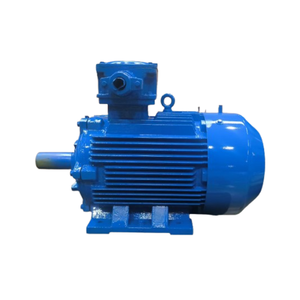
High-efficiency IE3/IE4/IE5 standard, hazardous location, and permanent magnet synchronous motors engineered for extreme industrial environments.
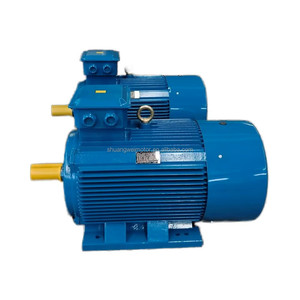
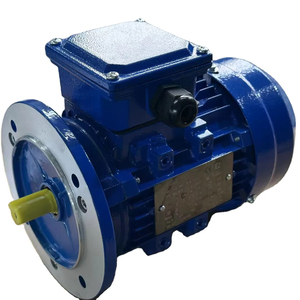
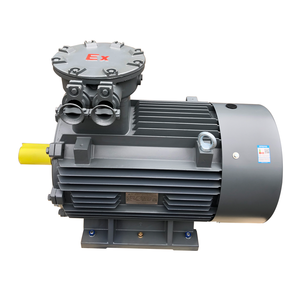
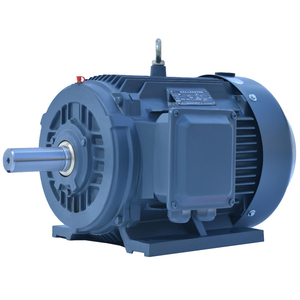
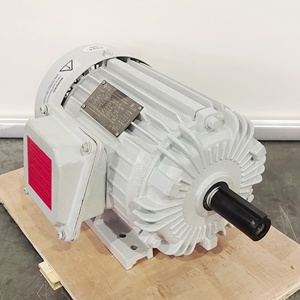
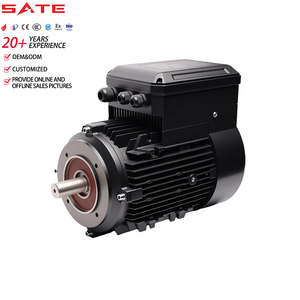
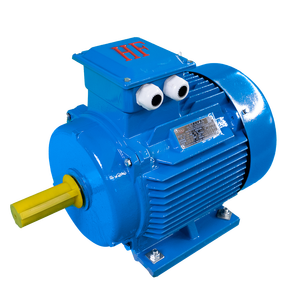
In modern heavy industry, electric motors operating within hazardous environments must comply with stringent explosion-proof safety standards. When specifying electromechanical machinery for facilities where flammable gases, vapors, or liquids are continuously or intermittently present under normal operating conditions, understanding the exact engineering dynamics of Class I Division 1 (C1D1) motors is paramount for plant safety, operational longevity, and regulatory compliance.
Under the North American National Electrical Code (NEC Article 500/505) and Canadian Electrical Code (CEC) framework, a Class I Division 1 location is explicitly defined as an atmosphere where hazardous concentrations of flammable gases or vapors exist under normal operating conditions, or where such concentrations may exist frequently due to maintenance, repair, or leakage.
Manufacturers located in the industrial heartland of Milan and Lombardy, Italy—a European region renowned for precision mechanical engineering and metallurgy—utilize heavy cast iron (FC250/GG25) or ductile iron housings engineered to withstand internal explosion pressures up to 10–12 bar (145–174 psi) without structural deformation.
The integrity of a Class I Division 1 motor relies on precision-machined joints known as flame paths (or flame gaps). Located at shaft entry points, end-shield mating surfaces, and terminal box interfaces, these flame paths force hot expanding gases through tightly controlled microscopic gaps (often under 0.15 mm). As the burning gas traverses the metallic flame path, thermal conduction rapidly dissipates its heat energy, quenching the flame front before it can ignite the surrounding external atmosphere.
| Hazard Standard | Classification Type | Environmental Condition | Enclosure Protection Level | Typical Gas Groups |
|---|---|---|---|---|
| NEC 500 (USA) | Class I, Division 1 | Ignitable gases present in normal operation | Explosion-Proof (UL 1203 / CSA C22.2) | Group A (Acetylene), B (H2), C (Ethylene), D (Propane) |
| NEC 500 (USA) | Class I, Division 2 | Ignitable gases present only in abnormal rupture/failure | Non-Sparking / Hermetically Sealed | Group A, B, C, D |
| ATEX / IECEx (EU/Intl) | Zone 1 (Ex db / Ex eb) | Ignitable gases likely to occur in normal operation | Flameproof Enclosure "Ex db" (EN/IEC 60079-1) | IIC (Hydrogen/Acetylene), IIB (Ethylene), IIA (Propane) |
| ATEX / IECEx (EU/Intl) | Zone 2 (Ex ec) | Ignitable gases not likely in normal operation | Increased Safety / Non-Sparking "Ex ec" | IIC, IIB, IIA |
Milan and the wider Lombardy region represent one of Europe's top industrial centers for heavy machinery, valve manufacturing, chemical processing equipment, and OEM skid fabrication. Lombardy accounts for over 25% of Italy's industrial output, serving as the primary procurement hub for global EPC (Engineering, Procurement, and Construction) contractors executing multi-billion-dollar energy projects across North America, the Middle East, and Asia-Pacific.
Local procurement managers, consulting engineers, and plant operators based in Milan face unique technical mandates:
A premier OEM skid builder located in the greater Milan area recently integrated high-efficiency 15kW to 75kW ExdIIBT4 / Class I Div 1 permanent magnet and induction motors into modular hydrogen fuel blending skids. By partnering with a local specialized manufacturer, the OEM achieved strict thermal dissipation ratings (T4 surface temperature limit of 135°C), ensuring that even during continuous inverter-driven low-speed operation, surface temperatures remained well below ignition thresholds.
Building upon over five decades of electromechanical heritage, our manufacturing framework in Lombardy combines advanced European metallurgical casting, computerized dynamic rotor balancing, and automated vacuum pressure impregnation (VPI). When procuring explosion-proof drive solutions, global enterprises choose our Milanese production infrastructure for several key strategic reasons:
We strictly utilize high-grade 99.99% pure oxygen-free copper wire, delivering higher electrical conductivity, minimal thermal losses, and maximum motor efficiency across IE3, IE4, and IE5 thresholds.
From NEMA standard 143T-449T frames to IEC 80 through 450 cast iron frames, our engineering facility customizes shaft diameters, keyways, terminal box positions, and specialized mounting feet.
Every explosion-proof motor undergoes routine routine testing including overspeed testing, dielectric breakdown, flame gap tolerance checks, vibration analysis (ISO 10816), and hydrostatic pressure tests.
Consult directly with our Milan-based engineering team for technical specifications, ATEX/IECEx/NEC certifications, CAD dimensional drawings, and competitive direct procurement pricing.