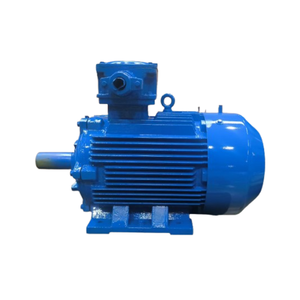
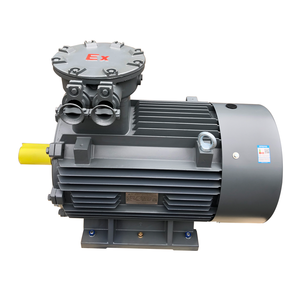
Engineered for extreme reliability, low total cost of ownership (TCO), and precise variable speed drive (VFD) compatibility across Bulgarian industrial sectors.
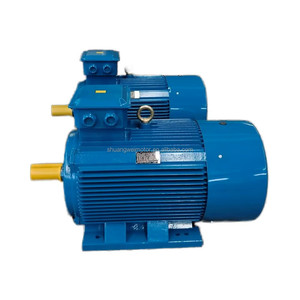
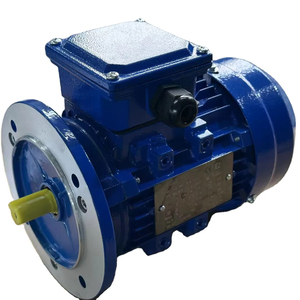
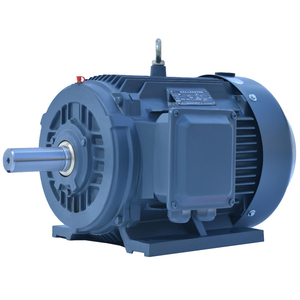
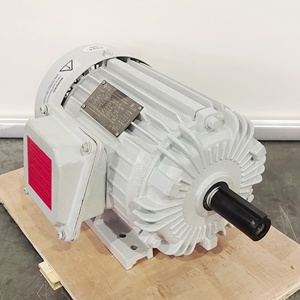
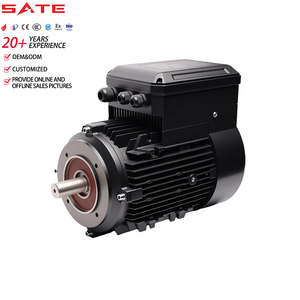
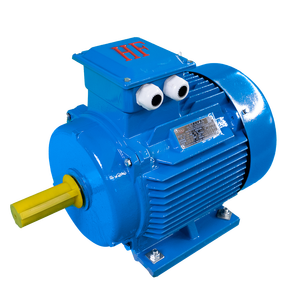
Bulgaria has solidified its position as one of Southeastern Europe's most dynamic manufacturing and engineering corridors. Driven by significant investments in the Sofia Tech Park ecosystem, the Plovdiv Economic Zone (Trakia Economic Zone), and heavy industrial infrastructure along the Danube (Ruse) and the Black Sea coast (Varna, Burgas), Bulgarian enterprises are undertaking comprehensive modernizations of their drive technologies. Central to this industrial evolution is the adoption of Brushless DC (BLDC) Industrial Motors and high-efficiency Permanent Magnet Synchronous Motors (PMSM).
Traditional induction motors, while historically dominant due to their rugged simplicity, present operational bottlenecks in energy consumption, heat generation, and low torque density at non-rated speeds. Under the European Union’s stringent Eco-design Regulation (EU 2019/1781) and Bulgaria’s National Energy and Climate Plan (NECP), plant operators are legally mandated and financially incentivized to lower carbon footprints. This whitepaper provides engineering directors, procurement professionals, and systems integrators in Bulgaria with an exhaustive analysis of BLDC and Permanent Magnet motor technology, local deployment landscapes, selection frameworks, and reliable export pathways.
Unlike standard brushed DC motors that rely on carbon brushes prone to mechanical friction and sparking, industrial Brushless DC motors utilize solid-state electronic commutation via digital controllers. Combined with high-coercivity Neodymium-Iron-Boron (NdFeB) permanent magnets, BLDC technology delivers near-zero rotor losses, achieving operational efficiency levels matching or exceeding IE4 (Super Premium) and IE5 (Ultra Premium) benchmarks.
To evaluate why Brushless DC industrial motors outperform conventional three-phase asynchronous motors in modern automation, engineers must examine their core electromechanical architecture:
In a brushed DC system, mechanical brushes continually contact the commutator bars to switch current direction, resulting in carbon dust accumulation, high thermal dissipation, acoustic noise, and required maintenance intervals every 2,000 to 4,000 operational hours. Industrial BLDC motors invert this dynamic: the windings are relocated to the stationary stator, while the permanent magnets rotate on the inner shaft. Electronic drive units (Inverters / Variable Frequency Drives) utilize Hall effect sensors, optical encoders, or sensorless back-EMF (Electromotive Force) detection to switch stator phase currents seamlessly. This eliminates spark formation, rendering BLDC technology inherently safer for explosive environments (ATEX Zone 1 / Zone 2) common in Bulgarian chemical plants.
The efficiency of a BLDC motor depends heavily on stator core geometry and slot fill factors. Premium industrial exporters utilize high-permeability, cold-rolled silicon steel laminations (typically 0.35mm to 0.5mm thickness) to minimize hysteresis and eddy current losses. Combined with 100% electrolytic oxygen-free copper winding wire insulated with Class H (180°C) enamels, these motors maintain ultra-low internal resistance ($I^2R$ electrical losses). Vacuum Pressure Impregnation (VPI) with resin ensures void-free insulation, protecting the motor against moisture ingress in humid Black Sea maritime installations.
The rotor assembly incorporates high-grade sintered NdFeB or Samarium-Cobalt (SmCo) magnets arranged in Surface-Mounted Permanent Magnet (SPM) or Interior Permanent Magnet (IPM) configurations:
To assist Bulgarian procurement personnel in performing rigorous capital investment evaluations, the table below contrasts Brushless DC / PMSM drives with legacy motor architectures across key engineering parameters:
| Performance Metric | Industrial Brushless DC (BLDC / PMSM) | AC Asynchronous Induction (IE3/IE4) | Traditional Brushed DC Motors |
|---|---|---|---|
| Efficiency Grade | IE4 to IE5+ (Up to 96.5%) | IE2 to IE4 (88% - 93.5%) | 75% to 85% |
| Maintenance Requirement | Negligible (Bearing maintenance only) | Low (Bearing regreasing) | High (Brush replace every 3000h) |
| Torque Density (Nm/kg) | Extremely High (2.5 - 4.5 Nm/kg) | Moderate (1.0 - 1.8 Nm/kg) | Moderate (1.2 - 2.0 Nm/kg) |
| Speed-Torque Profile | Flat up to rated speed; excellent closed-loop response | Requires VFD for speed variation; torque drops at low RPM | Linear; good torque but speed limited by mechanical commutator |
| Thermal Footprint | Rotor stays cool; heat concentrated entirely on stator | Rotor and stator both generate heat | High internal heating due to brush contact arc |
| Explosion Proofing (ATEX) | Inherently safe (Ex d, Ex ec certified configurations) | Ex d flameproof available | Unsuitable for hazardous gas/dust zones |
| Total Cost of Ownership (5-Yr) | Lowest (Fast 12-18 mo CAPEX payback) | Moderate | High operational and downtime cost |
Industrial exporters supplying motors to Bulgaria must tune their offerings to the distinct operational conditions of regional industrial clusters. Below are primary domestic applications where Brushless DC and Permanent Magnet motors deliver significant operational breakthroughs:
Plovdiv represents Bulgaria’s flagship industrial manufacturing core, hosting automotive component suppliers, automated packaging machinery makers, and CNC machine developers. These OEMs require compact, high-torque BLDC drives (such as 2.2kW to 7.5kW frame sizes) for multi-axis indexing tables, high-speed pick-and-place gantry systems, and conveyor lines. The integrated drive topology (such as IE5 Integrated BLDC units) allows machine builders to eliminate external control cabinet space, reducing total machine footprints by up to 25%.
Bulgaria is one of Europe’s leading producers of copper, gold, and lignite coal. Facilities operated by major extraction firms require ultra-heavy-duty industrial motors driving slurry pumps, flotation cells, vibrating screens, and underground ventilation systems. BLDC and PMSM motors rated for IP65/IP66 ingress protection with explosion-proof enclosures (ExdIIBT4 / ExdIICT4) ensure uninterrupted operation despite heavy abrasive dust, severe moisture, and high vibration levels.
The Lukoil Neftohim refinery in Burgas and the chemical processing plants in Devnya operate continuous fluid transfer pipelines requiring precise flow regulation. Traditional throttling valves introduce massive fluid friction energy waste. By pairing heavy-duty IE4/IE5 BLDC motors with direct-drive centrifugal pumps, Bulgarian process engineers achieve stepless flow variation directly via motor speed control, reducing overall pumping electrical consumption by up to 35% annually.
Modern commercial developments, tunnel ventilation projects along the Hemus and Struma motorways, and industrial facilities across Sofia demand high-temperature smoke extraction motors. Units compliant with F300 (300°C for 120 mins) and F400 (400°C for 120 mins) ratings ensure life-safety ventilation during emergency fire events while delivering high energy efficiency during standard continuous ventilation cycles.
Entering or scaling operations within the Bulgarian industrial landscape requires absolute alignment with European and domestic regulatory frameworks:
As a premier global exporter of industrial electric motors with over 50 years of electromechanical lineage (tracing back to Italian engineering roots), our manufacturing organization offers Bulgarian enterprise clients an uncompromised quality assurance ecosystem:
Below are authoritative technical answers addressing common procurement and engineering questions raised by Bulgarian enterprise clients: