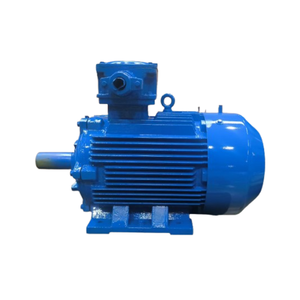
Top Trusted Heavy Duty Gear Motors Manufacturers & Global Procurement Guide

An Executive Engineering & Whitepaper Specification Guide on High-Torque Industrial Gear Motors, Premium Efficiency Standards (IE3/IE4/IE5), and Next-Generation Heavy-Duty Drive Solutions.

8 Benchmark Heavy-Duty Gear Motors & Industrial Electric Drives

Engineered for extreme continuous duty (S1), severe mechanical overload, high radial loads, and harsh industrial environments. Explore our top recommended motor architectures.
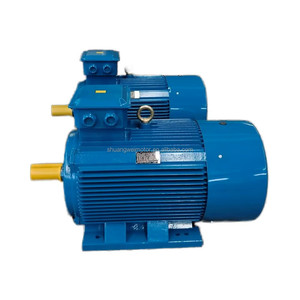
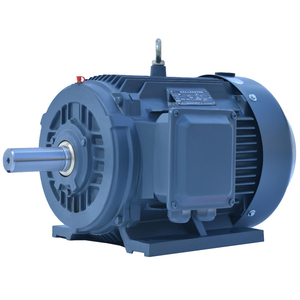
Electric Motor YE3-112M-4 IE3 Electric Motor 4kw

Electric Motor YE3-112M-4 IE3 Electric Motor 4kw

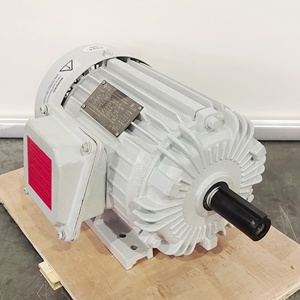
15KW 20HP IE4 Super Premium Efficiency 3-Phase Asynchronous Motor

15KW 20HP IE4 Super Premium Efficiency 3-Phase Asynchronous Motor, 2/4 Pole, 1450/2800 Rpm, 380V/50 60Hz, 100% Copper, IP55

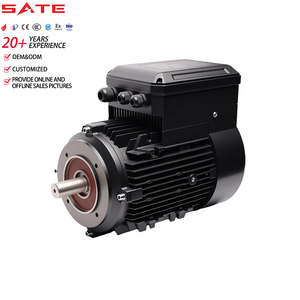
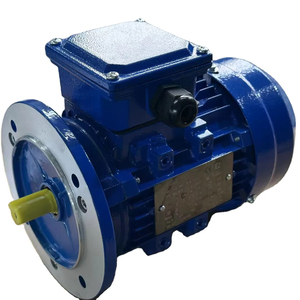
IE4 Series Super Premium Efficiency Motor 2.2kw

Factory Direct Sale IE4 Series Super Premium Efficiency Motor B3/B35/B5 Mounted 3 Phase AC Motor 2.2kw for Industrial Use

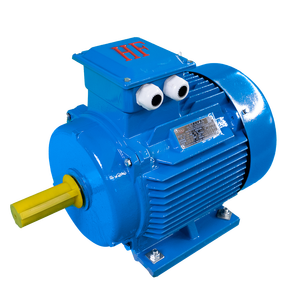
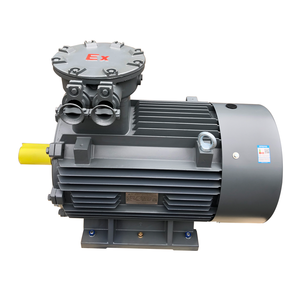
IE3/IE4 ExdIIBT4 Explosion-proof AC Electric Motor

IE3/IE4 ExdIIBT4 Explosion-proof AC Electric Motor Industrial Flame Proof Motor

High Efficiency IE4 Electric Motor 7.5kW 10hp

High Efficiency IE4 Electric Motor 7.5kW 10hp in 6 Poles With Winding Wire in 100% Copper

NEMA Premium Efficiency IE4 1 hp Three Phase Heavy Duty Electric Motor

NEMA Premium Efficiency IE4 1 hp 230/460V 1800RPM 143T Frame Size Three Phase Heavy Duty Electric Motor IP54 100% Copper Winding

IE5 High Efficiency 4kW Integrated Motor

IE5 High Efficiency 4kW Integrated Motor Replace Traditional Asynchronous Motor 380V 3000RPM Energy Saving

IE4 Three-Phase 5kW Permanent Magnet Synchronous Motor

High Efficiency IE4 Three-Phase 50Hz 5kW Permanent Magnet Synchronous Motor IP55 Protection CE Certified

Why Top Global Enterprises Partner With Us

Combining over 50 years of Italian electromechanical heritage with state-of-the-art automated manufacturing, rigorous ISO 9001 quality assurance, and direct technical consultation.

50+ Years Italian Engineering Heritage

Building upon decades of proven electromechanical design, our heavy-duty gear motors integrate heavy-grade grey cast iron (GG25/GGG40) housings, precision-ground helical gears, and Class H insulated copper windings engineered for severe duty thermal margins.

Global Certification Compliance

Full compliance across major global markets, featuring ATEX and IECEx explosive zone certifications (Zone 1, Zone 2, Ex d, Ex eb), NEMA MG-1 standards, CE directives, UL/CSA approvals, and GOST compliance for Eurasian energy projects.

Tailored OEM & ODM Customization

From non-standard shaft extensions, special flange geometries (B3/B5/B14/B35), integrated VFD drives, and high-frequency encoders to customized thermal protection (PT100/PTC), we engineer custom gear motors tailored precisely to client specifications.

50+
Years Industry Experience
100+
Countries Exported
IE5
Ultra-Premium Efficiency Class
100%
Factory Vacuum Pressure Impregnation

Global Heavy-Duty Gear Motor Procurement Trends (2025–2030)

Strategic insights for procurement directors, OEM design engineers, and industrial plant managers navigating decarbonization, digital transformation, and total cost of ownership (TCO).

1. Mandatory Transition to IE4/IE5 Super Efficiency Mandates

Across the EU, North America, and Asia-Pacific, regulatory frameworks such as the EU EcoDesign Directive are driving industrial energy standards beyond IE3 toward IE4 (Super Premium) and IE5 (Ultra Premium) efficiency levels. In heavy continuous-duty operations—such as mining conveyors, cement kilns, and chemical agitators operating 8,760 hours per year—electrical energy represents over 90% of a motor's Total Cost of Ownership over its lifecycle. Transitioning to IE4 asynchronous or IE5 permanent magnet synchronous gear motors yields payback periods as short as 8 to 14 months through energy reduction alone.

  • Energy Savings: Up to 15% reduction in kilowatt-hour consumption compared to legacy IE2/IE3 drives.
  • Thermal Lowering: Reduced internal stator heating extends winding insulation life exponentially according to Montsinger's Law.
  • Carbon Offsetting: Significant CO2 footprint reduction supporting ESG compliance goals for industrial enterprises.

2. Shift Toward Integrated Smart Gear Motors & Predictive Maintenance

Procurement strategies are rapidly pivoting from standalone mechanical gearboxes to intelligent, sensor-integrated drive packages. Modern heavy-duty gear motors are increasingly equipped with embedded micro-sensors for real-time monitoring of key physical parameters: tri-axial vibration, bearing temperature, acoustic emission, and lubricant dielectric health.

By transmitting telemetry via IIoT protocols (OPC UA, Modbus RTU, IO-Link) to plant-wide SCADA or cloud analytics platforms, plant engineering teams can detect early-stage bearing flaking, gear tooth wear, or rotor eccentricity weeks before catastrophic mechanical breakdown occurs. This transition from reactive or scheduled maintenance to condition-based predictive maintenance reduces unplanned downtime events by up to 45% in continuous process plants.

Drive Technology Efficiency Class Torque Density Maintenance Profile Ideal Application
IE3 Standard Induction Gear Motor IE3 (Premium) Standard Scheduled Intermittent General Material Handling, Pumps, Fans
IE4 Heavy-Duty Cast Iron Induction IE4 (Super Premium) High (+15%) Low Maintenance / Extended Cycles Mining Crushers, Steel Rolling Mills, Compressors
IE5 Permanent Magnet Synchronous (PMSM) IE5 (Ultra Premium) Very High (+35%) Predictive IIoT Integrated Variable Speed Agitators, Extruders, Winches
Exd Explosion-Proof Flameproof Drive IE3 / IE4 ATEX Robust Severe Duty Strict Hazardous Safety Inspections Petrochemical Refineries, Offshore Oil & Gas

Innovations in Heavy-Duty Gear Motor Architecture

How advances in materials science, electromagnetic modeling, synthetic tribology, and mechanical engineering are redefining heavy-duty drive density and durability.

Permanent Magnet & Direct-Drive Hybridization

Integrating high-coercivity NdFeB (Neodymium Iron Boron) permanent magnets inside the rotor eliminates rotor copper losses (I²R). When coupled with high-efficiency planetary or helical gear stages, these hybrid drives deliver unprecedented torque density in ultra-compact frame sizes.

Advanced Tribology & Synthetic Lubrication

Modern heavy-duty gear units leverage Polyglycol (PAG) and Polyalphaolefin (PAO) synthetic oils engineered with anti-wear (AW) and extreme-pressure (EP) additives. This extends oil change intervals up to 20,000 operational hours while drastically reducing mechanical friction losses within the gear meshing zones.

Inverter-Duty Insulation Systems (VFD Optimized)

To combat repetitive voltage spikes (dV/dt) caused by modern fast-switching Pulse Width Modulation (PWM) Variable Frequency Drives, our windings utilize Corona-Resistant enameled copper wire coupled with Class H Vacuum Pressure Impregnation (VPI) resins, preventing partial discharge degradation.

Heavy-Duty Gear Motor Procurement & Technical FAQ

Answers to essential technical, sizing, and procurement questions frequently asked by industrial engineers and purchasing managers.

Q1: How do I determine the appropriate Service Factor (SF) for a heavy-duty gear motor?

The Service Factor (SF) is a multiplier indicating how much a gear unit can handle beyond its nominal power rating. For light, uniform shockless loads operating under 8 hours/day, an SF of 1.0–1.2 is acceptable. However, for heavy-duty industrial applications involving severe shocks, heavy start/stop cycles, or reversing duty (e.g., stone crushers, steel mill rollers, heavy agitators), a Service Factor of 1.5 to 2.2 is strongly recommended to absorb peak shock loads without gear tooth pitting or shaft shearing.

Q2: What is the difference between IE3, IE4, and IE5 efficiency classes in heavy industrial drives?

According to IEC 60034-30-1 and IEC 60034-30-2: IE3 (Premium Efficiency) represents standard high-efficiency induction motors. IE4 (Super Premium Efficiency) reduces electrical losses by approximately 15% compared to IE3. IE5 (Ultra Premium Efficiency) reduces losses by an additional 20% compared to IE4, typically achieved through Permanent Magnet Synchronous Motor (PMSM) or Synchronous Reluctance (SynRM) architectures.

Q3: When should I specify an ATEX / IECEx Explosion-Proof gear motor?

Explosion-proof motors (Ex d flameproof or Ex eb increased safety) must be specified whenever the equipment operates in environments with flammable gases, vapors, mist, or combustible dusts. Zone 1 / Zone 21 environments require certified Ex d flameproof enclosures designed to contain internal explosions without igniting the surrounding hazardous atmosphere, compliant with ATEX Directive 2014/34/EU and IECEx international safety frameworks.

Q4: How does Variable Frequency Drive (VFD) operation affect motor cooling and bearing life?

Operating a motor at low speeds under VFD control reduces the self-cooling effectiveness of shaft-mounted fans. In constant-torque heavy-duty applications running below nominal frequency (50/60Hz), a forced cooling electric fan (forced ventilation unit) should be added. Furthermore, to prevent shaft currents caused by VFD high-frequency PWM switching from damaging bearings via electrical discharge machining (EDM), insulated bearings or grounding rings should be specified for motors above 110kW.

Q5: What IP protection rating is required for severe outdoors or mining installations?

Standard industrial indoor installations typically utilize IP55 (dust protected, water splash protected). For severe outdoor environments, washdown food processing lines, or dusty mining sites, IP65 (dust tight, water jet protected) or IP66 (dust tight, powerful water jet protected) enclosures with double-lip viton oil seals, stainless steel hardware, and anti-corrosion epoxies are required.

Q6: What thermal insulation class should be selected for high-ambient temperature applications?

Class F insulation (maximum operating temperature 155°C) with a Class B temperature rise (80K) is the standard industry benchmark, providing a 35°C safety margin. For severe hot environments, such as metallurgical plants or high-ambient desert installations, specifying Class H insulation (maximum operating temperature 180°C) ensures long-term winding life and thermal protection against temporary electrical overloads.

Need Tailored Technical Guidance or a Fast Procurement Quote?

Our senior electromechanical application engineers are available 24/7 to review your gearbox drawings, duty cycles, and operating parameters to recommend the optimum drive solution.

Get a Quote