Explore our globally compliant three-phase AC induction, permanent magnet synchronous, and flameproof electric motors engineered to IEC 60034, NEMA MG-1, and ATEX/IECEx standards. Designed for continuous industrial duty (S1) with 100% electrolytic copper windings and premium steel laminations.
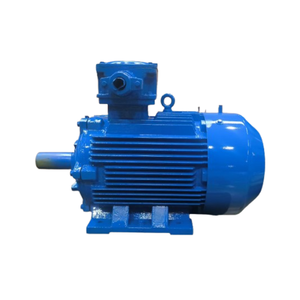
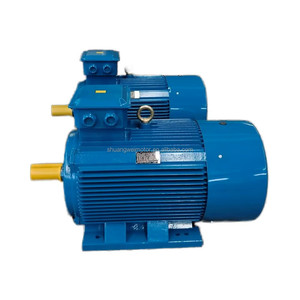
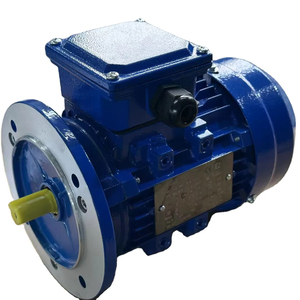
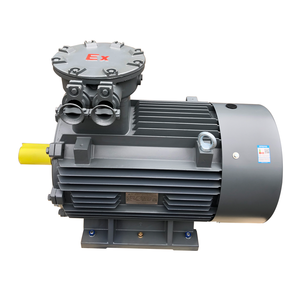
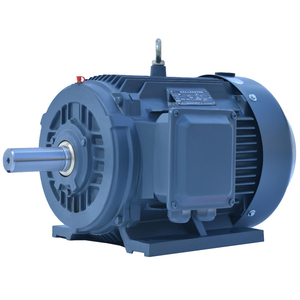
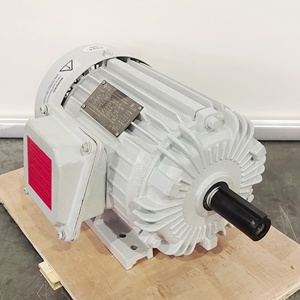
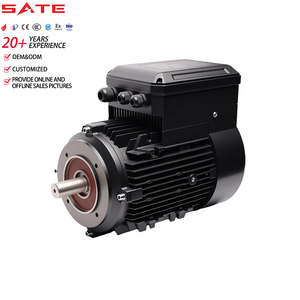

In modern heavy manufacturing and continuous process industries, the industrial electric motor is far more than a standard electromechanical commodity—it serves as the critical mechanical heart of industrial infrastructure. Driven by global decarbonization mandates, rising kWh electricity costs, and stringent reliability metrics in extreme environments, plant directors and procurement executives are moving beyond baseline purchasing costs toward Total Cost of Ownership (TCO) evaluation and Information-Gain-based engineering customization.
"Energy consumption accounts for over 92% to 95% of an industrial electric motor's total lifecycle cost. Transitioning from an IE2 legacy setup to custom-engineered IE4 Permanent Magnet or IE5 Ultra-Premium systems yields full procurement payback within 11 to 16 months under continuous S1 operating conditions."
When evaluating top trusted custom industrial electric motor suppliers and exporters, enterprise engineering teams utilize the standardized electromechanical TCO lifecycle framework:
TCO = C_purchase + C_installation + ∑(P_shaft / η_motor × Hours × Rate_energy) + C_maintenance - S_salvage
Where P_shaft represents the required mechanical shaft output, η_motor is the nameplate operational efficiency at specified partial or full load, Hours represents annual operating duty (typically 8,000+ hours for process industries), and Rate_energy reflects peak/off-peak power tariffs. Custom engineering optimizations—such as low-loss cold-rolled silicon steel laminations (M270-35A grade), 100% high-purity oxygen-free copper windings, and advanced slot fill factors—directly maximize the η_motor curve, effectively flatlining operational expenses across a 20-year lifespan.
| Efficiency Class (IEC 60034-30-1) | NEMA Standard Equivalent | Typical Rotor/Stator Tech | Loss Reduction vs IE1 Base | Primary Industrial Application |
|---|---|---|---|---|
| IE2 High Efficiency | Energy Efficient (NEMA MG-1) | Standard Aluminum Die-Cast Rotor | 20% - 25% Loss Reduction | Intermittent Duty Pumps, HVAC Blowers |
| IE3 Premium Efficiency | NEMA Premium® | High Slot-Fill Copper / Silicon Steel | 35% - 40% Loss Reduction | Continuous Process Pumps, Compressors |
| IE4 Super Premium | Above NEMA Premium | Permanent Magnet (PMSM) / Copper Rotor | 50% - 55% Loss Reduction | Heavy Mining Crushers, Extruders, Mills |
| IE5 Ultra Premium | Beyond Current Standards | Integrated Synchronous Reluctance (SynRM) / PMSM | 65%+ Loss Reduction | Direct Drive High-Torque VFD Powertrains |
Inheriting over 50 years of Italian engineering mastery from O.M.E. Motori Elettrici s.r.l. (originated in Gussago, Brescia, Italy), our manufacturing capabilities merge classic European electromechanical design with high-capacity global supply networks. We specialize in custom industrial electric motors tailored to solve intricate mechanical, thermal, and ambient operational bottlenecks that off-the-shelf standard motors cannot withstand.
From non-standard shaft extensions (splined, dual-tapered, hollow shaft) to custom voltage windings (220V up to 13.8kV high voltage), custom mounting flanges (B3, B5, B14, V1), and specialized thermal Class H insulation systems.
Full compliance with ATEX, IECEx, UL, CSA, and GOST certificates for Zone 1, Zone 2 (Gas Ex d / Ex eb) and Zone 21/22 (Dust Ex tb). Built with flameproof cast-iron frames and explosion-proof terminal boxes.
Every custom motor undergoes high-grade Vacuum Pressure Impregnation (VPI) utilizing solventless Class H epoxy resins, eliminating air voids, resisting severe chemical moisture, and preventing thermal breakdown.
Equipped with SKF/FAG re-greasable insulated bearings to mitigate VFD shaft circulating currents (NEMA MG1 Part 31 compliance), embedded PT100 RTDs in windings and bearings, and PTC thermistors.
Specialized emergency smoke extraction motors rated for F300 (300°C for 2 hours) and F400 (400°C for 2 hours) continuous operation, as well as extreme desert environment ratings up to +60°C ambient.
Full compliance with sea-freight export packaging, anti-corrosion VCI coating, heavy-duty wooden crate packing, and complete documentation export packages including COO, Form E, SASO, and CE certificates.
The industrial motor market is undergoing a seismic technological transformation driven by smart manufacturing (Industry 4.0), stringent energy efficiency regulations (EU 2019/1781 Stage 2 and US DOE directives), and advanced materials science. B2B procurement managers and EPC engineering heads must align their supplier qualification criteria with these four key macro trends:
While squirrel-cage induction motors remain the industry workhorse, Permanent Magnet Synchronous Motors (PMSM) and Synchronous Reluctance Motors (SynRM) are capturing high-duty applications. PMSM units offer zero-rotor-loss operation, delivering ultra-high IE4 and IE5 efficiencies even at low operating speeds and partial loads—making them essential for direct-drive extruders, agitators, and cooling towers.
Modern custom industrial motors are transitioning into intelligent edge nodes. Modern procurement RFQs increasingly mandate factory-integrated tri-axial vibration sensors, wireless temperature transmitters, and magnetic flux monitoring nodes. This enables AI-driven predictive maintenance algorithms to catch bearing spalling or stator turn-to-turn short circuits long before catastrophic unplanned downtime occurs.
With over 60% of modern industrial motors hooked up to Variable Frequency Drives (VFDs), standard insulation is no longer sufficient. Modern custom motors feature reinforced spike-resistant magnet wire (conforming to NEMA MG1 Part 31.4.4.2), shaft grounding rings (AEGIS® style), and insulated non-drive-end bearings to totally neutralize harmful micro-discharge bearing fluting caused by high dv/dt PWM switching voltage spikes.
"Procurement Trend Alert: Global EPC contractors are moving away from stock commodity purchasing toward strategic direct-factory custom engineering. Sourcing pre-customized, drop-in replacement motors with matched footprint dimensions cuts site installation timelines by up to 70% and eliminates field mechanical adaptation costs."
Key engineering and commercial questions answered by our senior electromechanical application engineers to assist your procurement decision-making.
The international IEC 60034-30-1 standard defines efficiency classes for line-operated AC electric motors. IE3 represents Premium Efficiency, while IE4 represents Super Premium Efficiency—reducing internal electrical and mechanical losses by approximately 15% to 20% compared to IE3. IE5 represents Ultra Premium Efficiency (defined in IEC TS 60034-30-2 for variable speed drives). IE5 motors, typically Permanent Magnet or Synchronous Reluctance designs, achieve the highest efficiency levels currently achievable in electrical engineering, reducing energy losses by over 50% compared to baseline IE1 standards.
Selection depends on zone classification and safety philosophy. Ex d (Flameproof / Flame Proof) enclosures are engineered to contain an internal explosion without igniting the surrounding explosive gas atmosphere (e.g., Zone 1 or Zone 2). The housing is heavy cast iron or steel with precision machining flame paths. Ex eb (Increased Safety) motors prevent internal sparks, arcs, or excessive temperatures during normal operation and specified abnormal conditions, but the frame itself is not designed to withstand an internal explosion. Ex d is mandatory for high-risk Zone 1 environments, oil refineries, and chemical processing facilities.
Vacuum Pressure Impregnation (VPI) is a process where the completely wound stator core is submerged in a pressure vessel filled with solventless epoxy resin under deep vacuum, followed by high hydraulic pressure. This eliminates microscopic air voids within the winding slots. VPI dramatically increases mechanical rigidity against electromagnetic forces during star-delta or direct-on-line (DOL) starting, enhances dielectric strength, improves thermal dissipation, and prevents moisture/chemical ingress—extending motor insulation life by over 300% in harsh industrial ambient conditions.
NEMA (North American) and IEC (European/International) standards use different mechanical dimensional conventions. NEMA frame numbers (e.g., 143T, 256T, 449T) indicate shaft height in sixteenths of an inch (e.g., NEMA 143T shaft height = 14 / 4 = 3.5 inches = 88.9 mm). IEC frame numbers (e.g., IEC 90, 160, 315) directly state the shaft center height in millimeters. When replacing or retrofitting cross-border machinery, custom motor exporters provide hybrid frames with dual NEMA/IEC shaft diameters, keyway profiles, and custom mounting foot hole matrices to ensure seamless physical drop-in installation.
Variable Frequency Drives utilize high-frequency Pulse Width Modulation (PWM) switches, creating Common Mode Voltage (CMV) that induces stray shaft voltages. If unmitigated, these discharge through motor bearings, causing electrical fluting, lubricant breakdown, and premature bearing destruction. Custom VFD-duty motors solve this using a three-part protection strategy: (1) Insulated ceramic or hybrid bearings on the non-drive end (NDE), (2) Conductive micro-fiber shaft grounding rings (SGR) on the drive end (DE) to safely shunt shaft currents to ground, and (3) Faraday electrostatic shielding or output sine-wave filters on the drive side.
Thermal insulation class defines the maximum allowable operating temperature of the motor's winding system. Class F insulation is rated for a maximum total temperature of 155°C (with a 105°C temperature rise over 40°C ambient). Class H insulation is rated for 180°C (with a 125°C rise). Best-practice custom engineering specifies Class H insulation materials operated at Class F or Class B temperature rise limits. This creates a thermal reserve margin of 25°C to 45°C, allowing the motor to withstand voltage fluctuations, temporary overloads, and high ambient operating environments (up to +55°C or +60°C) without degrading insulation life.
Top trusted custom exporters can engineer tailored mechanical adaptations, including: (1) Special shaft materials (e.g., AISI 4140, 316 Stainless Steel, Duplex Steel) and custom shaft machining (double shaft extensions, splines, tapered keys); (2) Custom terminal box locations (top, left, right, or oversized boxes for heavy cables); (3) Special mounting adaptors (transition plates for legacy foot patterns or custom C-face/D-flange dimensions); and (4) Integrated brake units, encoders, and forced ventilation blowers (IC416 cooling) for low-speed variable torque duty.
Complete enterprise export compliance packages must include: (1) Type Test Reports and Routine Factory Test Certificates (no-load losses, winding resistance, hi-pot insulation, vibration FFT analysis, noise level); (2) International Certification Certificates (ATEX/IECEx for hazardous areas, CE compliance declarations, UL/CSA mark documentation, GOST/EAC compliance for CIS regions); (3) Certificate of Origin (COO) and mill test reports (MTR) for copper wire and silicon steel; and (4) Comprehensive Operating & Maintenance (O&M) manuals with detailed dimensional mechanical drawings.
Need non-standard voltage, explosion-proof ATEX ratings, high-efficiency IE4/IE5 performance, or custom mechanical frame dimensions? Speak directly with our senior application engineering team today.
Inquire Now