Direct factory-engineered asynchronous AC induction motors certified to IEC, ATEX, NEMA, and GOST standards for high-reliability industrial duty.
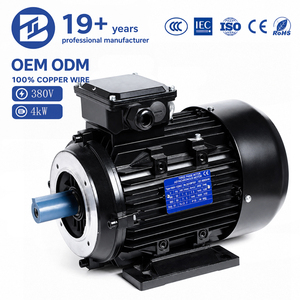
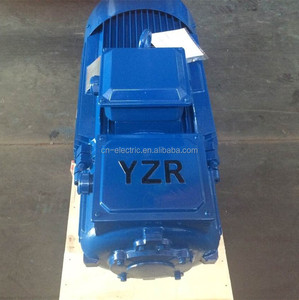
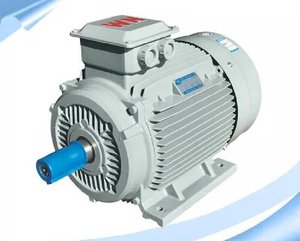
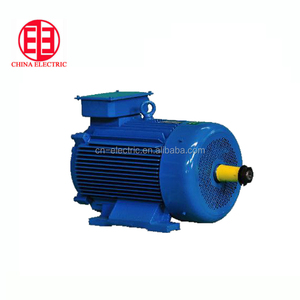
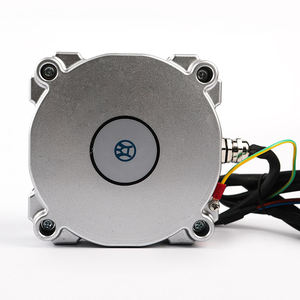
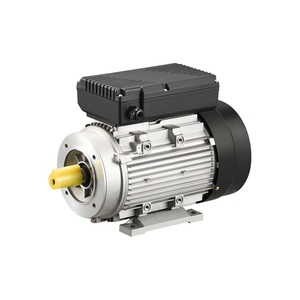
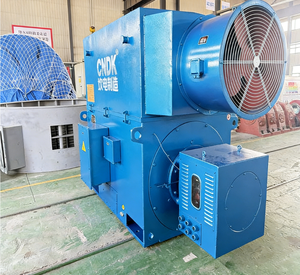
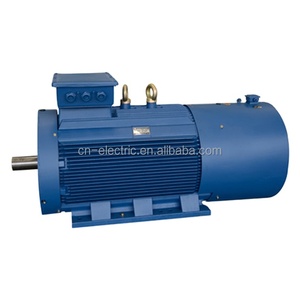
Three-phase asynchronous motors—commonly referred to as AC squirrel-cage induction motors—form the electromechanical backbone of global heavy industry. Operating on the principle of electromagnetic induction first quantified by Michael Faraday and developed by Nikola Tesla, these motors convert polyphase alternating current power into mechanical torque via a rotating magnetic field (RMF) generated within the stator windings.
Unlike synchronous machines where the rotor rotates at exact phase synchronism with the applied line frequency, asynchronous motors rely on a fundamental differential speed known as slip ($S$). Slip is mathematically expressed as:
Where N_s represents synchronous speed ($N_s = 120f / P$, with frequency $f$ and pole count $P$) and N_r represents actual mechanical rotor velocity. This relative movement between the stator's rotating magnetic flux and the rotor conductors induces electromotive force (EMF) and corresponding heavy currents within the rotor cage, producing continuous magnetic torque.
A industrial-grade three phase asynchronous motor factory must maintain rigorous metallurgical and tolerance standards across core subsystems:
Procurement directors must evaluate efficiency classifications under strict international regulatory compliance frameworks (EU Commission Regulation 2019/1781 & US DOE guidelines):
| Efficiency Class | Normative Standard | Relative Losses vs IE1 | Primary Industrial Applications | Lifecycle TCO Impact |
|---|---|---|---|---|
| IE1 (Standard Efficiency) | IEC 60034-30-1 | Baseline (100%) | Legacy installations, non-regulated regions | High energy consumption, high operational cost |
| IE2 (High Efficiency) | IEC 60034-30-1 / NEMA Energy | ~20% Loss Reduction | Intermittent duty (S3/S6), small workshops | Moderate operational payback period |
| IE3 (Premium Efficiency) | IEC 60034-30-1 / NEMA Premium | ~35-40% Loss Reduction | Water pumps, HVAC fans, conveyors, compressors | Optimal standard ROI (Payback < 14 months) |
| IE4 (Super Premium) | IEC 60034-30-1 / Sub-tier regulations | ~50-55% Loss Reduction | Continuous 24/7 process plants, chemical refineries | Lowest Total Cost of Ownership over 10-year lifecycle |
| IE5 (Ultra Premium) | IEC 60034-30-2 (VFD / PM sync) | >60% Loss Reduction | High-end automated processing, servo-pump units | Maximum energy optimization & carbon footprint reduction |
The global industrial electric motor market is undergoing a seismic shift driven by global decarbonization mandates, rising kWh electricity costs, and digital industry 4.0 integration. B2B buyers must shift from legacy initial-cost purchasing methodologies to advanced strategic procurement practices.
Electricity accounts for over 90% of a motor's lifecycle cost over a 10 to 15-year operational span. Initial purchase price accounts for merely 3-5%, with maintenance claiming the residual. Procurement teams are prioritizing IE3 and IE4 efficiency classes to capture immense lifetime OPEX savings.
With variable speed drives (VSD) becoming standard across pumping and ventilation systems, factories require motors designed specifically for PWM inverter harmonic stress. This includes mandatory spike-resistant magnet wire (CR200 rated) and independent auxiliary cooling fans (IC416).
Industrial buyers are demanding pre-fitted condition monitoring nodes (vibration, bearing temperature PT100/RTC, stator thermistors). Factories capable of integrating IoT telemetry directly onto terminal boxes are winning large enterprise OEM contracts.
Modern factories must offer complete modular engineering. Sourcing directors should look for suppliers providing custom mechanical mounting options (B3 foot, B5 flange, B14 face, or combined B35 configurations), non-standard shaft dimensions, special anti-corrosion marine paint systems (C4/C5-M for offshore applications), and multi-voltage dual-frequency windings (220V/380V/415V/440V/660V at 50Hz/60Hz).
Integrating Italian electromechanical design heritage with state-of-the-art automated manufacturing, delivering global safety compliance and unmatched reliability.
Inheriting half a century of engineering precision, our production processes in Gussago and Nuvolera set the benchmark for low and high voltage motor durability.
Certified supplier for explosive atmosphere applications (Zone 1, Zone 2, Zone 21, Zone 22). Explosion-proof OMEX series designed for chemical and offshore rigs.
100% routine testing including surge voltage withstand, high-potential dielectric test, dynamic vibration balancing (ISO 10816), and full load temperature rise testing.
Capability up to 15kV and 10,000kW output. Specialized cooling configurations including IC01 (IP23 open drip-proof), IC411 (TEFC), IC611 (air-to-air heat exchanger), and IC81W (water-cooled).
Fully compliant with European IEC, North American NEMA MG-1, Russian GOST, and international marine class certification society specifications (DNV, ABS, BV, LR).
Dedicated technical support hubs across Europe, the Middle East, the Americas, and Asia, ensuring fast spare parts dispatch and onsite commissioning support.
Technical responses to the most critical questions encountered by plant managers, EPC contractors, and procurement officers during motor selection.
IE4 motors reduce energy losses by approximately 15% to 20% compared to IE3 motors. This is achieved through higher-grade magnetic steel laminations, optimized copper slot fill factors, refined cooling airflow dynamics, and reduced rotor friction. In continuous 24/7 operations, IE4 motors typically recoup their cost differential within 8 to 12 months.
Direct-On-Line (DOL) starting draws a locked rotor current (inrush) up to 6-8 times the rated full-load current ($I_N$). Star-Delta starting reduces line voltage applied to each phase winding by $\sqrt{3}$ during startup, dropping starting current and starting torque to 1/3 of DOL values, preventing voltage dips on the utility grid.
Pulse-Width Modulation (PWM) inverters create high-frequency Common Mode Voltages (CMV). Capacitive coupling induces shaft voltages that discharge through bearing grease films, causing electric discharge machining (EDM) pits or "fluting." We prevent this by installing insulated NDE bearings, hybrid ceramic bearings, or shaft grounding rings.
IC411 is Totally Enclosed Fan Cooled (TEFC), relying on a shaft-mounted fan. At low VFD operating speeds (e.g., <25Hz), cooling airflow drops drastically. IC416 utilizes an independently powered electric auxiliary fan, ensuring constant high-velocity cooling airflow across all operating speed ranges.
Slip ring (wound rotor) motors—such as our heavy-duty YZR series—allow insertion of external resistance into the rotor circuit via carbon brushes. This yields extremely high starting torque (up to 250% breakdown torque) while maintaining a low starting current, making them essential for gantry cranes, heavy hoists, and ball mills.
Standard industrial motors are rated for maximum 40°C ambient temperature at altitudes $\le$ 1000m above sea level (per IEC 60034-1). Operating at 50°C requires a derating factor of approximately 0.92x, or upgrading insulation class from Class F to Class H with Class B temperature rise limits.
Outdoor water pump drives require a minimum of IP55 (dust protected, water jets protection). For harsh washdown, coastal, or severe weather outdoor installations, IP56 or IP66 enclosures equipped with stainless steel hardware, drain plugs, and double-lip shaft seals are strictly recommended.
Essential factory audit documentation includes ISO 9001 quality certificates, Type Test reports to IEC 60034-2-1 (loss measurement), VPI resin inspection records, dynamic balancing certificates (ISO 1940 Grade G2.5), and ATEX/IECEx QAN/QAR notification reports for hazardous motors.
Consult directly with our engineering team for technical datasheets, CAD dimensional models, and competitive direct factory pricing.