Explore high-efficiency, precision-engineered PMSM configurations tailored for continuous-duty industrial automation, HVAC pumps, elevator traction, heavy-duty ball mills, and electric vehicles.
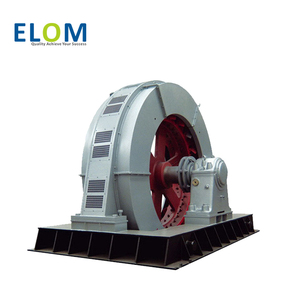
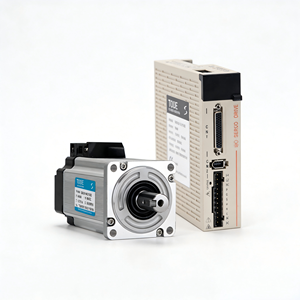
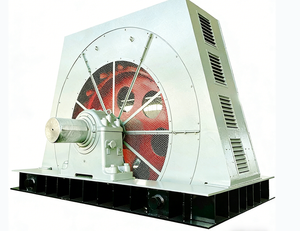
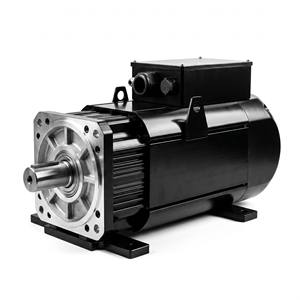
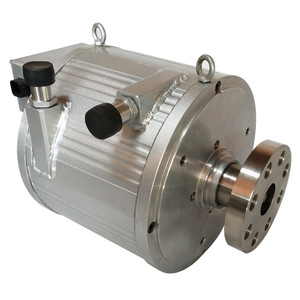
Industrial motion control is experiencing a paradigm shift driven by stringent decarbonization mandates (such as the EU Commission Regulation 2019/1781 and US Department of Energy motor standards) alongside volatile global energy prices. Permanent Magnet Synchronous Motors (PMSMs) have emerged as the definitive solution for high-performance electromechanical power conversion. Unlike standard Squirrel-Cage Induction Motors (SQIM) that depend on electromagnetic induction to induce rotor current—resulting in continuous rotor copper losses—PMSMs utilize high-energy Neodymium-Iron-Boron (NdFeB) or Samarium-Cobalt (SmCo) permanent magnets embedded directly within or mounted on the rotor core.
This structural elimination of rotor slip and excitation current enables PMSMs to achieve IE4 (Super Premium) and IE5 (Ultra-Premium) efficiency standards across wide speed-torque operating envelopes. For procurement managers, plant engineering directors, and OEM equipment builders, transitioning to PMSM systems translates into immediate operational expense (OpEx) reductions, reduced thermal stress on insulation systems (extending L10h bearing life), and superior low-speed torque delivery without requiring gear reduction stages.
Technical Information Gain Note: In continuous duty applications (S1 operation) such as petrochemical pumping stations, cement ball mills, and mining conveyor networks, electrical power consumption accounts for over 92% of a motor’s total life cycle cost (LCC). A 3.5% efficiency gain in a 500 kW continuous-duty drive yields complete capital payback (CapEx recovery) within 11 to 14 months of operation.
| Performance Parameter | Standard AC Induction (IE2/IE3) | Permanent Magnet Synchronous (IE4/IE5) | Industrial Operational Impact |
|---|---|---|---|
| Full-Load Efficiency | 88.0% – 93.5% | 95.0% – 97.8% | Direct reduction in kWh consumption & CO2 emissions. |
| Rotor Electrical Losses | High (I²R losses in rotor bars) | Near-Zero (Permanent magnet excitation) | Significantly lower motor operating temperature & longer insulation life. |
| Power Factor (cos φ) | 0.78 – 0.86 (Requires VAR compensation) | 0.95 – 0.99 (Near-Unity) | Eliminates utility power factor penalties; lowers cable sizing. |
| Torque Density (Nm/kg) | Baseline (1.0x) | 2.5x to 3.5x Baseline | Compact frame size; enables direct-drive gearless machinery. |
| Low-Speed Torque Performance | Derates sharply below 30% base speed | 100% Constant Torque down to Zero RPM | Ideal for extruders, winders, ball mills, and heavy traction. |
| Thermal Rise & Bearing Life | Class B or F temperature rise | Class B rise with Class H insulation | Extends grease re-lubrication intervals by up to 200%. |
Selecting the optimal PMSM supply partner requires evaluating technical manufacturing depth, electromagnetic FEA optimization capabilities, rotor magnet retention engineering, thermal dissipation topology, and compliance with international standards (IEC, NEMA, ATEX, IECEx, UL/CSA, GOST). Below is a comprehensive breakdown of the world's leading PMSM factories and industrial suppliers.
With over 50 years of Italian engineering excellence originating from Gussago, OME Motors excels in custom-built, explosion-proof (OMEX), high-voltage, and IE4/IE5 permanent magnet synchronous solutions tailored for heavy industry, mining, and oil & gas.
A pioneer in automation integration, Siemens provides SIMOTICS S and M series PMSMs designed for seamless operation with SINAMICS variable frequency drives in high-speed motion control.
Renowned for their SynRM and permanent magnet motor technologies, ABB offers robust industrial drive packages certified for hazardous environments and continuous process applications.
Specializing in high-precision servomotors and IPM (Interior Permanent Magnet) designs, Yaskawa dominates industrial robotics and high-accuracy machine tool drives.
WEG’s W22 Magnet series delivers high-efficiency performance across global industrial sectors, offering heavy cast-iron frame construction and broad thermal margins.
A comprehensive electric motor conglomerate delivering low-to-high voltage PMSMs for automotive traction, commercial HVAC, and heavy machinery power systems.
Focusing on off-highway e-mobility, marine propulsion, and heavy commercial machinery, Danfoss produces ultra-compact synchronous reluctance and PMSM architectures.
Lenze provides highly dynamic m850 series PMSMs optimized for intralogistics, packaging equipment, and continuous material handling processing lines.
Engineers high-density IPM synchronous motors with integrated drive electronics, offering exceptional energy conservation for elevator and HVAC infrastructure.
10. Specialized OEM & Custom Engineering Factories (e.g., OME Motors Custom Line): For non-standard shaft extensions, specialized flange geometry (NEMA/IEC dual footprint), extreme temperature environments (-40°C to +60°C ambient), or high-voltage direct-drive mill motors (up to 10kV), custom engineering manufacturers provide customized electromagnetic design, reduced lead times, and tailored VFD-matching engineering support.
As corporate procurement shifts from simple purchase price evaluation to comprehensive Total Cost of Ownership (TCO) and Scope 2 carbon footprint accounting, several key procurement trends are defining the PMSM marketplace:
Procurement teams are prioritizing life-cycle energy savings over upfront unit acquisition costs. Because electricity accounts for up to 95% of a motor's 10-year operating expense, IE5-rated PMSMs deliver complete ROI despite initial premiums.
Forward-thinking factories are diversifying magnet chemistry—utilizing Dy-free (Dysprosium-free) NdFeB magnets, SmCo for high-temperature stability, or Ferrite-assisted Synchronous Reluctance (Fe-SynRM) designs to eliminate supply chain bottleneck exposure.
Eliminating mechanical gearboxes reduces friction losses, oil maintenance, and mechanical backlash. High-torque low-speed PMSMs are directly coupled to mill drums, cooling tower fans, and extruders for near-zero maintenance.
Advancements in materials science and power electronics are unlocking new performance thresholds for permanent magnet synchronous machinery. Key technological vectors include:
Drawing upon over half a century of Italian electromechanical manufacturing heritage, OME Motors combines custom European engineering precision with scalable global production capacities. Headquartered in Gussago (Brescia), Italy, OME Motors designs and manufactures tailor-made electric motor solutions built for extreme industrial operating environments.
Full ATEX, IECEx, UL, CSA, and GOST certifications across explosion-proof motor series (OMEX). Engineered for Zone 1, Zone 2, Zone 21, and Zone 22 hazardous chemical and offshore environments.
Every motor can be customized: specialized stator windings for distinct voltage inputs (from 380V up to 11kV), custom shaft metallurgy (316L/Duplex stainless), custom IC cooling methods (IC411, IC611, IC81W water-jacket), and specialized bearings.
Integrated international service hubs ensure fast-track spare parts availability, full factory acceptance testing (FAT) with load testing facilities, and technical commissioning assistance across 60+ countries.
Answers to critical technical and commercial questions raised by electrical engineers, plant maintenance managers, and OEM buyers when evaluating PMSM drive systems.
Need a high-efficiency IE4/IE5 PMSM drive system, custom frame mounting, or ATEX explosion-proof certification for your next project? Consult directly with OME Motors' electromechanical engineering team.
Get a Quote