Certified IE3, IE4 & IE5 Energy-Saving Electric Motors Manufactured for Heavy Industrial Duty & Global OEM Integration
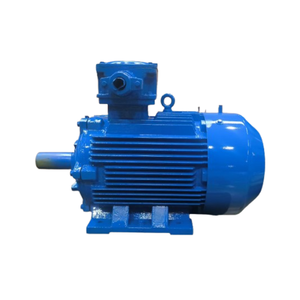
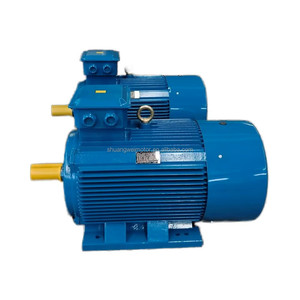
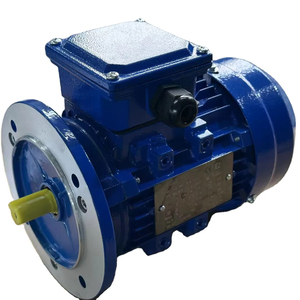
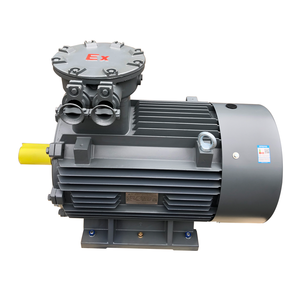
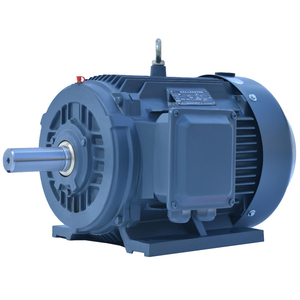
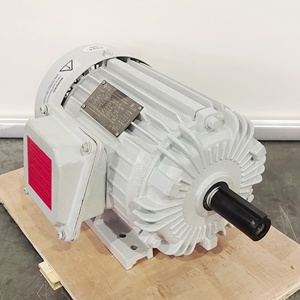
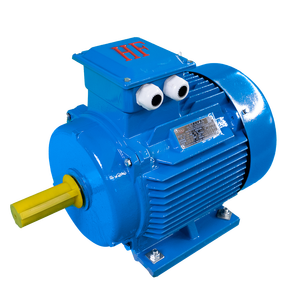
Electric motors consume approximately 70% of total electrical energy in industrial applications and over 45% of global electricity production. In modern industrial operations—spanning oil & gas refineries, chemical process plants, mining facilities, power stations, and large-scale manufacturing facilities—the electric motor is the core driver of operational throughput. As global decarbonization mandates intensify and electricity prices fluctuate, industrial enterprises can no longer treat electric motor selection as a standard commodity purchase. Modern procurement strategies prioritize total Life Cycle Cost (LCC) rather than initial capital spending (CAPEX).
Over a typical 10-to-15-year operational lifecycle of a continuously running industrial electric motor, the initial purchase price accounts for only 2% to 5% of its total cost, while energy consumption represents more than 90% to 95%. The remaining portion covers maintenance and downtime risks. Transitioning from legacy IE1 or IE2 induction motors to IE3 (Premium Efficiency), IE4 (Super Premium Efficiency), and IE5 (Ultra-Premium Permanent Magnet Synchronous) motor architectures yields immediate financial returns, significantly lowers scope 2 carbon emissions, and ensures strict regulatory compliance across international markets.
Technical Insight: Upgrading a single 110kW industrial motor running 8,000 operating hours per year from IE2 efficiency (94.3%) to IE4 Super Premium efficiency (96.3%) saves over 18,500 kWh annually. At an average industrial power tariff of $0.12/kWh, this generates $2,220 in direct energy savings per year—repaying the initial motor price difference within less than 14 months of operation.
This comprehensive technical whitepaper details the engineering principles, standard efficiency thresholds (IEC 60034-30-1 and NEMA MG-1), rotor thermal management, slot fill factor optimizations, and structural reliability metrics that distinguish the top global manufacturers of energy-saving electric motors. Written from the perspective of senior industrial electromechanical engineers and global B2B procurement consultants, this guide provides actionable intelligence for engineering managers, plant supervisors, and procurement directors evaluating supplier capabilities worldwide.
Understanding Efficiency Classes, Energy Loss Mitigation, and Core Engineering Standards
The International Electrotechnical Commission (IEC) standard 60034-30-1 defines international efficiency classes for line-operated single-speed three-phase cage-induction motors. The standards range from IE1 (Standard Efficiency) to IE4 (Super Premium Efficiency), with the newer IE5 (Ultra-Premium Efficiency) established under IEC TS 60034-30-2 for variable-speed drive applications such as Permanent Magnet Synchronous Motors (PMSM) and Synchronous Reluctance Motors (SynRM).
| Efficiency Class | International Standard | North American Equivalent | Avg Efficiency Range (4-Pole, 7.5kW-45kW) | Primary Rotor & Stator Technology |
|---|---|---|---|---|
| IE2 (High Efficiency) | IEC 60034-30-1 | Energy Efficient (EPACT) | 88.7% - 93.1% | Standard Electrical Steel Laminations, Aluminum Cage |
| IE3 (Premium Efficiency) | IEC 60034-30-1 | NEMA Premium® | 90.4% - 94.5% | Low-Loss Cold-Rolled Silicon Steel, 100% Copper Winding |
| IE4 (Super Premium) | IEC 60034-30-1 | Above NEMA Premium | 92.6% - 95.7% | Thin-Gauge Silicon Laminations, Die-Cast Copper / Ultra-Dense Stator Slot |
| IE5 (Ultra-Premium) | IEC TS 60034-30-2 | Exceeds NEMA Guidelines | 94.0% - 97.2% | Permanent Magnet Synchronous (NdFeB) / Synchronous Reluctance |
To transition an industrial motor from standard efficiency (IE2) to Super Premium efficiency (IE4/IE5), engineering teams must eliminate parasitic losses across five specific internal mechanisms:
Stator copper resistance accounts for 35%-40% of total motor energy losses. IE4 and IE5 motors utilize 100% high-purity oxygen-free copper (OFC) wire with maximized stator slot fill factors (up to 75%), larger wire cross-sections, and optimized end-turn geometry to minimize internal electrical resistance.
Core losses occur within the stator magnetic iron. Leading factories employ premium ultra-thin cold-rolled non-oriented silicon steel (0.35mm to 0.27mm laminations) with specialized insulating coatings, reducing hysteresis heat build-up and localized eddy currents by 25% to 35%.
Rotor losses equal roughly 20% of total losses in standard squirrel-cage designs. Replacing traditional cast aluminum rotor bars with precision copper bars or high-coercivity NdFeB permanent magnets eliminates rotor slip losses entirely in permanent magnet synchronous motor (PMSM) configurations.
Key Technical Criteria for Assessing OEM Supplier Competence and Factory Infrastructure
Identifying top-tier industrial electric motor manufacturers requires evaluating supplier qualifications beyond simple catalog specifications. B2B procurement managers and engineering teams must audit candidate factories against six core technical pillars:
Top manufacturers maintain strict incoming material validation protocols. Stator wire must be 99.99% electrolytic copper. Silicon steel laminations must maintain consistent magnetic permeability and low watt-loss specs per kilogram (e.g., ≤ 2.5 W/kg at 1.5T 50Hz). Substandard recycled aluminum or impure copper leads to premature coil breakdown and thermal runaway.
To withstand hostile operational environments—such as high ambient humidity, corrosive chemical vapors, and high-frequency voltage spikes from Variable Frequency Drives (VFDs)—advanced motor manufacturers implement Class H VPI systems utilizing solventless epoxy resins. VPI eliminates air voids in stator slots, providing superior dielectric strength and thermal dissipation.
Mechanical vibration accelerates bearing wear and reduces system efficiency. Leading factories utilize multi-plane dynamic balancing machines per ISO 21940-11 Grade G1.0 or G2.5 standards. Precision-balanced rotors ensure whisper-quiet operation (<72 dB), reduced shaft deflection, and extended bearing re-lubrication intervals (>20,000 operating hours).
For applications in explosive dust or gas atmospheres (oil refineries, coal mines, grain elevators), manufacturers must hold third-party hazardous area certifications. This includes ATEX Directive 2014/34/EU, IECEx international safety scheme, and Ex d IIB/IIC T4 flameproof ratings with precision flame path machining tolerances (<0.15mm gap).
Factory Testing Standards: Premier electric motor manufacturers conduct 100% automated end-of-line (EOL) testing on every produced unit. EOL tests must verify winding resistance balance, surge voltage resistance, high-potential (Hi-Pot) insulation integrity, no-load current loss, phase displacement, and vibration velocity before factory release.
Next-Generation Technologies Transforming Industrial Electric Motor Procurement
As industry 4.0 accelerates, the industrial electric motor market is undergoing a structural shift driven by digital connectivity, advanced materials, and tightening environmental standards. B2B buyers must align their multi-year procurement roadmaps with three dominant technological macro-trends:
Traditional electric motors operate as isolated electromechanical assets. Next-generation IE4 and IE5 motors incorporate integrated IoT sensor suites or prepared sensor mounting pads for tri-axial vibration, bearing temperature, and magnetic flux monitoring. Via wireless protocols (Bluetooth LE, LoRaWAN, or Industrial Ethernet), operational telemetry is streamed to cloud platforms. Predictive AI algorithms analyze FFT vibration spectra to detect early bearing fluting, stator insulation degradation, or shaft misalignment weeks before catastrophic failure occurs, shifting maintenance from reactive to predictive regimes.
While standard AC induction motors remain common, PMSM technology is becoming dominant in heavy energy-consuming sectors. Because permanent magnet rotors run synchronously with the stator magnetic field without slip, PMSM motors achieve IE5 Ultra-Premium efficiency levels even under partial load conditions (25% to 75% load). For variable-torque applications like centrifugal pumps, HVAC fans, and rotary screw compressors driven by Variable Frequency Drives (VFDs), PMSM motors deliver up to 30% lower energy consumption than legacy fixed-speed induction motors.
With regulations such as the EU Carbon Border Adjustment Mechanism (CBAM) and corporate ESG reporting rules taking effect worldwide, multinational manufacturers are required to audit the embedded carbon footprint and operational power efficiency of their factory assets. Sourcing motors built in ISO 14001 certified facilities using high-efficiency design profiles provides quantifiable Scope 2 emissions reductions, preserving corporate competitiveness and avoiding carbon tax surcharges.
Precision Italian Engineering & Global Manufacturing Standard Excellence
Backed by over 50 years of electromechanical manufacturing history, OME Motors (O.M.E. Motori Elettrici s.r.l.) stands at the forefront of high-efficiency electric motor production. Combining European design precision from our facilities in Gussago, Italy with advanced global manufacturing scalability, our factory complex is equipped with state-of-the-art automated CNC machining centers, automated coil winding lines, continuous VPI resin impregnation chambers, and certified full-load testing laboratories.
We supply specialized motor configurations tailored to unique mechanical specs: non-standard shaft dimensions, custom mounting flanges (B3, B5, B14, B35), dual-shaft extensions, specialized IP66/IP67 ingress seals, marine duty coatings (C5-M environment rated), and custom terminal box locations.
From low voltage 220V/380V/440V/690V industrial motors to medium and high voltage heavy-duty motors (up to 11kV/13.8kV), our custom engineering division builds solutions for applications spanning 0.75kW up to 25,000kW (25MW) power output.
Every motor series is fully certified under rigorous international standard schemes, including ISO 9001 quality management, ATEX and IECEx hazardous area safety schemes, CE compliance, UL/CSA safety standards for North America, and GOST certification for Eurasian markets.
Common Technical Inquiries Addressed by Industrial Motor Application Engineers
Partner with an industry-leading Italian electric motor manufacturer. Our application engineering team will analyze your operational load profiles and recommend the optimal IE3, IE4, or IE5 motor solution.
Inquire Now