⚙
UL 674
NEMA Standard Mandate
🛡
Ex d / Ex db
Flameproof Containment
⚡
IE4 / IE5
Super Premium Efficiency
🌐
50+ Yrs
Engineering Excellence
1. Demystifying Class I Division 1 Hazardous Location Motors
In modern industrial safety architecture, selecting electric motors for explosive atmospheres requires a rigorous understanding of environmental hazard classification. According to the National Electrical Code (NEC 500 / NFPA 70) standard utilized across North America and widely specified in global EPC projects, a Class I, Division 1 (C1D1) designation identifies environments where flammable gases, vapors, or liquids exist continuously, intermittently, or periodically under normal operating conditions.
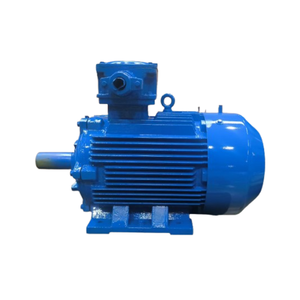
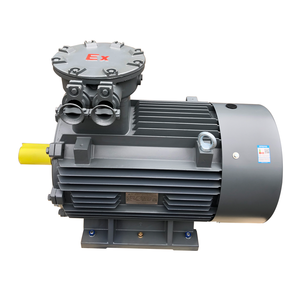
Unlike standard totally enclosed fan-cooled (TEFC) industrial motors, Class I Division 1 motors are engineered under strict explosion-proof design paradigms governed by UL 674 and CSA C22.2 No. 145 standards. The fundamental structural principle of a C1D1 explosion-proof motor is not to prevent gas from entering the enclosure, but to safely contain an internal explosion if gas penetrates the motor housing and ignites due to internal arcing, spark, or thermal surface overload.
Key Engineering Insight: Flame Path Dynamics
Class I Division 1 motor casings are built with heavy-wall ductile iron or high-tensile cast iron engineered to withstand internal hydrostatic explosion pressures exceeding 1.5 times the maximum reference pressure. Precision-machined flame paths (flanged, rabbet, or threaded joints) cool and quench escaping hot gases below the auto-ignition temperature of surrounding ambient Gas Groups (Group A Acetylene, Group B Hydrogen, Group C Ethylene, Group D Propane).
Technical Classification Comparison: NEC C1D1 vs. IECEx/ATEX Zone 1
For multinational procurement officers and plant engineers, cross-referencing global standards is paramount. While North American projects specify Class I Division 1, international projects governed by IEC 60079 and ATEX Directives specify Zone 1 Ex db (Flameproof) or Ex eb (Increased Safety). The table below illustrates the technical equivalence matrix:
| Standard System |
Hazard Frequency |
Protection Method |
Typical Gas Groups |
Temp Classes (T-Class) |
| NEC / CEC (Class I, Div 1) |
Continuous / Normal Operations |
Explosion-Proof Enclosure (UL 674) |
Group A (C₂H₂), B (H₂), C (Ethylene), D (Methane) |
T1 (450°C) down to T6 (85°C) |
| IECEx / ATEX (Zone 1) |
Likely to occur in normal operation |
Flameproof Enclosure 'Ex db' (IEC 60079-1) |
Group IIC (Acetylene/H₂), IIB (Ethylene), IIA (Propane) |
T1 (450°C) down to T6 (85°C) |
| NEC / CEC (Class I, Div 2) |
Not likely during normal operations |
Non-Incendive / Hermetically Sealed |
Group A, B, C, D |
T1 to T6 |
2. Benchmark Matrix: Top 10 Class I Division 1 Motors Factories & Exporters
Navigating the global supply chain for certified explosion-proof heavy machinery demands an evaluation of manufacturing precision, international certification coverage, efficiency capabilities, and custom OEM flexibility. Below is an authoritative technical benchmark of the world's leading factories and exporters specializing in Class I Division 1 and Zone 1 hazardous location electric motors.
1. OME Motors (Italy)
Headquarters: Gussago (BS), Italy
Core Strengths: Over 50 years of Italian electromechanical engineering heritage. Globally renowned for custom OMEX Series low/high voltage explosion-proof motors (Ex d/Ex db/C1D1 equivalent), IP65/IP66 protection, and IE4/IE5 permanent magnet energy optimization. Multi-certified under ATEX, IECEx, UL, and GOST.
2. ABB Motors & Generators
Headquarters: Zurich, Switzerland
Core Strengths: Comprehensive global footprint with broad NEMA explosion-proof and IECEx Ex d portfolios. Excellent integration with variable speed drive (VSD) systems and IIoT digital condition monitoring.
3. Siemens AG
Headquarters: Munich, Germany
Core Strengths: SIMOTICS XP series covering flameproof enclosures for hazardous zones. Exceptional dynamic response, robust cast iron frames, and extensive modular options for oil, gas, and chemical plants.
4. WEG Electric Corp.
Headquarters: Jaraguá do Sul, Brazil
Core Strengths: W22X explosion-proof line certified for C1D1 and Zone 1. High structural rigidity, optimized thermal dissipation fins, and dominant market presence in South and North America.
5. Nidec Industrial Solutions
Headquarters: St. Louis, MO, USA / Kyoto, Japan
Core Strengths: Incorporates US Motors brand legacy for NEMA C1D1 cast-iron heavy-duty motors. Specializes in severe-duty petroleum and chemical drive applications.
6. Baldor-Reliance (ABB Group)
Headquarters: Fort Smith, AR, USA
Core Strengths: Premier manufacturer of North American NEMA explosion-proof motors certified for Class I Division 1 Groups C & D and Group B hydrogen environments.
7. Toshiba International Corp.
Headquarters: Houston, TX, USA / Japan
Core Strengths: EQP Global Explosion Proof series meeting NEMA Premium efficiency. Known for heavy-gauge cast iron construction and oversized bearings for offshore platform reliability.
8. Wolong Electric Group
Headquarters: Shangyu, China
Core Strengths: Expansive industrial footprint incorporating ATB and Schorch brands. Large-scale manufacturing capacity for high-voltage explosion-proof motors up to 15kV.
9. Regal Rexnord (Marathon Motors)
Headquarters: Beloit, WI, USA
Core Strengths: Blue Chip Series C1D1 motors with XRI Premium efficiency ratings. Widely specified in grain elevators, refineries, and chemical processing facilities.
10. Shanghai Electric Heavy Machinery
Headquarters: Shanghai, China
Core Strengths: Major Asian exporter of large-scale flameproof induction motors for mining, coal-to-chemical projects, and heavy industrial export projects worldwide.
3. Product Development & Engineering Trends (2025–2030)
Driven by global decarbonization mandates, ESG regulations, and Industry 4.0 automation, the engineering framework for Class I Division 1 electric motors is undergoing major technological shifts. Sourcing directors must anticipate these technology trends when planning long-term capital investments:
A. Transition to IE4 Super Premium & IE5 Permanent Magnet Synchronous Motors (PMSM)
Historically, explosion-proof motors lagged behind standard industrial motors in energy efficiency due to thick casting walls and tight internal flame path clearances that restricted heat dissipation. Today, advanced thermal modeling and high-grade electromagnetic steel allow leading factories to manufacture IE4 Super Premium and IE5 ultra-high-efficiency permanent magnet motors in C1D1/Ex db flameproof housings. Utilizing rare-earth neodymium magnets (NdFeB), IE5 PMSM explosion-proof motors reduce electrical losses by up to 40% compared to standard IE3 induction motors, drastically reducing total cost of ownership (TCO) in continuously operating petrochemical pumps and gas compressors.
B. Smart C1D1 IIoT & Wireless Predictive Maintenance Integration
Unplanned downtime in a refinery or offshore rig costs tens of thousands of dollars per hour. Future-ready Class I Division 1 motors are now manufactured with factory-integrated, intrinsically safe (IS) WirelessHART or Bluetooth Low Energy (BLE) condition monitoring sensors. These C1D1-certified sensors record tri-axial vibration, bearing temperature (PT100/RTC), winding insulation thermal resistance, and magnetic flux in real-time, streaming telemetry to cloud AI platforms to predict bearing failure or rotor imbalance weeks before catastrophic breakdown.
C. Variable Frequency Drive (VFD) Inverter-Duty Optimization
With the rapid adoption of speed-controlled pumping and ventilation systems, explosion-proof motors must handle high-frequency voltage spikes (dV/dt) and common-mode shaft currents induced by PWM inverters. Leading exporters now supply C1D1 Inverter-Duty Motors equipped with Class H pulse-resistant magnet wire, reinforced phase insulation, insulated non-drive-end (NDE) bearings, and grounding rings to prevent electrical bearing fluting and premature winding breakdown.
4. Strategic Enterprise Advantages of Italian Engineering (OME Motors Focus)
Reflecting the core strengths of OME Motors' 50-year manufacturing heritage, selecting an elite European custom engineering partner offers decisive operational advantages over off-the-shelf commodity suppliers:
- Tailored Mechanical Design: Custom shaft dimensions, specialized mounting arrangements (B3, B5, B35, V1), non-standard flange tolerances, and heavy stainless steel terminal boxes designed for rapid field wiring.
- Extreme Ambient Temperature Resilience: Standard explosion-proof motors operate from -20°C to +40°C. OME Motors engineers customized C1D1 units rated for extreme arctic environments (-60°C) or scorching desert ambient temperatures (+60°C) with T4/T5 thermal compliance.
- Severe Duty Surface Protection: Multi-layer epoxy or polyurethane C5-M marine-grade paint systems engineered to withstand saltwater spray, acid mist, and aggressive chemical processing fumes.
- Hydrostatic Pressure Testing Rigor: Every flameproof casing batch undergoes 100% routine hydrostatic pressure testing (up to 1.5–2.0 MPa) to guarantee absolute structural integrity before winding assembly.
5. Master B2B Procurement FAQ: Class I Division 1 Motors
What is the exact technical difference between Class I Div 1 and Class I Div 2 motors?
Class I Division 1 assumes flammable gas is present during normal operation. Therefore, the motor MUST feature a heavy explosion-proof enclosure (UL 674) capable of containing internal explosions without rupturing or igniting external gas. Class I Division 2 assumes flammable gas is present only during abnormal/accidental conditions (e.g., pipe rupture); thus, Div 2 motors require non-incendive design (preventing sparks, hot surfaces, or arcs) but do not require full heavy explosion-proof containment castings.
How do Gas Groups (A, B, C, D) impact motor design and cost?
Gas Groups categorize gases by their Maximum Experimental Safe Gap (MESG) and Minimum Igniting Current (MIC) ratio. Group D (Propane/Methane) requires standard explosion-proof gaps. Group B (Hydrogen) and Group A (Acetylene) have extremely small MESG flame-extinction gaps and higher explosion pressures. Motors certified for Group B/A require significantly tighter flame path clearances, thicker casing walls, and specialized potted terminal bushings, increasing engineering complexity and raw material costs.
Can a Class I Division 1 motor be safely driven by a VFD?
Yes, provided the motor is specifically UL 674 Listed for Inverter Duty in C1D1 locations. When operated on a VFD, reduced speed cooling fan output can cause motor over-temperature. Therefore, the motor must either be certified with embedded PTC thermistors hardwired to an intrinsically safe drive trip circuit or certified for a specific speed-torque range under inverter supply.
What thermal Temperature Class (T-Class) should be specified?
The T-Class (T1: 450°C to T6: 85°C) dictates the maximum outer surface temperature the motor can reach under worst-case overload or locked-rotor conditions. The motor's T-Class must NEVER exceed the auto-ignition temperature of the specific gas present in the plant. For instance, Gasoline requires a T3 (200°C) rating, while Ethyl Ether requires a T4 (135°C) rating.
What factory inspection documentation should procurement managers request?
Buyers should mandate a complete Quality Inspection Package prior to dispatch: 1) Certified UL/CSA or ATEX/IECEx Type Examination Certificates; 2) Routine Hydrostatic Test Reports of housing; 3) Routine Electrical Test Certificates (Winding Resistance, Megger insulation test, High-pot test, No-load current/voltage); 4) Dynamic Vibration Balancing Certificate (ISO 21940); and 5) Flamepath Clearance Dimensional Inspection Sheets.
Need Custom Class I Division 1 Motor Specifications?
Consult with OME Motors' senior electromechanical application engineers for technical drawings, CAD files, price quotes, and custom explosion-proof catalog selections tailored to your exact industry project.
Get Catalog