
Blower Drive
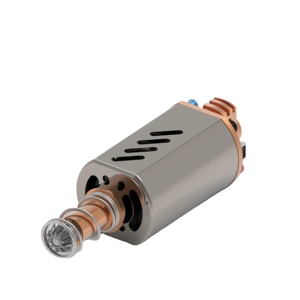
SHS 480 High-Speed Auxiliary Cooling Motor Assembly
Application:IC416 Blower Unit
Magnetic Core:Neodymium Ultra
Cooling Type:Independent Aux
Explore specialized IC416 forced-ventilated motors engineered for low-speed constant torque, high switching frequency VFD drives, and extreme industrial environments.
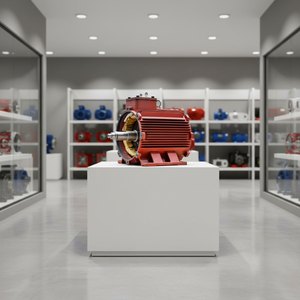
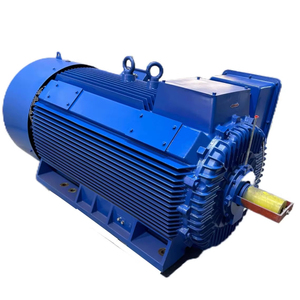
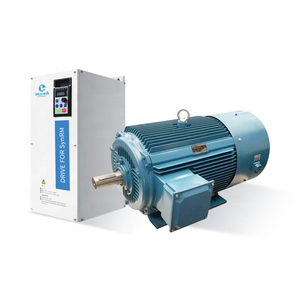
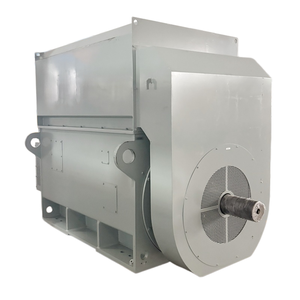
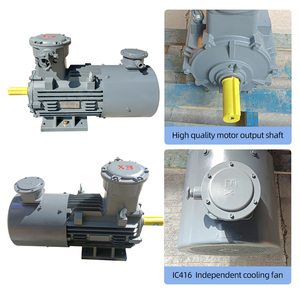
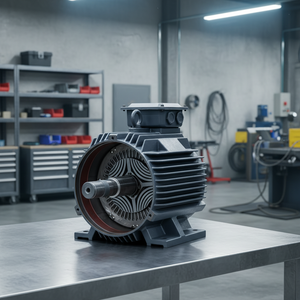
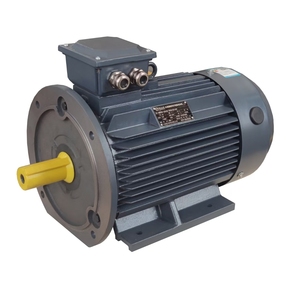
Building upon over five decades of electromechanical manufacturing mastery rooted in Italian industrial traditions (inheriting the design rigor of Orsatti electromechanical traditions), our enterprise has solidified its standing as a premier global OEM and ODM partner for custom high-voltage and specialized electric motors. Modern heavy industries—ranging from offshore petrochemical platforms to ultra-deep mining facilities and steel rolling mills—demand rotating machinery that operates without interruption under hostile ambient conditions.
Our global custom manufacturing ecosystem bridges traditional European craftsmanship with cutting-edge automated production technology. By maintaining complete control over electrical stator winding, Vacuum Pressure Impregnation (VPI), rotor precision dynamic balancing, and certified routine and type testing, we deliver tailored IC416 motors certified according to IEC, NEMA, IEEE 841, ATEX, IECEx, and GOST standards.
OEM/ODM Technical Advantage: Unlike mass-market catalog suppliers, our engineering factories specialize in custom frame dimensions, bespoke shaft extensions, multi-voltage winding setups (3kV, 6kV, 10kV, 11kV), and specialized IC416 forced cooling top-boxes designed to withstand extreme ambient temperatures from -40°C to +60°C.
Mica tape wrap combined with solventless epoxy resin cured under deep vacuum and pressure, eliminating microscopic air voids to withstand voltage spikes up to $dV/dt = 10 \, \text{kV}/\mu\text{s}$.
Rotors dynamically balanced to ISO 1940 Grade G1.0 standards, drastically decreasing bearing mechanical vibration amplitudes to below $0.8 \, \text{mm/s}$ to prolong operational service life.
Full global compliance for Zone 1, Zone 2 (Gas Ex d / Ex eb) and Zone 21/22 (Dust Ex tb) applications, incorporating explosion-proof auxiliary blower drive motors.
In accordance with standard IEC 60034-6 (Methods of Cooling), electric motor cooling codes define how thermal energy generated by copper losses ($I^2R$), core iron losses ($P_{fe}$), and mechanical friction is dissipated into the surrounding atmosphere. The two most prominent totally enclosed surface-cooled configurations in heavy industrial manufacturing are IC411 and IC416.
In an IC411 motor (Frame Surface Cooled, Self-Ventilated), cooling airflow is generated by a non-directional fan attached directly to the primary rotor shaft. The volumetric air discharge rate ($Q_{air}$) produced by a shaft-driven fan obeys the centrifugal fan affinity laws:
When an IC411 high-voltage motor is driven by a Variable Frequency Drive (VFD) to operate at reduced speeds—for instance, turning down to 20% of nominal frequency (10 Hz in a 50 Hz grid)—the volumetric cooling airflow drops linearly by 80%, while the static pressure drops by an astonishing 96%. However, under constant torque loads (such as positive displacement pumps, extruders, ball mills, and heavy conveyors), the stator current $I_{stator}$ remains at 100% of nominal rating. Consequently, stator copper losses ($P_{cu} = 3 I^2 R$) remain at full load levels while forced convection cooling collapses. This causes rapid thermal runaway, breakdown of stator insulation, and premature winding catastrophic failure.
An IC416 motor solves this fundamental thermodynamic constraint by decoupling cooling airflow generation from the primary rotor shaft velocity. An IC416 unit incorporates an independently powered auxiliary blower motor (driven by a separate 3-phase power supply at constant line frequency).
| Cooling Parameter | IC411 (Self-Ventilated) | IC416 (Forced Air Cooling) | Engineering Impact on VFD Operations |
|---|---|---|---|
| Airflow Source | Primary Shaft-Mounted Fan | Independent Blower Motor Assembly | Airflow in IC416 is completely independent of main shaft RPM. |
| Cooling Efficiency at Low Speed (1:10 Speed Range) | Severe Loss (Degrades by 90%) | 100% Full Rated Cooling Capacity | IC416 eliminates thermal derating at low operating frequencies. |
| Constant Torque Range Capacity | Limited (Requires substantial derating) | Full 1:20 (0.05 to 1.0 nominal speed) | Enables full torque output at 5 Hz without thermal failure. |
| Acoustic Noise Levels at High Speed | High (Shaft fan noise scales $n^5$) | Controlled & Constant | Drastically lowers ambient dB levels in high-speed applications. |
| Auxiliary Power Requirement | None (Parasitic load on main shaft) | Dedicated 3-phase power for fan | Minor auxiliary power consumption yields exponential thermal safety. |
As illustrated in the comparative breakdown above, specifying IC416 high-voltage motors for VFD applications preserves thermal equilibrium across the full speed envelope. This prevents thermal degradation of Class F/H insulation systems and ensures predictable bearing grease life.
As industrial procurement leaders, engineering consultants, and plant directors align operations with global Net-Zero carbon targets and Industry 4.0 standards, the strategic procurement of high-voltage IC416 motors is undergoing a paradigm shift. Buyers are moving beyond initial Capital Expenditure (CapEx) metrics toward comprehensive Total Cost of Ownership (TCO) and intelligent asset integration.
While standard high-voltage asynchronous induction motors have historically dominated industrial drives, market demand is rapidly shifting toward IE5 Ultra-Premium PM-Assisted Synchronous Reluctance Motors. By embedding permanent magnets within a synchronous reluctance rotor geometry, rotor copper losses are virtually eliminated ($I^2R_{rotor} = 0$). When combined with IC416 forced cooling, PM-SynRM motors deliver unprecedented torque density and maintain peak efficiency (exceeding 97.5%) across wide speed and load spectrums (from 25% partial load to 120% continuous overload).
Modern OEM/ODM procurement contracts for high-voltage IC416 motors now routinely mandate integrated industrial IoT diagnostic suites. Our factory-installed instrumentation options include:
Modern IGBT (Insulated Gate Bipolar Transistor) variable frequency drives utilize steep voltage rise times ($dV/dt$), causing transient voltage reflection spikes at motor terminals that can reach twice the DC bus voltage. Future-proof procurement requires stators wound with corona-resistant magnet wire, triple-layer slot phase insulation, and VPI processing specifically validated under IEC 60034-18-41/42 guidelines for converter-fed drives.
The rapid evolution of high-voltage motor performance relies heavily on advancements in material science and automated manufacturing techniques. Our advanced production facilities continue to drive technological breakthroughs in several critical areas:
By utilizing ultra-thin ($0.27 \, \text{mm}$ to $0.35 \, \text{mm}$), cold-rolled non-oriented silicon steel sheets with organic insulation coatings, hysteresis loss and eddy current losses are minimized. This design innovation is crucial for high-frequency VFD operations where harmonic core losses would otherwise overheat the stator stack.
Common-mode voltage induced by VFD pulse-width modulation creates high-frequency circulating shaft currents. Left unmitigated, these currents cause electrical fluting in bearing races. Our factory builds custom IC416 motors with insulated NDE bearing housings or hybrid silicon nitride ($\text{Si}_3\text{N}_4$) ceramic ball/roller bearings, completely breaking the electrical path.
Our OEM/ODM manufacturing framework allows full customization of frame geometries, terminal box configurations, and cooling duct placement to match existing footprint constraints during brownfield plant retrofits.
| Motor Component | Standard Technical Offering | Bespoke OEM/ODM Customization Options |
|---|---|---|
| Frame Material | Rigid Cast Iron FC250 / FC300 | Fabricated Welded Structural Steel (Q345B) / Stainless Steel 316L |
| Frame Sizes | IEC 355 to IEC 630 Frame | Custom center heights, special feet dimensions, adapter bases |
| Winding Material | Grade H Electrolytic Copper Wire | Form-wound coils, dual-voltage tapping (e.g., 3.3kV / 6.6kV reconnectable) |
| Cooling Hood Design | Top-Mounted Steel Fan Housing | Side-mounted blower, duct-connectable inlet filters, Ex-d certified fan box |
| Bearing Systems | SKF / FAG Rolling Element Bearings | Sleeve bearings with forced lubrication oil units (for heavy industrial loads) |
Technical guidance compiled by our senior electromechanical engineering team to assist B2B procurement managers and EPC project engineers.
Need custom mechanical footprints, specialized high-voltage VPI winding designs, or IE5 ultra-premium efficiency IC416 motors tailored to your plant specifications? Our technical application engineering team is ready to consult on your project.