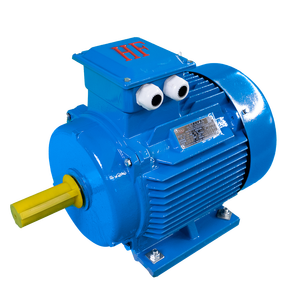
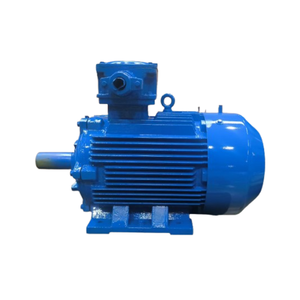
Custom OEM High Efficiency IE3 Motors Exporter & Exporters

Engineering Next-Generation Industrial Drive Systems, Energy-Efficient Asynchronous Motors, and Custom OEM Solutions for Global Heavy Industry

Product Catalog

High Efficiency IE3, IE4 & IE5 Industrial Motor Portfolio

Engineered to IEC 60034-30-1 and NEMA MG-1 standards. Explore our high-efficiency three-phase asynchronous, explosion-proof, and permanent magnet electric motors designed for heavy-duty OEM integrations.
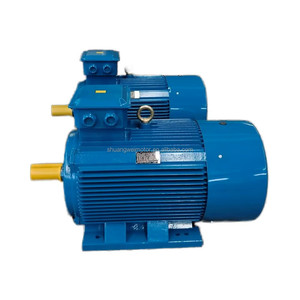
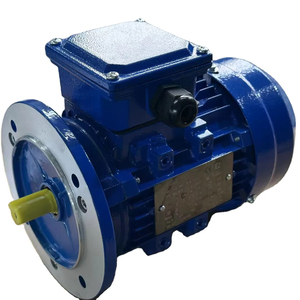
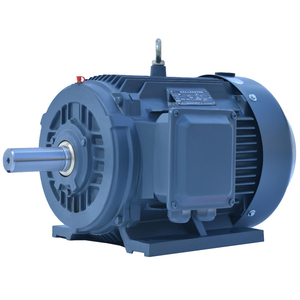
Electric Motor YE3-112M-4 IE3 Electric Motor 4kw

Electric Motor YE3-112M-4 IE3 Premium Efficiency 4kW

Rated Power: 4.0 kW (5.5 HP)
Efficiency Class: IE3 Premium
Poles / RPM: 4 Pole / 1450 RPM
Winding: 100% Copper
Get a Quote
15KW 20HP IE4 Super Premium Efficiency 3-Phase Motor

15KW 20HP IE4 Super Premium Efficiency 3-Phase Asynchronous Motor

Power Range: 15 kW (20 HP)
Protection Rating: IP55 / Class F
Voltage / Frequency: 380V 50/60Hz
Speed: 2/4 Pole 1450/2800 RPM
Get a Quote
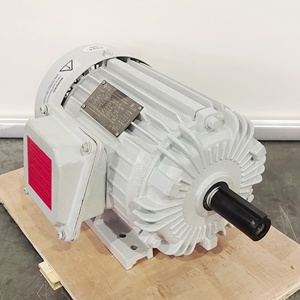
IE4 Series Super Premium Efficiency Motor B3 B35 B5

Factory Direct Sale IE4 Super Premium Efficiency Motor 2.2kW

Mounting Options: B3 / B5 / B35
Rated Power: 2.2 kW (3.0 HP)
Duty Cycle: S1 Continuous
Housing: Cast Iron / Aluminum
Get a Quote
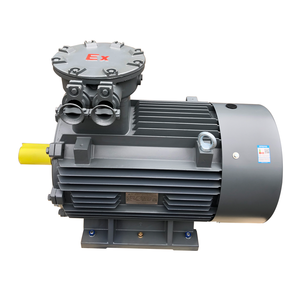
IE3 IE4 ExdIIBT4 Explosion proof AC Electric Motor

IE3/IE4 ExdIIBT4 Explosion-Proof Flame Proof AC Motor

Ex Certification: Exd IIB T4 Gb / ATEX
Efficiency Standard: IE3 / IE4 High Eff.
Application: Chemical / Oil & Gas
Protection: IP65 / Flameproof
Get a Quote
High Efficiency IE4 Electric Motor 7.5kW 10hp 6 Poles

High Efficiency IE4 Electric Motor 7.5kW 10HP (6 Poles)

Rated Power: 7.5 kW (10 HP)
Pole Count: 6 Poles (960 RPM)
Conductor Material: 100% Electrolytic Cu
Thermal Class: Class H Insulation
Get a Quote
NEMA Premium Efficiency IE4 1 hp 230 460V 143T Frame

NEMA Premium Efficiency IE4 1HP 143T Frame Motor

Frame Size: NEMA 143T
Voltage Rating: 230/460V Dual Volt
Speed: 1800 RPM (4 Pole)
Protection: IP54 Heavy Duty
Get a Quote
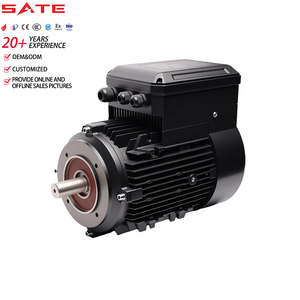
IE5 High Efficiency 4kW Integrated Motor Energy Saving

IE5 Ultra Efficiency 4kW Integrated Smart Motor

Efficiency Class: IE5 Ultra Premium
Rated Power: 4.0 kW (3000 RPM)
Energy Saving: Up to 15% vs IE3
Integration: Smart VFD Compact
Get a Quote
IE4 Permanent Magnet Synchronous Motor 5kW IP55

IE4 Three-Phase 5kW Permanent Magnet Synchronous Motor

Technology: PMSM Synchronous
Power Rating: 5.0 kW 50Hz/60Hz
Protection Class: IP55 CE Certified
Torque Density: High Partial-Load Eff.
Get a Quote
50+
Years Engineering Heritage
96.5%
Peak IE4/IE5 Efficiency
100+
Global Export Markets
100%
Electrolytic Copper Coils
Technical Whitepaper

Custom OEM High Efficiency IE3 Motors Exporter & Exporters: Engineering Principles, Energy Efficiency Architecture, and Global Procurement Technical Whitepaper

An authoritative deep-dive into international efficiency regulations, electromotive loss reduction, custom OEM mechanical adaptations, and lifecycle total cost of ownership (TCO) optimization for modern industrial plants.

Executive Summary & Industry Context

Electric motor-driven systems (EMDS) consume approximately 70% of all electrical energy utilized across industrial manufacturing worldwide. As global energy frameworks tighten under the European Union’s EcoDesign Regulation (EU 2019/1781), the US Department of Energy (DOE) federal energy standards, and international IEC 60034-30-1 mandates, industrial plant operators, machine builders (OEMs), and procurement directors must transition from legacy standard-efficiency drives to Custom OEM High Efficiency IE3, IE4 Super Premium, and IE5 Ultra Premium electric motors. Sourcing from a certified manufacturer and specialized exporter ensures non-negotiable compliance, thermal longevity, and minimized operational expenditure (OpEx).

1. Technical Fundamentals of IE3 Premium & IE4 Super Premium Efficiency Motors

The International Electrotechnical Commission (IEC) standard 60034-30-1 defines efficiency classes for low-voltage AC electric motors operating on line power. Achieving IE3 (Premium Efficiency) and IE4 (Super Premium Efficiency) performance requires complete electromagnetic and structural redesign rather than simple dimensional scaling. A specialized Custom OEM High Efficiency IE3 Motors Exporter utilizes advanced engineering methodologies to eliminate internal loss mechanisms:

Stator Copper Loss ($P_{s}$) Mitigation

Stator $I^2R$ resistive heating accounts for up to 40% of total motor losses. By increasing the slot fill factor with 100% high-purity electrolytic copper windings, shortening end-turn geometry, and increasing wire cross-sectional areas, stator resistance is reduced by 25% to 35% compared to IE1 designs.

Magnetic Core Loss ($P_{fe}$) Minimization

Hysteresis and eddy current losses in the stator core are minimized by utilizing ultra-thin (0.35mm to 0.2mm), cold-rolled non-grain-oriented (CRNGO) silicon steel laminations coated with high-grade organic C-5 insulation, significantly improving permeability and reducing magnetic saturation.

Rotor Copper/Aluminum Loss ($P_{r}$) Reduction

Rotor $I^2R$ losses are decreased by redesigning rotor slots, expanding the cross-sectional area of end rings, and employing precision pressure die-cast high-conductivity aluminum alloys or solid copper rotor bar insertion for extreme duty applications.

Technical Comparison: Loss Distribution Across Efficiency Standards

Understanding the exact thermodynamic distribution of internal losses enables system integrators to evaluate the thermal overhead and cooling demands of machinery. Below is an engineering benchmark mapping motor performance metrics across IEC efficiency classes for a standard 15 kW (20 HP) 4-pole motor:

Efficiency Class (IEC 60034-30-1) Nominal Efficiency (%) Total Internal Losses (W) Stator $I^2R$ Loss (%) Core Iron Loss (%) Stray Load Loss (%) Typical Payback Period (Hours)
IE1 Standard Efficiency 88.7% 1,911 W 42% 23% 18% Baseline Reference
IE2 High Efficiency 90.6% 1,556 W 38% 21% 15% ~ 4,500 Operating Hours
IE3 Premium Efficiency 92.1% 1,286 W 34% 19% 12% ~ 2,800 Operating Hours
IE4 Super Premium 93.9% 974 W 29% 16% 9% ~ 1,800 Operating Hours
IE5 Ultra Premium (PMSM) 95.2% 756 W 18% 12% 5% ~ 1,200 Operating Hours

2. Custom OEM Engineering Adaptation & Manufacturing Capabilities

Standard off-the-shelf catalog motors rarely meet the stringent space, mounting, and environmental challenges of high-performance OEM machinery. A reputable Custom OEM High Efficiency IE3 Motors Exporter like OME Motors provides complete tailor-made electromechanical engineering solutions, allowing seamless integration into proprietary gearboxes, industrial pumps, air compressors, and heavy mining crushers.

Mechanical Customizations

  • Non-Standard Shaft Geometries: Custom shaft lengths, dual-ended extensions, ground keyways, splined shafts, hollow shafts, and special stainless steel alloys (AISI 304, AISI 316, AISI 420) to withstand severe torsional stress and chemical exposure.
  • Versatile Flange & Mounting Interfaces: Precision machined B3 foot-mounted, B5 large flange, B14 small flange, B35 combination foot/flange, or customized face-mounts compliant with metric IEC and imperial NEMA (e.g., 143T, 254T, 405T) standards.
  • Enclosure & Ingress Protection: Custom IP55, IP56, IP65, IP66, and washdown IP69K sealed housings utilizing double-lip viton oil seals, labyrinth shaft seals, and epoxy sealed terminal boxes for extreme moisture and dust exposure.
  • Vibration & Acoustic Dampening: Precision dynamic rotor balancing to Grade A or Grade R (ISO 10816/ISO 21940) ensuring ultra-quiet operation under 65 dB(A) for residential or indoor industrial installation.

Electrical & Thermal Customizations

  • Custom Voltage & Frequency Windings: Tailored insulation systems supporting 220V/380V, 400V/690V, 460V, 575V, 1100V at 50Hz, 60Hz, or dual-frequency operation with ±10% voltage tolerance margins.
  • VFD Inverter-Duty Reinforced Insulation: Corona-resistant magnet wire, reinforced inter-phase insulation barriers, and 100% solid content Vacuum Pressure Impregnation (VPI) with Class H ($180^\circ\text{C}$) resin. To prevent high-frequency PWM switching voltage spikes ($dV/dt$) from eroding bearing raceways, custom motors incorporate insulated non-drive end (NDE) bearings and brass grounding brushes.
  • Embedded Thermal Protection Devices: Direct integration of Positive Temperature Coefficient (PTC) thermistors, PT100 platinum resistance temperature detectors (RTDs) in stator windings and bearing housings, and anti-condensation heating elements for humid marine atmospheres.

3. Future Procurement Trends in the Global Electric Motor Market (2025–2030)

As global manufacturing undergoes digital transformation and decarbonization, B2B procurement strategies for electric motors are shifting rapidly. Buying decisions are no longer dictated purely by upfront capital expenditure (CapEx); instead, enterprise buyers focus on strategic lifecycle optimization and risk mitigation.

1. Total Cost of Ownership (TCO) Driven Procurement

Over a 15-year operational lifespan, the initial purchase cost of an industrial motor accounts for less than 3% of its total expense, while electricity consumption represents over 95%. Enterprise buyers are mandating IE3 and IE4 motors to secure immediate OpEx reductions, achieving full ROI payback within 12 to 24 months.

2. Transition to Permanent Magnet (PMSM) & SynRM Technology

While induction motors dominate line-start applications, variable-speed applications are rapidly adopting Permanent Magnet Synchronous Motors (PMSM) and Synchronous Reluctance Motors (SynRM) to reach IE5 efficiency. These motors maintain ultra-high efficiency even under 25%-50% partial load conditions.

3. Integration of Smart IIoT Condition Monitoring

Modern procurement contracts mandate motors equipped with smart sensor mounts or pre-installed wireless IIoT telemetry nodes. Real-time tracking of tri-axial vibration, surface thermal gradients, and bearing health enables predictive maintenance, preventing catastrophic unscheduled downtime.

4. Technological & Material Innovation Trends in Electric Motor Manufacturing

The electric motor industry is undergoing a material science revolution driven by decarbonization and strict performance targets. Exporters and manufacturers are adopting cutting-edge production methodologies:

  • Nanocomposite Slot Insulation: Next-generation polyamide-imide and inorganic film coatings allow motors to operate continuously at elevated temperatures ($180^\circ\text{C}$ to $200^\circ\text{C}$) without insulation degradation, extending thermal insulation life by up to 300%.
  • Rare-Earth Heavy-Grain NdFeB Magnet Stabilization: For IE4 and IE5 Permanent Magnet motors, magnet chemistry incorporates Dysprosium (Dy) and Terbium (Tb) grain boundary diffusion techniques, allowing operation up to $180^\circ\text{C}$ without irreversible demagnetization.
  • Aerodynamic Noise & Thermal Flow Optimization: Advanced Computational Fluid Dynamics (CFD) software is used to design low-drag, unidirectional cooling fans and ribbed cast-iron frame housing geometries. This maximizes surface heat dissipation while keeping acoustic noise below strict OSHA and European workplace standards.

5. Enterprise Advantages: Partnering with OME Motors & Orsatti Heritage

When sourcing industrial drive units, technical leadership, manufacturing heritage, and international certification compliance are critical. OME Motors (O.M.E. Motori Elettrici s.r.l.) inherits over 50 years of Italian engineering excellence, dating back to the pioneering work of Elettrotecnica H. Orsatti in 1970.

Why Global OEMs Choose OME Motors as Their Primary Exporter

  • European Quality Standards: Italian engineering design combined with state-of-the-art automated production facilities in Gussago and Nuvolera (Brescia, Italy), guaranteeing precision tolerances.
  • Comprehensive Global Certification Matrix: Certified compliance across ISO 9001, ATEX Zone 1 / Zone 2 / Zone 21 / Zone 22, IECEx explosion proof (Ex d, Ex eb, Ex nA), CE, UL, CSA, and GOST standards.
  • Rigorous Testing Facilities: Every custom motor undergoes load bay testing, surge comparison testing, partial discharge analysis, thermal rise testing, and dynamic vibration analysis before dispatch.
  • Global Logistics & Field Support: Dedicated international service networks supporting enterprise clients across 60+ countries in oil & gas, mining, steel production, water desalination, and power generation.
Procurement Guide

Frequently Asked Questions (FAQ) - Industrial Motor Procurement

Technical answers to common questions encountered by plant engineers, procurement managers, and OEM buyers when specifying high-efficiency IE3/IE4 motors.

What is the ROI and financial payback period when upgrading from IE2 to IE3 or IE4 motors?

For continuous duty (S1) applications running 6,000+ hours per year, upgrading from IE2 to IE3 typically delivers energy savings of 2% to 4%, achieving full financial payback on the price premium within 12 to 18 months. Upgrading to IE4 Super Premium or IE5 Permanent Magnet motors can save up to 8% to 12% in energy costs, yielding tens of thousands of dollars in electricity savings over the motor’s 15-year lifecycle.

How do IEC metric frame sizes compare to NEMA imperial frame sizes during OEM motor replacement?

IEC motors use shaft heights measured in millimeters (e.g., IEC 112M = 112mm shaft center height), while NEMA motors express frame sizes in sixteenths of an inch (e.g., NEMA 143T). Key dimensional differences include shaft diameter, shaft length, bolt hole patterns, and terminal box locations. OME Motors provides custom OEM transition plates and hybrid NEMA/IEC mechanical designs to allow direct drop-in replacement without modifying host equipment baseplates.

Why is 100% electrolytic copper winding essential for high-efficiency IE3/IE4 motors?

100% electrolytic copper features superior electrical conductivity ($58.0 \times 10^6 \text{ S/m}$) compared to copper-clad aluminum or secondary recycled copper alloys. High conductivity minimizes internal stator $I^2R$ copper losses, reduces thermal operating temperatures (keeping motors running cooler), and prevents thermal expansion stress on insulation systems, extending operational lifetime.

What measures protect custom OEM motors against VFD-induced high-frequency shaft currents?

Variable Frequency Drives (VFDs) using high-frequency PWM switching generate common-mode voltage spikes ($dV/dt$) that discharge through motor bearings, causing electrical discharge machining (EDM) fluting, micro-pitting, and premature bearing failure. To prevent this, OME Motors installs insulated ceramic/hybrid bearings on the Non-Drive End (NDE), conductive micro-fiber shaft grounding rings on the Drive End (DE), and VPI corona-resistant Class H magnet wire.

What explosion-proof certifications are required for motors operating in hazardous chemical or refinery environments?

For Zone 1 and Zone 2 explosive dust or gas atmospheres, motors must be certified under ATEX Directive 2014/34/EU and IECEx standards. Flameproof Ex d (or Ex db) enclosures are engineered to contain an internal explosion without igniting external explosive atmospheres. Increased Safety Ex eb and Non-Sparking Ex ec motors provide additional safety margins to prevent hot spots or arcs during continuous operation.

What is the difference between S1 continuous duty and intermittent duty cycles (S2 to S8)?

S1 continuous duty indicates the motor can operate indefinitely under rated load without exceeding its thermal class rating. S2 to S8 duty cycles cover short-time, intermittent, or variable-load operating profiles (e.g., cranes, hoists, stamping presses). Specifying the exact duty cycle allows custom OEM winding optimizations that optimize frame size and reduce energy consumption.

How does ambient operating temperature and high altitude above 1000m impact motor power ratings?

Standard motor ratings are based on an ambient temperature of $40^\circ\text{C}$ and altitudes up to 1000 meters above sea level. At higher altitudes, thinner air reduces air cooling density; at ambient temperatures above $40^\circ\text{C}$, heat dissipation is restricted. Motors operating in these conditions must be derated or engineered with Class H thermal insulation, force-ventilation cooling fans (IC416), or special synthetic grease formulations.

What IP Ingress Protection ratings should be selected for severe outdoor and washdown environments?

Standard indoor industrial motors are rated IP55 (dust protected, water jet protected). For outdoor marine environments, mining, or heavy washdown applications, IP56 (heavy sea water jets), IP66 (dust tight, powerful water jets), or IP69K (high-pressure high-temperature washdown) should be specified, featuring viton shaft seals, cast iron junction boxes, and stainless steel fasteners.

How do Permanent Magnet Synchronous Motors (PMSM IE4/IE5) compare to standard AC induction motors under partial loads?

AC induction motors experience a sharp decline in efficiency and power factor when operating below 50% load due to rotor magnetizing losses. In contrast, PMSM motors utilize permanent rare-earth NdFeB magnets to create rotor flux without magnetizing current, maintaining flat, ultra-high efficiency curves from 20% to 120% load, making them ideal for variable torque pump and fan systems.

What custom OEM documentation and quality certificates are provided with export shipments?

Every shipment from a certified exporter includes EN 10204 3.1 material test certificates, factory routine test reports (surging, vibration, dielectric breakdown), CE declaration of conformity, ATEX/IECEx explosion-proof certificates, 3D CAD step files for engineering integration, and comprehensive operational and maintenance manuals.

Need Custom OEM High Efficiency Motors Built to Your Technical Specifications?

Consult directly with our Italian engineering team and global export specialists. Receive tailored technical datasheets, 3D STEP models, and competitive direct factory quotes.