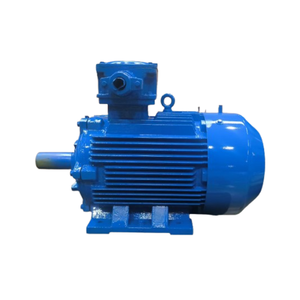
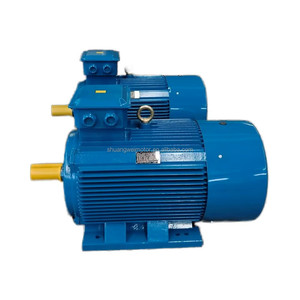
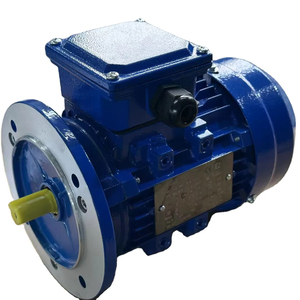
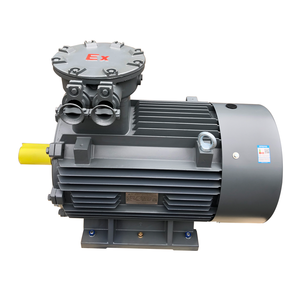
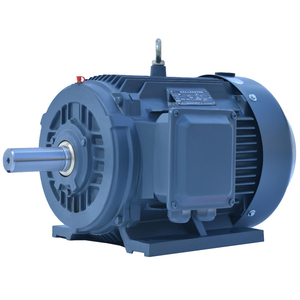
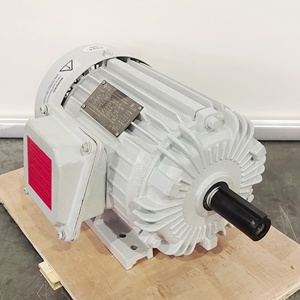
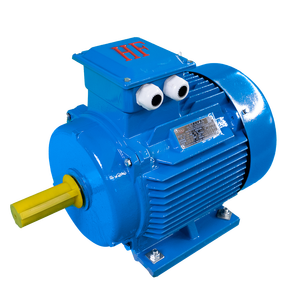
Certified OEM heavy-duty electric motors engineered for volatile environments, oil & gas, mining, and high-efficiency industrial automation.
In modern industrial process environments—ranging from hydrocarbon refining and off-shore petrochemical platforms to underground coal mining and chemical manufacturing—the requirement for safety, operational continuity, and energy conversion efficiency is absolute. Standard industrial induction motors, while ubiquitous, present distinct electrical and thermal vulnerabilities when subjected to explosive gas atmospheres (Zone 1, Zone 2) or combustible dust conditions (Zone 21, Zone 22).
As a veteran European-heritage electromechanical manufacturer with roots dating back over 50 years (integrating the design traditions of Elettrotecnica H. Orsatti and Orsatti Electric Motors), OME Motors manufactures industrial custom OEM explosion-proof synchronous motors engineered to mitigate catastrophic ignition risks while dramatically reducing Lifecycle Energy Costs (LCC).
Global B2B buyers and EPC engineering firms face mounting regulatory pressures under the EU Commission Regulation (EU) 2019/1781 and US Department of Energy (DOE) efficiency mandates. Procuring specialized Custom OEM Explosion-Proof Synchronous Motors from certified factories and direct exporters guarantees compliance with international standards including ATEX Directive 2014/34/EU, IECEx schemes, NEMA MG-1 Part 31, and GOST R certifications.
To withstand severe internal explosion pressures without rupturing or allowing internal flames to propagate into the surrounding combustible environment, an OEM explosion-proof synchronous motor relies on precision-machined mechanical flame paths (flameproof gaps). The internal arc or gas ignition is contained within the heavy cast-iron or fabricated steel frame, cooling hot gases below the Auto-Ignition Temperature (AIT) of surrounding hazardous gas groups (IIA, IIB, or IIC).
When customizing electric motors for global project specifications, engineering procurement specialists must differentiate between protection methodologies:
| Protection Type | Designation | Operating Principle | Gas Group Suitability | Typical Industrial Applications |
|---|---|---|---|---|
| Flameproof Enclosure | Ex d / Ex db | Contains internal explosions; cools escaping gases via precision flame gaps. | Group IIA, IIB, IIC (Hydrogen, Acetylene) | Refinery Compressors, Crude Oil Transfer Pumps, Offshore Rig Drives |
| Increased Safety | Ex e / Ex eb | Prevents sparks, arcs, and excessive temperatures during normal operation. | Group IIA, IIB (Zone 2 primary) | HVAC Blower Fans, Water Purification Agitators, Clean Gas Mixers |
| Pressurized Enclosure | Ex p / Ex px | Maintains protective overpressure with inert gas (Nitrogen/Air) to exclude ambient gases. | High Voltage / Large Frame Synchronous Motors | Large Extruders, Main Pipeline Gas Compressors (>1000 kW) |
| Dust Ignition Proof | Ex t / Ex tb | Tight ingress protection (IP65/IP66) preventing combustible dust accumulation. | Group IIIA, IIIB, IIIC (Conductive Dusts) | Grain Elevators, Coal Handling, Pharmaceutical Powder Processing |
Our manufacturing facilities utilize high-grade Meehanite cast iron (EN-GJL-200 to EN-GJS-400-15) or heavy welded steel plate housings subjected to 100% hydrostatic pressure testing (up to 1.5–2.0 times maximum explosion pressure) to eliminate micro-porosity and guarantee structural integrity under harsh vibration profiles.
The global market for hazardous-area rotating electrical machinery is undergoing a paradigm shift driven by stringent decarbonization policies, predictive maintenance digital transformation, and shifting raw material supply chains. Exporters and factory partners who master these technological vectors offer tremendous information gain and procurement value to plant operations managers.
Induction motors hit a thermodynamic efficiency ceiling due to rotor resistive losses. Direct-drive Permanent Magnet Synchronous Motors (PMSM) eliminate gearboxes, boost power density by 30-40%, and achieve IE5 efficiency ratings under Variable Frequency Drive (VFD) operation. Line-Start Permanent Magnet (LSPM) motors are rising for applications requiring direct-on-line (DOL) starting with synchronous running behavior.
Next-generation OEM Ex motors incorporate wireless, intrinsically safe (Ex i) vibration sensors, bearing RTDs (Pt100), and magnetic flux sensors embedded inside the stator. Real-time edge diagnostics feed condition-monitoring AI systems, predicting bearing fatigue or insulation degradation before thermal runaway occurs in hazardous zones.
As offshore oil & gas exploration moves into deeper waters and floating production storage (FPSO) units, procurement trends favor medium/high voltage (3.3kV, 6.6kV, 11kV) explosion-proof motors with IC81W (water-to-air cooling) or IC611 (air-to-air heat exchangers) designed with extreme marine C5-M anti-corrosion coating systems.
Procuring custom electric motors demands more than standard off-the-shelf catalog selections. Industrial plants frequently operate under non-standard voltage supply, unique mechanical mounting constraints, extreme ambient temperature variations (-50°C to +60°C), or specialized shaft load requirements. As a master exporter and OEM facility, OME Motors provides full-spectrum custom engineering:
Every custom OEM motor undergoes routine and type testing on our automated test benches. Tests include dynamic balancing to Grade G1.0/G2.5 (ISO 1940), full-load temperature rise testing, partial discharge analysis for high voltage windings, vibration spectral measurement, and hydrostatic flameproof enclosure pressure validation.
With established distribution hubs in Europe, the Middle East, Asia, and the Americas, our export division manages specialized seaworthy export packaging, customs compliance, consular documentation, and on-site engineering commissioning support worldwide.
Essential technical and commercial answers for project engineers, procurement officers, and plant operators seeking custom explosion-proof synchronous motors.
Synchronous explosion-proof motors (such as Permanent Magnet Synchronous Motors - PMSM) run at exact synchronous speed determined by supply frequency ($n_s = 120f / p$) without slip. They offer significantly higher power density, power factor close to unity (1.0), and up to 3-5% higher efficiency (IE4/IE5) compared to induction motors. Induction motors experience rotor slip, generating higher internal rotor heat ($I^2R$ thermal losses) which requires larger frame sizes in hazardous areas to maintain safe surface temperature classes (T1-T6).
The Temperature Class defines the maximum surface temperature that the explosion-proof motor frame can reach during worst-case operation. For instance, T3 limits maximum surface temperature to 200°C, T4 to 135°C, T5 to 100°C, and T6 to 85°C. To prevent igniting ambient explosive gas mixtures, the motor's Temperature Class must be below the Auto-Ignition Temperature (AIT) of the specific gas present in your plant (e.g., Hydrogen requires T1/T4 depending on concentration; Ethyl Ether requires T4).
Yes. However, when operating under VFD drive control, custom Ex motors must be certified as a package ("Motor + VFD drive combination") or equipped with embedded thermistors (PTC/Pt100) wired to an intrinsically safe trip circuit to prevent thermal overload at reduced speeds. Additionally, VFD-driven synchronous motors require Class H insulation, reinforced inverter-duty magnet wire, and insulated bearings (or grounding rings) to eliminate damaging shaft voltages and bearing fluting currents.
OEM customization includes non-standard voltage/frequency ratings (e.g., 500V 50Hz, 460V 60Hz, high voltage 3.3kV-11kV), special shaft dimensions (keyed, splined, stainless steel 316), custom foot/flange mountings (B3, B5, B14, V1, NEMA C-face/D-flange), terminal box placement (top, left, right), space heaters, encoder feedback packages for Ex environments, and specialized marine (C5-M) or chemical-resistant epoxy coatings.
Depending on the project location, exported motors are delivered with complete certification dossiers: European ATEX Directive certificates, global IECEx Certificates of Conformity, UL/CSA explosion-proof listings for North America, GOST-R / EAC certificates for CIS countries, and ISO 9001 quality factory inspection reports (including routine load test reports, insulation resistance, and hydrostatic flameproof gap checks).
Standard low-voltage explosion-proof motors (up to 315 frame) are frequently available from our buffer inventory within 1-2 weeks. Fully customized OEM motors, medium/high voltage synchronous units, or specialized PMSM motors typically require 6 to 12 weeks for precision casting, custom winding, VPI treatment, testing, and third-party certification witness inspections.
Petrochemical process pumps operate continuously 24/7/365. PMSM motors offer flat efficiency curves across partial load conditions (from 25% to 120% load), reducing electrical consumption drastically. Furthermore, the absence of rotor windings reduces internal operating temperature rise, making it significantly easier to achieve strict T4/T5 surface temperature limits while maintaining a smaller overall physical foot-print.
You can initiate a direct engineering inquiry by clicking any of the Contact Us buttons on this whitepaper. Our technical sales team will assist you in defining frame sizes, hazardous area classifications (Zone 1/2, Gas Group, Temp Class), electrical duty cycles, and customized mechanical dimensions.
Partner with an authoritative European electrical engineering manufacturer. Receive detailed technical datasheets, 3D CAD models, and competitive direct-factory quotation pricing within 24 hours.
Contact Us