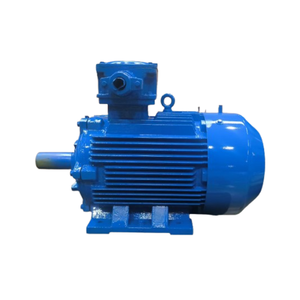
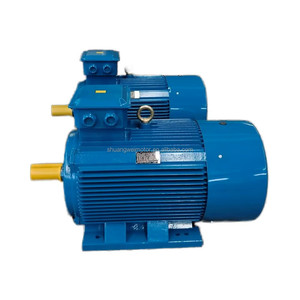
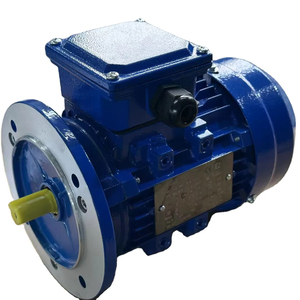
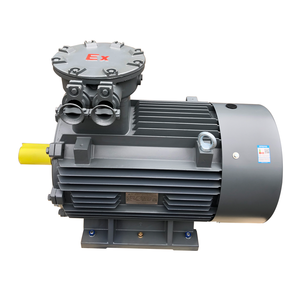
Featured Two-Speed & High-Efficiency Electric Motors
Factory-direct industrial AC asynchronous and permanent magnet synchronous motors designed for heavy-duty two-speed torque switching, energy savings, and hazardous area reliability.
IE3 Standard
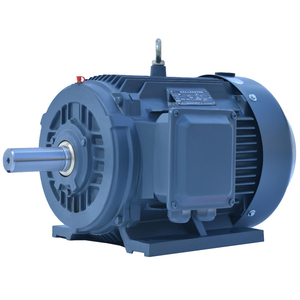
Electric Motor YE3-112M-4 IE3 Premium Efficiency Motor 4kw
Comprehensive Technical Whitepaper: Two Speed Electric Motors in Industrial Applications
In modern industrial manufacturing and electromechanical procurement, Two Speed Electric Motors (also designated as dual-speed or multi-speed pole-changing asynchronous induction motors) represent a fundamental component for applications requiring discrete velocity control without the expense, electromagnetic interference (EMI), or electrical complexity associated with Variable Frequency Drives (VFDs). As leading China Wholesale Two Speed Electric Motors Suppliers and Exporters, our manufacturing ecosystems synthesize decades of Italian electromechanical design engineering with China's high-capacity, precision automated manufacturing infrastructure.
Industrial buyers, system integrators, and plant engineers face mounting pressure to balance capital expenditure (CAPEX) with operational energy efficiency (OPEX) and long-term mechanical uptime. Multi-speed induction motors achieve speed variation by altering the internal stator winding magnetic pole configuration. This structural approach yields immediate step-change speed control—such as 2/4 pole (3000/1500 RPM at 50Hz), 4/8 pole (1500/750 RPM), or 4/6 pole combinations—delivering exceptional reliability across heavy industry, HVAC ventilation, maritime winches, crane hoists, and industrial mixing units.
Information Gain Highlight: Unlike standard single-speed AC induction motors that rely on external inverter throttling, Dahlander two-speed motors utilize specialized stator tap changing (Δ/YY or Y/YY winding topologies) to maintain peak power factor and thermal stability at both operating speeds. Understanding the operational distinction between Constant Torque and Variable Torque torque-power relationships is critical during B2B procurement to avoid motor burnout and mechanical gear stress.
Core Winding Architecture: Dahlander vs. Separate Double Winding Systems
When evaluating wholesale procurement options for multi-speed induction motors, engineers must select between two primary internal winding designs:
Dahlander Single Winding (1:2 Speed Ratio)
Utilizes a single stator winding with center taps. By reconnecting the stator lead terminals via contactors (e.g., switching from Delta Δ to Double Star YY), the effective pole count is halved, doubling the rotational velocity. Ideal for 2/4 pole or 4/8 pole 1:2 speed ratio configurations.
Dual Separate Windings (Non-1:2 Ratios)
Contains two distinct, electrically isolated stator windings inserted into the same armature slots. This setup accommodates non-1:2 pole combinations such as 4/6 pole or 6/8 pole speeds. While slightly larger in frame size, it allows independent thermal rating and torque optimization for each speed.
Load Characterization: Constant vs. Variable Torque
Dahlander motors must be specified based on load characteristics: Constant Torque (hoists, conveyors, machine tools where load resistance remains fixed across speeds) or Variable Torque (centrifugal pumps, fans, blowers where torque demands increase quadratically with speed).
Winding Machines, Lathes, Tension Control Equipment
Enterprise Strengths & Global Manufacturing Heritage
Rooted in over 50 years of Italian electromechanical heritage through O.M.E. Motori Elettrici s.r.l. and expanded through state-of-the-art Chinese OEM/ODM production facilities in Gussago and Nuvolera, our enterprise bridges European design compliance with large-scale industrial manufacturing capabilities. We supply worldwide OEMs, EPC contractors, and distributors with customized two-speed, high-voltage, standard asynchronous, and explosion-proof motors engineered to strict international benchmarks.
100% Premium Pure Copper Windings & Vacuum Pressure Impregnation (VPI)
Unlike standard commercial motors that utilize aluminum or copper-clad wires, all our two-speed electric motors are built with 100% Grade-H electrolytic copper winding coils. Each stator core undergoes automated Vacuum Pressure Impregnation (VPI) resin treatment, guaranteeing Class H insulation integrity, superior dielectric strength, and complete moisture resistance in marine or tropical environments.
Every rotor assembly undergoes high-precision dynamic balancing adhering to ISO 1940 Grade G2.5 standards to ensure ultra-low vibration levels (<1.5 mm/s) and extended bearing lifecycle. Cast-iron frame construction with IP55 standard sealing (upgradeable to IP65/IP66) protects internal components against abrasive industrial dust, corrosive chemical atmospheres, and high-pressure water jets.
Global Standard Compliance: IEC, ATEX, IECEx, NEMA & GOST
Our two-speed motor product lines fully comply with IEC 60034-1, IEC 60034-30-1, NEMA MG-1, CE, UL/CSA, and ATEX/IECEx explosion-proof certifications (Ex d IIB T4 / Ex d IIC T4). This extensive qualification simplifies global trade compliance and engineering integration across North America, Europe, the Middle East, and Asia-Pacific.
Future B2B Procurement Trends for Two Speed Electric Motors (2025–2030)
As the global industrial sector pivots toward decarbonization, strict energy efficiency regulations, and smart manufacturing architectures, B2B procurement strategies for electric motors are undergoing significant transformation. Procurement directors and engineering consultants must anticipate several structural trends when sourcing wholesale dual-speed and multi-speed motors:
1. Resurgence of Mechanical Step-Speed Control vs. VFD Over-Reliance
While Variable Frequency Drives (VFDs) provide continuous speed variation, they introduce significant high-frequency harmonics (THD), bearing fluting currents, electromagnetic interference (EMI), and thermal losses in severe duty environments. For applications requiring only two discrete operational speeds (e.g., high-speed operation and low-speed standby/positioning), two-speed Dahlander motors eliminate drive maintenance costs, inverter heat losses, and expensive shielded cabling.
2. Integration with IE4 / IE5 Super Premium Efficiency Mandates
Regulatory bodies including the European Union (MEPS), US Department of Energy (DOE), and China’s GB 18613 standards are mandating IE3 and IE4 efficiency thresholds across industrial plants. Next-generation two-speed motors incorporate ultra-low-loss cold-rolled silicon steel laminations (M270/M330 grade) and optimized stator slot filling factors to satisfy elevated efficiency targets across both high and low speed modes.
The convergence of Permanent Magnet Synchronous Motor (PMSM) technology with dual-winding control is opening new frontiers in energy savings. By utilizing rare-earth Neodymium (NdFeB) rotors and integrated electronics, these motors deliver IE5 ultra-premium efficiency, flat efficiency curves across partial loads, and exceptional power density in compact mechanical frames.
Technological Innovations in Modern Industrial Motor Design
Engineering advances in multi-speed motor manufacturing focus on thermal dissipation, mechanical robustness, smart diagnostic integration, and hazardous environment isolation:
Advanced Finite Element Method (FEM) Electromagnetic Simulation: Stator slot geometry and rotor bar skewing are optimized using FEA simulation to minimize cogging torque, eliminate high-frequency harmonics during speed switching, and suppress operating noise to under 68 dB(A).
Dual-Rated Insulation Systems (Class H with Class B Temperature Rise): Utilizing premium Nomex paper, mica tape, and high-grade resin, our motors operate with a conservative thermal margin. Even during continuous duty (S1) at high ambient temperatures (+60°C), thermal stress on stator windings remains well below insulation limits.
Integrated Smart IoT Condition Monitoring: Optional embedded PT100 temperature sensors in stator windings, SPM vibration sensors on bearing housings, and smart terminal box connections enable predictive maintenance, continuous thermal tracking, and real-time operational diagnostics via Modbus or WirelessHART protocols.
ATEX Exd Flameproof Dual-Speed Construction: For petrochemical refineries and subterranean mining applications, our explosion-proof two-speed motors feature flameproof enclosure joints, heavy-duty ductile iron bodies, and reinforced explosion-proof terminal boxes certified for Zone 1, Zone 2, Zone 21, and Zone 22 hazards.
Require Custom Two-Speed Electric Motor Quotations?
Our engineering team provides direct wholesale factory quotes, custom frame modifications, CAD drawings, and complete IEC/NEMA compliance documentation for global projects.
Frequently Asked Questions (FAQ) for B2B Procurement & Engineering
Q1: What is the primary difference between a Dahlander motor and a two-speed motor with separate windings?
A Dahlander motor uses a single stator winding tapped at specific points to change pole numbers in a strict 1:2 speed ratio (such as 2/4 pole 3000/1500 RPM or 4/8 pole 1500/750 RPM). A motor with separate windings contains two completely independent stator coils within the same frame, allowing for non-1:2 speed ratios like 4/6 pole (1500/1000 RPM) or 6/8 pole (1000/750 RPM).
Q2: How do I choose between Constant Torque and Variable Torque two-speed motors?
Choose Constant Torque (Δ/YY connection) for mechanical loads where operational torque resistance remains uniform regardless of speed—such as overhead cranes, hoists, positive displacement pumps, machine tool spindles, and industrial mixers. Choose Variable Torque (Y/YY connection) for fluid dynamics applications—such as centrifugal fans, blowers, and water pumps—where required torque scales quadratically with speed ($T \propto n^2$) and power scales cubically ($P \propto n^3$).
Q3: Can China wholesale two-speed electric motors replace Variable Frequency Drives (VFDs)?
Yes, in systems that only require two distinct operational speeds (e.g., high speed for normal operation, low speed for positioning, standby, or reduced air exchange). Two-speed motors eliminate VFD purchase costs, control cabinet cooling requirements, electromagnetic interference (EMI/EMC), motor bearing fluting damage, and inverter electrical harmonic losses, making them highly reliable in harsh industrial or remote site conditions.
Q4: What starter contactor configurations are required for Dahlander speed switching?
A standard Dahlander motor control panel requires a 3-contactor switching scheme (Low-Speed Contactor, High-Speed Contactor, and Star-Point Shorting Contactor) equipped with mechanical and electrical interlocking to prevent line-to-line short circuits during speed transitions. Thermal overload protection relays must be calibrated independently for both low-speed and high-speed rated current values.
Q5: What custom options are available for wholesale OEM/ODM motor orders?
We offer comprehensive customization including custom shaft dimensions (keyed, splined, double-extension), non-standard voltages/frequencies (220V/380V/415V/440V/460V/660V at 50Hz or 60Hz), specialized mounting flanges (B3, B5, B14, B35), IP65/IP66 ingress sealing, space heaters for anti-condensation, forced cooling blowers (IC416), tropical insulation treatment, and custom brand nameplates.
Q6: What certifications are provided with export shipments?
All export shipments are accompanied by comprehensive quality control documentation, including IEC 60034 factory routine test reports, CE conformity declarations, ISO 9001 quality certificates, and optional third-party inspection reports (SGS, TÜV, Bureau Veritas). For explosion-proof models, ATEX and IECEx certificates are provided.
Q7: What is the typical lead time and minimum order quantity (MOQ) for wholesale buyers?
Standard frame multi-speed motors maintain stock for fast delivery within 7 to 10 working days. Customized OEM batches or specialized explosion-proof/high-voltage units feature production lead times of 20 to 30 days. Flexible MOQs are available for trial orders and distributor partnerships.
Q8: How does pure copper winding impact motor longevity and total cost of ownership (TCO)?
100% pure electrolytic copper wire exhibits significantly lower electrical resistance compared to aluminum alternatives, minimizing $I^2R$ copper losses and heat generation. This results in 3% to 5% higher operational efficiency, cooler motor running temperatures, extended insulation lifetime (up to 15–20 years), and lower lifecycle energy costs.
Global Logistics, Packaging & B2B Supply Chain Guarantee
To ensure safe international delivery, all electric motors are packed in heavy-duty fumigated wooden crates or reinforced ISPM-15 compliant sea-freight pallets. Internal moisture protection includes vacuum plastic wrapping and desiccant gel packs. Our strategic port proximity to Shanghai, Ningbo, and Qingdao guarantees efficient container loading, streamlined customs clearance, and prompt global shipping via FOB, CIF, DDP, or EXW terms.
Strategic Buyer Advantage: By combining direct factory wholesale pricing with stringent Italian engineering oversight, our clients achieve up to 30% CAPEX savings on industrial electric motor procurement without compromising quality, thermal margins, or international compliance certifications.
Ready to optimize your industrial motor procurement with factory-direct China wholesale supply?