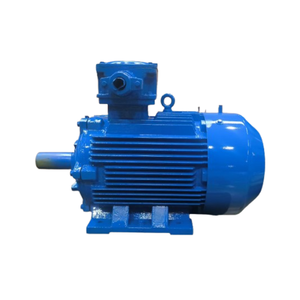
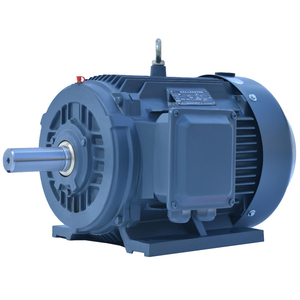
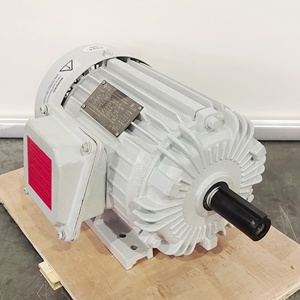
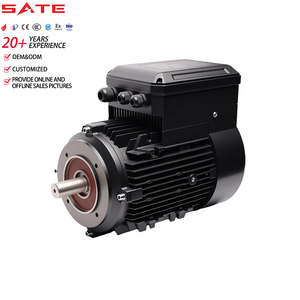
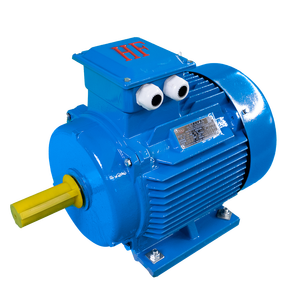
Electric Motor YE3-112M-4 IE3 Electric Motor 4kw High Efficiency
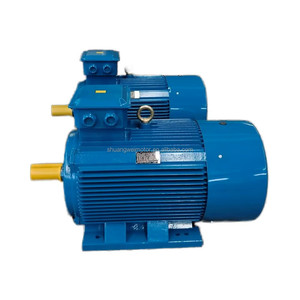
15KW 20HP IE4 Super Premium Efficiency 3-Phase Asynchronous Motor, 2/4 Pole, 1450/2800 Rpm, 380V/50 60Hz, 100%Copper, IP55
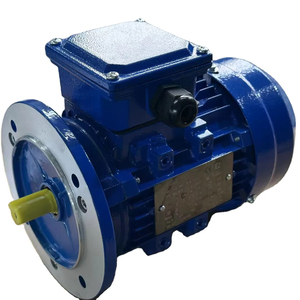
Factory Direct Sale IE4 Series Super Premium Efficiency Motor B3/B35/B5 Mounted 3 Phase AC Motor 2.2kw for Industrial Use
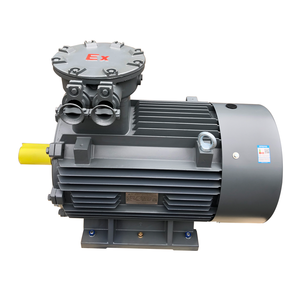
IE3/IE4 ExdIIBT4 Explosion-proof AC Electric Motor Industrial Flame Proof Motor
High Efficiency IE4 Electric Motor 7.5kW 10hp in 6 Poles With Winding Wire in 100% Copper
NEMA Premium Efficiency IE4 1 hp 230/460V 1800RPM 143T Frame Size Three Phase Heavy Duty Electric Motor IP54 100% Copper Winding
IE5 High Efficiency 4kW Integrated Motor Replace Traditional Asynchronous Motor 380V 3000RPM Energy Saving
High Efficiency IE4 Three-Phase 50Hz 5kW Permanent Magnet Synchronous Motor IP55 Protection CE Certified
50+
Years Engineering Heritage
IE4 / IE5
Efficiency Certification Level
100+
Export Destination Countries
G1.0
Precision Dynamic Balance Grade
1. Technical Foundations of High-Speed Induction Motor Manufacturing
High-speed induction motors represent the cornerstone of modern industrial automation, turbomachinery, CNC high-precision machining, and energy-efficient pumping applications. As global industrial ecosystems transition toward ultra-high efficiency standards (IEC 60034-30-1 IE4 Super Premium and IE5 Ultra Premium), selecting a top-tier Chinese manufacturer with proven original equipment manufacturer (OEM) and custom engineering capabilities has become a strategic priority for global B2B buyers.
Unlike standard 50Hz/60Hz fixed-speed AC induction motors operating at synchronous speeds of 1500 RPM or 3000 RPM, high-speed induction motors are designed to operate at frequencies reaching 200 Hz to upwards of 1000 Hz, achieving rotational speeds from 6,000 RPM to over 30,000 RPM when driven by Variable Frequency Drives (VFDs). Engineering these robust electromechanical units requires rigorous control over electromagnetic field losses, mechanical rotor balance, insulation thermal endurance, and high-frequency harmonic dissipation.
Information Gain Insight: Operating motors at high frequencies increases iron core eddy-current losses proportionally to the square of the frequency. Leading Chinese manufacturers mitigate this thermal strain by employing ultra-thin 0.2mm to 0.35mm cold-rolled non-oriented electrical silicon steel laminations coated with high-grade organic C-5 insulation.
Key Engineering Parameters for High-Speed Motor Sizing:
- Stator Core Lamination Thickness: Ultra-thin silicon steel sheets (0.2mm - 0.35mm) significantly reduce magnetic hysteresis and high-frequency eddy current losses.
- Winding System & Insulation Class: Premium Class H (180°C) or Class N (200°C) enamelled copper wire treated with Vacuum Pressure Impregnation (VPI) to prevent corona discharge under fast-switching VFD PWM (Pulse Width Modulation) inverters.
- Rotor Structural Integrity: High-tensile copper-alloy or specialized cast-aluminum squirrel cage rotors dynamically balanced according to ISO 1940-1 Grade G1.0 to eliminate high-rpm mechanical vibration.
- Bearing Technology: Integration of hybrid ceramic ball bearings (Si3N4 silicon nitride balls) or active magnetic bearings (AMB) with high-temperature synthetic grease to prevent electrical fluting and bearing seizure.
2. Enterprise Core Competencies & Quality Assurance Standards
Partnering with an established Chinese motor manufacturer delivers significant supply chain resilience, cost optimization, and specialized custom capabilities. Building upon five decades of Italian and international electromechanical manufacturing standards, our production infrastructure integrates state-of-the-art automated CNC winding machines, VPI dip-coating chambers, and computerized automated motor testing systems (CAT).
Every stator coil is wound using 99.99% pure oxygen-free copper wire, delivering minimal electrical resistance, reduced copper loss ($I^2R$), and maximum thermal endurance under continuous S1 duty cycles.
Full compliance with international safety protocols including ATEX (Zone 1, Zone 2), IECEx, ExdIIBT4 flame-proof standards, and UL/CSA approvals for harsh petrochemical environments.
Available in versatile mounting styles including IEC standard B3 (foot mounted), B5 (flange mounted), B35 (foot and flange mounted), as well as NEMA 143T-449T frame standards.
3. Global B2B Procurement Trends for High-Speed Motors (2025–2030)
The industrial procurement landscape for electric motors is undergoing a structural shift driven by global carbon neutrality goals, surging electricity costs, and digitalization. Enterprise buyers are moving away from evaluating initial purchase cost alone toward Total Cost of Ownership (TCO) and Lifecycle Cost Assessment (LCA).
Key Trends Shaping Procurement Strategies:
- Mandatory Adoption of IE4 & IE5 Standards: Regulations in the European Union (EU MEPS), North America (DOE), and China (GB 18613-2020 Level 1) strictly mandate minimum efficiency thresholds. Sourcing IE4 Super Premium and IE5 Permanent Magnet Synchronous Motors (PMSM) cuts lifecycle electrical cost by up to 15-20%.
- Integration of Smart Predictive Maintenance (IoT & Industry 4.0): Modern high-speed motors are increasingly pre-equipped with wireless vibration sensors (tri-axial accelerometers) and embedded PT100/RTC thermal sensors to monitor real-time bearing wear, rotor misalignment, and insulation degradation.
- Transition to Silicon Carbide (SiC) VFD Inverters: Next-generation Wide Bandgap (WBG) power electronics allow higher VFD switching frequencies with smaller filter footprints. High-speed motors must feature phase-isolation barriers and insulated non-drive-end (NDE) bearings to withstand high dv/dt voltage spikes.
- Custom OEM/ODM Modularization: Buyers increasingly require tailor-made shaft extensions, specialized IP65/IP66 enclosure ratings, non-standard voltage supply compatibility (e.g., 230V/460V/690V/1100V), and integrated liquid-cooling jackets for space-constrained equipment.
4. Technology Development Trends: Induction vs. Permanent Magnet Motors
As industrial high-speed applications evolve, engineering teams frequently evaluate the performance trade-offs between High-Speed Induction Motors (HSIM) and High-Speed Permanent Magnet Synchronous Motors (HSPMSM).
High Speed Induction Motors (HSIM)
Strengths: Highly rugged rotor construction, exceptional thermal reliability under harsh overload conditions, zero risk of demagnetization at temperatures above 150°C, significantly lower raw material cost, and straightforward field-oriented control (FOC).
Best For: Heavy industrial centrifugal compressors, severe-duty pumps, steel rolling mill auxiliary drives, and explosive hazardous environments.
Permanent Magnet Motors (HSPMSM)
Strengths: Highest power density per frame size, superior partial-load efficiency exceeding IE5 thresholds, ultra-compact physical footprint, and precise speed control across broad operating ranges.
Best For: High-speed direct-drive air blowers, HVAC chillers, CNC spindle drives, and energy storage flywheel systems.
Technical Consensus: While Permanent Magnet motors lead in power density, High-Speed Induction Motors remain the industry standard for high-power (above 200kW), extreme-temperature, and cost-critical continuous duty industrial applications due to their unmatched mechanical stability and zero reliance on rare-earth magnetic materials.
5. Frequently Asked Questions (FAQ) - High-Speed Motor Procurement
Below are authoritative responses to the most critical technical and commercial queries raised by B2B buyers, plant engineers, and OEM equipment integrators.
Q1: How do you calculate the rotational speed of a high-speed induction motor driven by a VFD?
▼
The synchronous speed ($N_s$) in revolutions per minute (RPM) is determined by the supply frequency ($f$ in Hz) generated by the Variable Frequency Drive and the number of magnetic poles ($P$) of the motor stator winding:
$N_s = \frac{120 \times f}{P}$
For example, a 2-pole motor ($P=2$) operated at a VFD output frequency of 400 Hz achieves a synchronous speed of $N_s = (120 \times 400) / 2 = 24,000\text{ RPM}$. Actual rotor speed ($N_r$) will be slightly lower due to slip: $N_r = N_s \times (1 - s)$, where $s$ typically ranges from 1% to 3% in high-efficiency designs.
Q2: How does high speed affect bearing life, and how is electrical fluting prevented?
▼
High rotational speeds significantly increase bearing friction, temperature, and centrifugal forces on rolling elements. To ensure L10h bearing life exceeds 40,000 to 100,000 operating hours:
- We specify precision SKF/NSK bearings with special C3 radial clearance and synthetic high-speed polyurea grease.
- To prevent high-frequency shaft currents (caused by VFD Common Mode Voltage) from arcing across bearing raceways (fluting), an insulated NDE (Non-Drive End) endshield or ceramic ball bearings are integrated alongside shaft grounding rings.
Q3: What is the difference between IE3, IE4, and IE5 efficiency classes for industrial induction motors?
▼
Efficiency classes defined under IEC 60034-30-1 dictate maximum allowable electrical power losses:
- IE3 (Premium Efficiency): Standard baseline efficiency required across major industrial regions.
- IE4 (Super Premium Efficiency): Reduces energy losses by approximately 15% compared to IE3. Achieved through premium copper volume, optimized stator slot geometry, and thinner rotor laminations.
- IE5 (Ultra Premium Efficiency): Represents the highest level of energy efficiency currently defined, reducing losses by another 20% compared to IE4. Primarily fulfilled by Permanent Magnet Synchronous Motors or specialized integrated motor drives.
Q4: Can standard AC induction motors be safely operated at high speeds using a VFD?
▼
Running a standard 50Hz/60Hz grid-tied motor beyond its rated nominal speed (over-speeding via VFD field weakening) carries severe technical risks:
- Mechanical Risk: Standard rotor fans and cast rotors are not dynamically balanced for speeds above 120% of nominal speed, which can result in catastrophic bearing failure or rotor explosion.
- Electrical Risk: Lack of VPI phase insulation barriers leads to rapid dielectric breakdown under VFD voltage spikes. High-speed operation requires dedicated high-frequency design with forced-air cooling (IC416) or liquid cooling.
Q5: How do Chinese motor manufacturers guarantee structural dynamic balance at high speeds?
▼
Dynamic balancing is performed on computerized two-plane balancing machines compliant with ISO 1940-1 standards. For high-speed rotors operating above 3,600 RPM, material is selectively removed or added to achieve Grade G1.0 precision (residual imbalance less than 1 mm/s peak velocity). This eliminates mechanical resonance and guarantees low vibration amplitude across the complete operating speed curve.
Q6: What customization options are available for industrial OEM procurement orders?
▼
Our direct manufacturing capabilities support comprehensive OEM engineering customization:
- Custom shaft dimensions (splined shafts, keyless taper shafts, hollow shafts).
- Specialized winding voltages (110V to 11,000V) and customized terminal box orientations.
- Thermal protection options: PTC thermistors, PT100 RTDs for stator windings and bearings.
- Corrosion protection: C3, C4, or C5-M marine-grade epoxy painting for offshore environments.
Engineered for Extreme Performance. Customized for Your Industry.
Need technical assistance selecting the perfect High-Speed Induction Motor, Explosion-Proof AC Motor, or IE4/IE5 Permanent Magnet Solution? Contact our senior engineering team today for instant datasheets, 3D CAD models, and factory-direct price quotations.