Explore our flagship export-grade aluminum housing three-phase asynchronous and permanent magnet synchronous motors. Engineered for high heat dissipation, IP55 protection, and compliance with IEC, NEMA, and CE global efficiency standards.
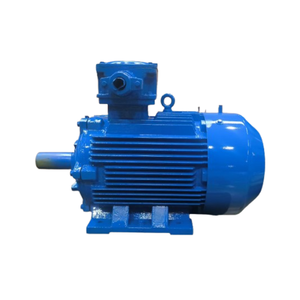
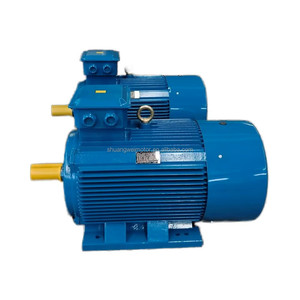
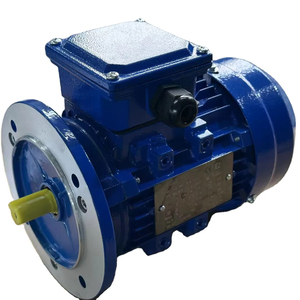
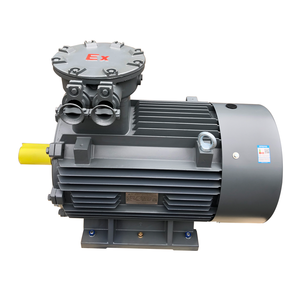
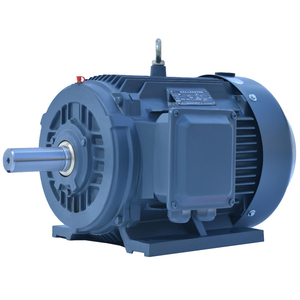
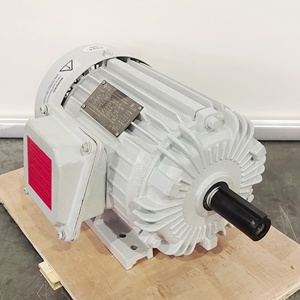
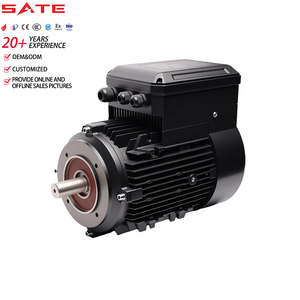
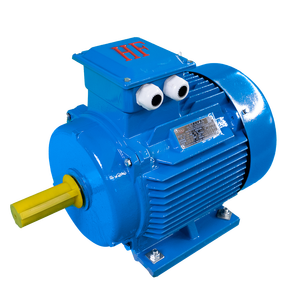
Leveraging advanced pressure die-casting, cold-rolled silicon steel laminations, and European engineering standards to redefine strength-to-weight ratios in motion control.
In modern industrial drive engineering, the selection of housing material is a critical design variable that directly governs thermal dissipation efficiency, mechanical structural integrity, and total lifecycle energy overhead. Traditionally dominated by heavy grey cast iron (HT200/HT250), the global industrial electric motor landscape has experienced a major technical shift toward high-pressure die-cast aluminum alloys (such as ADC12, A380, and extruded 6063-T6 aluminum shells).
The primary physical engine driving this shift is the substantial difference in coefficient of thermal conductivity. Standard cast iron exhibits a thermal conductivity rating of approximately 45–52 W/(m·K), whereas die-cast aluminum alloys achieve between 96 and 160 W/(m·K)—over two to three times greater dissipation capacity. Because electric motor winding insulation degradation follows Arrhenius' thermal aging model (where every 10°C reduction in operating temperature doubles insulation life expectancy), aluminum housings offer significant advantages for maintaining lower winding hot-spot temperatures.
| Engineering Parameter | High-Pressure Die-Cast Aluminum (ADC12 / A380) | Extruded Aluminum Alloy (6063-T6) | Traditional Cast Iron (HT200) |
|---|---|---|---|
| Thermal Conductivity | 96 - 130 W/(m·K) | 160 - 200 W/(m·K) | 45 - 52 W/(m·K) |
| Density / Weight Ratio | 2.70 g/cm³ (35% lighter) | 2.69 g/cm³ (40% lighter) | 7.20 g/cm³ (Baseline) |
| Tensile Strength (MPa) | 230 - 310 MPa | 245 - 295 MPa | 200 - 250 MPa |
| Corrosion Resistance | Superior (Passivated Anodized Film) | Exceptional (Architectural Anodize) | Moderate (Requires Heavy Painting) |
| Machining Precision & Tolerance | IT7 - IT8 Die-Cast Tolerance | Micron-level Extrusion Precision | IT9 - IT10 Rough Casting |
| Vibration Damping Capacity | Moderate (Optimized via Ribbing) | Good Structural Consistency | High Acoustic Damping |
Top Chinese factories utilize 100% high-conductivity oxygen-free copper wire combined with high-speed automated precision coil winding. Coupled with cold-rolled silicon steel laminations (800-grade to 400-grade low-loss sheets), eddy current losses are minimized, enabling seamless compliance with IEC 60034-30-1 IE3 and IE4 efficiency thresholds.
Unlike monolithic cast iron frames, modern aluminum electric motor frames feature multi-mount detachable feet (B3, B5, B14, B35). Manufactured using 5-axis CNC machining centers, bearing journals and end-shield fits maintain tight tolerances (<0.01mm), eliminating shaft eccentricity and reducing mechanical vibration.
With strict climate regulations enforced by the EU (ErP Directive), North America (DOE 2027 mandates), and East Asia, standard IE2 and IE3 motors are rapidly being superseded by IE4 Super Premium and IE5 Ultra Premium motors. Chinese manufacturers lead global output in NdFeB (Neodymium Iron Boron) Permanent Magnet Synchronous Motors (PMSM), which deliver higher power density within lightweight aluminum housings.
Modern B2B buyers no longer source standalone AC motors. Sourcing trends prioritize Integrated VFD Motor Systems equipped with IoT-enabled vibration and thermal monitoring nodes. Aluminum housings allow direct mounting of top-mounted frequency inverters due to high structural rigidity and localized heat dissipation.
Global machine builders demand customized shaft extensions (tapered, double-extension, stainless steel 316), specialized voltage windings (220V/380V/440V/690V at 50Hz/60Hz), and specialized IP66/IP69K sealing systems. Chinese aluminum motor suppliers excel in rapid prototype tooling, taking custom designs from CAD model to sample batch in under 21 days.
Leading Chinese motor factories employ advanced FEA software to simulate internal electromagnetic fields, mechanical stress distributions, and cooling airflow dynamics. By optimizing outer cooling fin density, pitch, and aerodynamic curvature, motor noise level is reduced to below 62 dB(A), making aluminum motors ideal for food processing, medical HVAC, and indoor industrial machinery.
To withstand high-voltage spikes caused by high-frequency VFD PWM carrier waves, modern copper stator windings undergo Class H or Class F Vacuum Pressure Impregnation (VPI) with solventless resin. This process eliminates micro-voids, locks out moisture and chemical vapors, and elevates insulation dielectric strength to over 2000V.
While raw aluminum exhibits natural passivation against oxidation, industrial marine, chemical, and agricultural applications require higher surface resilience. Advanced Chinese suppliers apply electrophoretic coating (E-coating), fluorocarbon paint, or anodization treatments to withstand salt spray tests exceeding 960 hours according to ISO 9227 standards.
Integrating European precision standards with China's end-to-end industrial supply chain ecosystem, our modern production hubs deliver high-grade motors trusted by multinational OEMs across Europe, North America, the Middle East, and Southeast Asia.
Our core technical team brings decades of electromechanical R&D heritage, blending European design philosophy (IEC/ATEX compliance) with lean automated manufacturing processes to ensure zero-defect output.
From raw aluminum pressure die-casting and precision rotor balancing to automatic stator winding, VPI insulation treatment, and final CMM dimensional inspection, 95% of components are made in-house for complete cost and quality control.
Fully certified under ISO 9001, ISO 14001, CE (Low Voltage Directive), UL/CSA for North America, ATEX/IECEx for hazardous explosion-proof areas, and GOST standards for Eurasian markets.
Aluminum housing motors offer up to 40% weight reduction, significantly higher heat dissipation efficiency (thermal conductivity of ~150 W/m·K vs ~50 W/m·K for cast iron), superior natural corrosion resistance, lower vibration, and higher precision in die-cast tolerances. This makes them ideal for mobile equipment, pumps, fans, food processing, and weight-sensitive industrial setups.
Yes. Modern high-pressure die-cast aluminum alloys (e.g., A380, ADC12) and extruded 6063-T6 aluminum shells provide tensile strengths exceeding 250-300 MPa. Advanced Finite Element Analysis (FEA) ribbed designs ensure that structural rigidity, bearing seat integrity, and torsional resistance match or exceed standard HT200 cast iron frames for IEC frame sizes up to 160/180.
Our product line complies fully with International Electrotechnical Commission standards (IEC 60034-30-1), offering IE3 (Premium Efficiency), IE4 (Super Premium Efficiency), and IE5 (Ultra Premium Permanent Magnet Synchronous Motors). We also manufacture NEMA Premium Efficiency compliant motors for the North American market.
Absolutely. All IE3, IE4, and IE5 series motors feature Class F or Class H VPI (Vacuum Pressure Impregnation) insulation systems with inverter-duty magnet wire rated to withstand peak voltage spikes (up to 1600V) and fast rise times associated with VFD PWM switching frequencies without insulation breakdown.
Thanks to detachable foot designs, our motors support flexible mounting configurations including B3 (foot mounted), B5 (large flange mounted), B14 (small flange mounted), B35 (foot and flange mounted), and V1 vertical mounting. Customized stainless steel shafts, keyways, spline shafts, and double-ended shafts can be engineered to customer CAD specifications.
For standard IEC aluminum frame motors (0.18kW to 22kW), standard production lead time is 15 to 25 days. For specialized OEM custom voltage windings or custom shafts, lead times range from 25 to 35 days. Flexible MOQ options are available for trial engineering batches.
Every motor undergoes 100% online routine inspection before packaging, including winding resistance tests, surge tests, high-potential dielectric breakdown tests, no-load current/power verification, vibration spectrum analysis, and dynamic balancing checks to ISO 1940 Grade G2.5 standards.
Consult our senior motor design engineering team today for technical datasheets, CAD 3D models, performance curves, and competitive factory-direct quotations tailored to your exact industrial specifications.