In-depth technical guides, engineering standards, industry trends, and practical updates from our European electric motor specialists.
Asynchronous Single Phase Motors remain a practical choice for equipment connected to ordinary single-phase power. In 2026, buyers and designers will still encounter several familiar types: split-phase, capacitor-start, permanent split capacitor, capacitor-start capacitor-run, and shaded-pole motors. Each uses a different starting arrangement, which affects starting torque, running behavior, cost, and maintenance needs. The distinctions matter. A shaded-pole motor may suit a small fan, while a loaded compressor typically needs stronger starting torque. Matching the motor to the actual load is more useful than choosing by name alone.
This guide compares how the main designs work and where they are commonly used. It also considers details that are easy to overlook, including rated voltage, frequency, horsepower, enclosure, duty cycle, and the driven equipment’s starting load. A capacitor-start model, for example, can offer strong starting performance, but its capacitor and switch arrangement may require service over time. Permanent split capacitor designs have fewer starting components, yet may not suit every heavy-starting application. Small details matter. Specifications and operating conditions should be checked against the manufacturer’s documentation, not guessed from appearance. The categories can blur in product listings, and no type is automatically best. A careful comparison helps readers narrow the options while recognizing that installation conditions, noise, efficiency, and repair access can change the right choice.
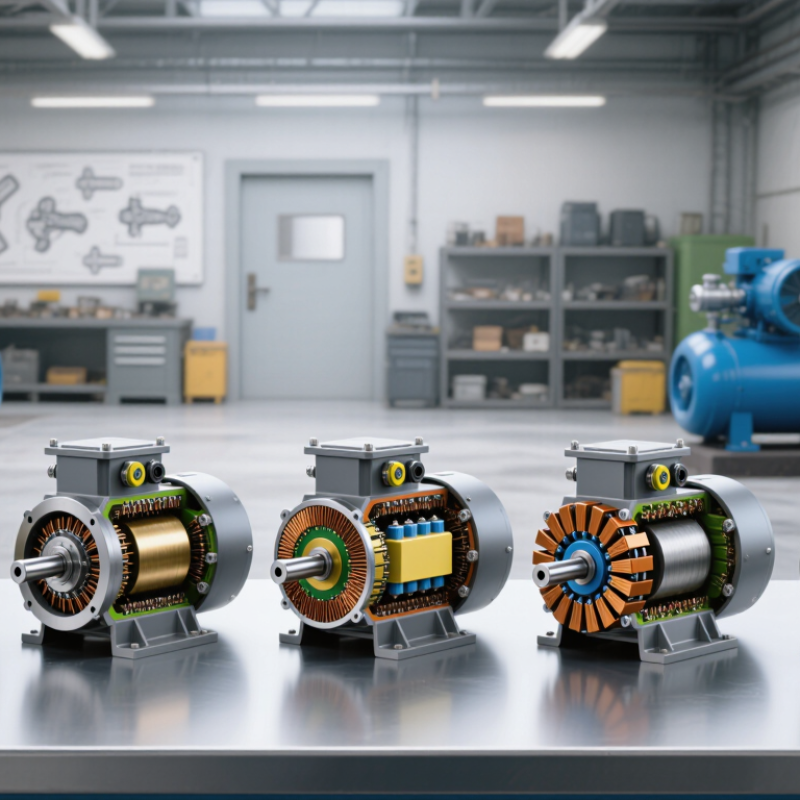
A single-phase asynchronous motor uses alternating current to create a pulsating magnetic field in its stator. By itself, this field cannot reliably start the rotor. An auxiliary winding, often paired with a capacitor, shifts current and creates starting torque. Once running, induction between stator and rotor currents keeps the shaft turning slightly below synchronous speed. That speed difference is called slip.
Classification depends mainly on the starting arrangement. Split-phase motors use an auxiliary winding with higher resistance; capacitor-start designs add stronger starting torque. Permanent-split-capacitor motors keep a capacitor in circuit during operation, while capacitor-start/capacitor-run types use separate starting and running capacitance. Shaded-pole motors use copper shading coils for a modest starting effect. Simple, but limited. The U.S. Department of Energy’s 2014 Improving Motor and Drive System Performance sourcebook estimates that motor-driven systems use about 68% of U.S. industrial electricity. This figure covers industrial motor systems broadly, not single-phase motors alone. For equipment selection, load, starts per hour, and ventilation matter as much as the motor label. I would not treat a type name as a performance guarantee.
| Motor Type | Operating Principle | Starting Arrangement | Typical Starting Torque | Typical Applications | Main Characteristics |
|---|---|---|---|---|---|
| Resistance-Split-Phase Motor | The main and auxiliary windings have different electrical characteristics. Their phase-displaced currents create a rotating magnetic field sufficient to start the rotor. The motor then runs as an induction motor. | A centrifugal switch or starting relay typically disconnects the auxiliary winding after the motor accelerates. | Moderate | Small fans, blowers, bench tools, and other light- to moderate-starting-load equipment. | Simple construction and relatively low cost. Starting current and torque are generally higher and lower, respectively, than in many capacitor-start designs. |
| Capacitor-Start Induction-Run Motor | A capacitor in series with the auxiliary winding creates a larger phase difference between winding currents during starting, producing a stronger starting field. | A starting switch or relay disconnects the start capacitor and auxiliary winding after acceleration; the main winding continues to operate the motor. | High | Pumps, compressors, refrigeration equipment, and machinery that must start under load. | Provides strong starting performance. The switching device and start capacitor add components that may require maintenance or replacement. |
| Permanent-Split-Capacitor (PSC) Motor | A run capacitor remains connected in series with the auxiliary winding during both starting and normal operation, helping create a phase-displaced magnetic field. | No starting switch is normally required because the capacitor and auxiliary winding stay in the circuit. | Low to moderate | HVAC blowers, circulation fans, and other applications with relatively light starting loads. | Quiet operation, straightforward control, and no centrifugal starting switch. It is generally less suited to loads requiring high breakaway torque. |
| Capacitor-Start, Capacitor-Run (CSCR) Motor | A large start capacitor and a smaller run capacitor work with the auxiliary winding during starting. After acceleration, the start capacitor is removed while the run capacitor remains connected. | A switch or relay disconnects the start capacitor; the run capacitor stays in the circuit during operation. | High | Air compressors, pumps, and other demanding loads where strong starting and steady running performance are useful. | Combines strong starting capability with improved running characteristics. It is more complex and typically costs more than simpler single-phase designs. |
| Shaded-Pole Motor | A short-circuited copper shading coil around part of each pole delays the magnetic flux in that section. The resulting weak field sweep provides starting torque and sets the direction of rotation. | The shading coil provides the starting effect; no capacitor or centrifugal starting switch is normally used. | Low | Small instrument fans, appliance fans, and other low-power loads that start freely. | Very simple, compact, and inexpensive. It generally has low efficiency and limited starting torque compared with capacitor-based motor types. |
General operating principle: A single-phase supply alone does not produce a self-starting rotating magnetic field in a conventional induction motor. Auxiliary windings, capacitors, or shading coils create a phase-displaced field for starting. Once rotating, the rotor runs below synchronous speed because of slip.
Its stator creates a pulsating magnetic field, which cannot reliably start the rotor alone. An auxiliary winding, often with a capacitor, creates starting torque. The rotor then runs slightly below synchronous speed. That gap is called slip.
It has a main winding and a higher-resistance starting winding. Their currents differ in phase, producing starting torque. A switch usually disconnects the starting winding as the rotor speeds up. Simple, but limited.
A faulty or worn switch may leave the starting winding energized too long. Check the switch, but do not assume it is the only cause. Load and supply conditions can also affect a hesitant start.
Its run capacitor stays connected while the motor runs. This design has no starting switch and may provide quieter service. It often suits steady loads, such as ventilation fans with modest startup demands.
It uses a larger capacitor for extra starting torque, then disconnects it while the run capacitor stays connected. Some pumps and compressors may benefit when starting under load. More parts, though.
Both use an auxiliary winding to help start. A split-phase motor relies on winding resistance to shift current. A capacitor-start design adds capacitance for stronger starting torque. Actual performance still depends on the motor and load.
Copper shading coils create a modest starting effect. The design is simple, but its starting ability is limited. It may not suit equipment that needs strong startup force.
Compare the load, starting torque, starts per hour, duty cycle, supply conditions, and ventilation. Rated horsepower alone can be misleading. I would check the specifications twice; motor labels do not tell the whole story.
Asynchronous Single Phase Motors are widely used in equipment that needs a practical power source from a single-phase supply. They operate through an alternating magnetic field, while auxiliary windings or other starting arrangements help create the initial rotation. Their designs differ mainly in how they start, the torque they provide, and the applications they suit.
Split-phase motors use separate winding characteristics to begin turning, while capacitor-start motors add a capacitor to deliver stronger starting torque. Permanent-split-capacitor motors keep a capacitor in the circuit during operation, and capacitor-start capacitor-run designs combine starting assistance with improved running performance. For simpler, low-power applications, shaded-pole motors offer a straightforward construction and modest output. Understanding these types makes it easier to compare their operating features and select a motor design suited to the demands of a particular application.