OME Motors Technical Hub

Industrial Electric Motor Blog & Insights

In-depth technical guides, engineering standards, industry trends, and practical updates from our European electric motor specialists.

0%

Choosing Smoke Extraction Motors for global projects is a life-safety decision, not simply a motor-selection exercise. Smoke movement changes with building height, fire load, climate, pressure, and evacuation strategy. NFPA’s Fire Loss in the United States During 2023 reported 1,388,500 fires, 3,670 civilian fire deaths, and approximately $22.2 billion in property damage. These figures underline the consequences of weak smoke-control planning.

The numbers are serious.

The CTIF World Fire Statistics Centre’s 2024 report also shows major differences in national fire data collection. Therefore, designers should not transfer one country’s assumptions into every project. John H. Klote, a leading smoke-control researcher, wrote in Design of Smoke Management Systems: “Smoke control is the use of mechanical systems to modify smoke movement.” This definition remains practical when comparing Smoke Extraction Motors for warehouses, tunnels, airports, and high-rise buildings.

A reliable selection begins with the required airflow, temperature rating, operating duration, pressure loss, noise limit, and backup-power arrangement. EN 12101-3 and relevant local standards provide important reference points for smoke-exhaust fan performance. However, compliance marks alone do not guarantee suitability. The motor, fan, controls, cabling, and installation environment must work as one tested system.

Global projects often expose overlooked details. A motor approved for 400 volts may not suit a site with unstable power. A laboratory rating may not represent dusty rooftop conditions. These gaps deserve honest review. In practice, engineers should verify third-party certification, performance curves, fire-test evidence, maintenance access, and local authority requirements before approval. Some specifications still focus too heavily on purchase price. That is a mistake worth reconsidering.
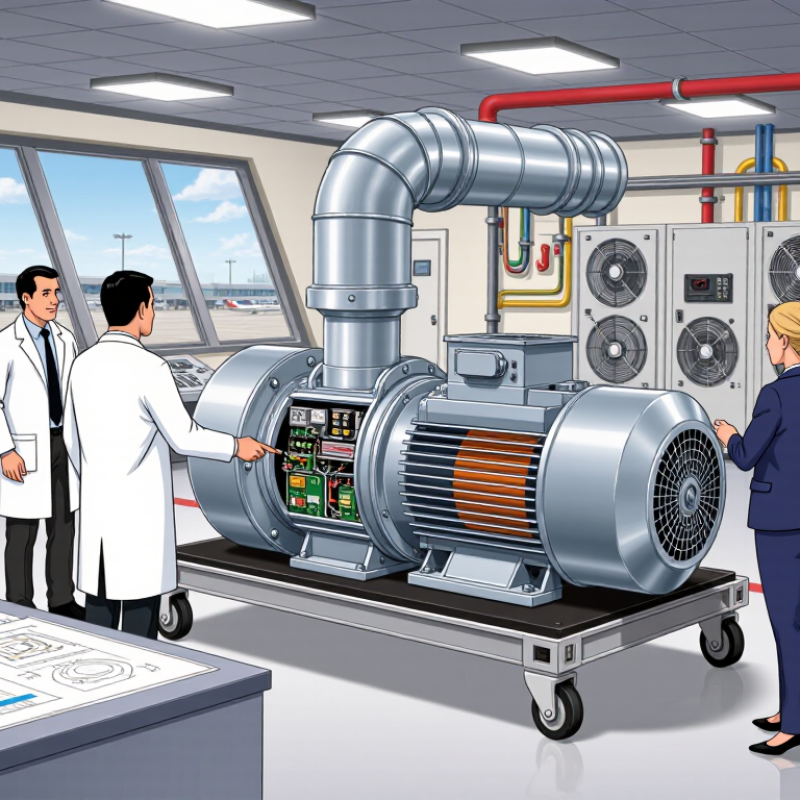
How to Choose Smoke Extraction Motors for Global Projects?

Understanding Smoke Extraction Motors and Their Role in Fire Safety

Smoke extraction motors are critical components in a fire safety system. They drive fans that remove hot smoke from corridors, stairwells, car parks, and enclosed industrial areas. Clear escape routes depend on stable airflow. Smoke moves quickly.

When selecting motors for global projects, review the complete duty cycle, not only the rated power. A fire mode may require continuous operation at high temperature. Check temperature ratings, insulation systems, bearings, enclosure protection, and emergency power compatibility. The motor must match the fan, controls, duct resistance, and expected airflow. Small mismatches can reduce extraction performance.

Project conditions also shape the decision. Coastal sites may need stronger corrosion protection. High-altitude locations can reduce cooling efficiency. Dust, humidity, and limited maintenance access deserve practical attention.

In field reviews, commissioning records often reveal problems that product data hides. Incorrect rotation, weak cable connections, or poor heat dissipation can compromise a well-designed system. Details matter.

Use independently verified test reports and traceable quality records. Confirm that the motor and fan assembly meet the project’s required fire-testing and electrical standards. Requirements differ between regions, so local engineers should review the design early. Redundant power supplies may improve resilience, but they also add complexity and maintenance needs. More equipment is not always safer. A rushed selection can pass a document check yet perform poorly during a real emergency. That assumption fails. Calibration, functional testing, and periodic inspection remain essential after installation.

Identifying Project Requirements and Environmental Conditions

Choosing smoke extraction motors for global projects starts with the building, not the catalogue.

In field reviews, I check the fire strategy, extract volume, duct resistance, shaft dimensions, and escape routes. The fan must deliver its duty point under smoke conditions, not only in clean air.

NFPA’s 2023 U.S. fire-loss estimates recorded about 1.39 million fires and 3,670 civilian fire deaths. These figures underline why smoke control calculations require traceable assumptions. A neat spreadsheet can still be wrong.

Environmental conditions often decide the motor specification. EN 12101-3 classifies smoke exhaust fans by temperature and exposure duration, including F200, F300, and F400 categories. Select the rating from the fire-engineering design, not habit.

Record ambient temperature, altitude, humidity, dust, salt exposure, corrosive gases, and seismic risk. At high altitude, lower air density changes fan performance. Coastal air can attack unprotected metal. Cold climates may require preheaters or suitable bearing grease. Small details matter.

Electrical compatibility needs equal attention. Confirm voltage, frequency, starting current, emergency power, cable fire survival, and control-panel location. IEC 60034 provides a useful framework for motor performance and testing, but local certification may add requirements.

I prefer independent test evidence and a documented factory test curve. Oversizing feels safe, yet it may increase starting stress and noise. Undersizing is worse.

The difficult part is admitting that early project data is often incomplete. Recheck the selection when the final duct layout, pressure losses, and environmental survey become available.

Comparing Motor Types, Performance Ratings, and Control Methods

How to Choose Smoke Extraction Motors for Global Projects?

Motor selection should begin with the smoke control duty, not the catalogue power rating. AC induction motors suit many fixed-speed systems because they are robust and familiar to maintenance teams. EC motors can improve part-load efficiency, especially where ventilation operates daily. However, emergency smoke duty may require a dedicated high-temperature motor with tested insulation and bearing performance. Keep it simple. The motor must match the fan, airflow, pressure, and extraction duration.

Performance ratings need careful checking. Review airflow at the actual system resistance, not at free-air conditions. Confirm the temperature class, operating time, enclosure protection, starting current, and allowable ambient temperature. A motor rated for 400°C may not maintain that rating for every installation position. This detail is often missed. Project records should include test certificates, wiring data, thermal limits, and service instructions. Ratings vary by test method, so assumptions can become expensive.

Control methods affect both safety and energy use. Two-speed motors provide a practical choice for normal ventilation and emergency extraction. Variable frequency drives can reduce energy consumption, but their use must be approved for the selected fire-duty arrangement. A bypass circuit, manual emergency override, and clear fault indication can support reliable operation. During commissioning, technicians should test rotation, airflow, control signals, and emergency restart behavior. A control screen showing “run” is not enough. I would also recheck sensor locations, because poor placement can delay the required response.

Checking International Standards, Certifications, and Local Compliance

How to Choose Smoke Extraction Motors for Global Projects?

International smoke extraction projects require more than a motor with a suitable power rating. The motor must match the fan, airflow, pressure, temperature, and operating duration. Check the project’s required standard, such as EN 12101-3 or relevant national equivalents. Requirements can differ between countries. A certificate accepted in one market may carry little weight elsewhere.

Request complete test reports, not only certificate numbers. Verify the tested temperature, exposure time, mounting position, rotation direction, and electrical supply. For example, a system may require 400°C operation for 120 minutes. The motor should also suit local voltage, frequency, enclosure protection, insulation class, and emergency power arrangements. Confirm compliance with IEC motor requirements where applicable. Then check regional marks, fire approvals, and construction regulations.

Local authorities often review the entire smoke control system, not the motor alone. Ask for translated documents, traceable serial records, installation instructions, and maintenance procedures. A local engineer should confirm whether additional approval is needed. In practice, a recurring mistake is treating a general industrial certification as fire-system approval. It is not enough. Project schedules also encourage rushed document checks. That weakness can create expensive redesigns later. I would leave room for technical review, even when the specification appears clear.

How to Choose Smoke Extraction Motors for Global Projects? - Checking International Standards, Certifications, and Local Compliance

Decision Area Reference Standard or Requirement What the Requirement Covers Motor and Fan Selection Checks Typical Compliance Evidence Application Status
Smoke-control fan classification EN 12101-3:2015+A1:2019 Requirements and test methods for powered smoke and heat exhaust ventilators used in smoke-control systems. Select a complete fan and motor assembly that has the required temperature and operating-time classification, such as F200, F300, or F400 where specified by the project. Performance-test report, classification report, declaration of performance where applicable, and installation instructions. Required for applicable European smoke-control fan projects
International motor construction IEC 60034-1 Rating and performance requirements for rotating electrical machines, including duty, rated output, voltage, frequency, temperature rise, and testing. Confirm rated duty, service conditions, starting current, permissible temperature rise, voltage tolerance, frequency, and compatibility with the emergency operating mode. Routine-test records, type-test information, motor datasheet, rating plate, and technical construction file. Widely used international baseline
Motor enclosure and protection IEC 60034-5 / IEC 60529 Defines motor enclosure protection against access, solid objects, and water through IP codes. Choose the IP rating according to the installation environment. Outdoor, rooftop, humid, dusty, or wash-down locations may require higher protection than indoor plant rooms. IP test report, motor datasheet, enclosure drawing, and installation details. Project and environmental-condition dependent
Electrical installation IEC 60364 or the applicable national electrical code Addresses low-voltage electrical installations, protective devices, earthing, cable selection, isolation, and emergency power arrangements. Verify cable fire resistance, voltage drop, short-circuit protection, motor protection strategy, isolator location, and separation from normal ventilation circuits. Single-line diagram, cable schedule, protection-coordination study, earthing design, and inspection records. Always governed by the local authority having jurisdiction
European market access CE marking framework; Low Voltage Directive 2014/35/EU, EMC Directive 2014/30/EU, and applicable machinery requirements Sets conformity obligations for products placed on the European Economic Area market. The applicable legislation depends on whether the motor is supplied separately or as part of a machine or fan assembly. Identify the legal manufacturer, determine the applicable directives, assess EMC and electrical safety, and avoid treating CE marking as proof of smoke-temperature performance. EU Declaration of Conformity, technical file, risk assessment, test reports, instructions, and CE marking. Required when applicable to the product and destination market
United Kingdom market access UK product-safety legislation and UKCA requirements where applicable Provides the United Kingdom conformity route for products placed on the relevant UK market, subject to current government rules and designated standards. Confirm whether CE remains accepted for the project date and destination, identify the required UK conformity route, and provide UK-specific documentation when requested. UK Declaration of Conformity, technical file, test reports, instructions, and UKCA marking where required. Verify current UK transitional rules before shipment
North American smoke-control design NFPA 92 Provides guidance and requirements for the design and installation of smoke-control systems, including system objectives, pressure relationships, controls, and acceptance testing. Confirm fan airflow, static pressure, standby power, automatic controls, manual override, sequence of operation, and acceptance-test requirements. Smoke-control rational analysis, approved sequence of operation, commissioning records, and acceptance-test report. Commonly referenced; local building and fire codes remain controlling
North American electrical equipment NFPA 70, National Electrical Code Covers wiring methods, overcurrent protection, grounding, disconnects, motors, and emergency or legally required standby systems. Check the motor branch circuit, emergency supply, conductor rating, disconnecting means, grounding, and protection against overload and short circuit. Electrical drawings, equipment listings where required, inspection approval, and commissioning documentation. Adopted and amended by the local jurisdiction
Fan performance verification ANSI/AMCA 210 / ISO 5801 Test methods for determining fan airflow, pressure, power, and efficiency performance. Compare the certified fan curve with the design duty point. Check air density, temperature, system resistance, rotation, and motor input power. Certified fan-performance report, test-setup details, fan curve, and selection printout. Recommended for transparent performance comparison
Hazardous-area installation IEC 60079 series; ATEX 2014/34/EU where applicable Applies to electrical equipment intended for explosive atmospheres and defines protection concepts, zones, gas or dust groups, and temperature classes. Use hazardous-area equipment only when the area classification requires it. Match zone, gas or dust group, temperature class, ambient range, cable entries, and protection concept. Ex certificate, marking, installation instructions, conformity documentation, and inspection records. Not automatically required for ordinary smoke-exhaust rooms
China project compliance GB 51251-2017, Building Smoke Control and Exhaust System Technical Standard Addresses smoke-control and exhaust-system design, equipment arrangement, control logic, power supply, and testing requirements in China. Check required fan temperature rating, emergency power, automatic start, manual control, fire alarm interface, cable protection, and local acceptance procedures. Chinese-language technical documents where required, product test reports, design approvals, commissioning records, and fire-acceptance documents. Applicable to relevant projects in mainland China
Australia and New Zealand projects AS 1668.1 and AS/NZS 3000 AS 1668.1 covers fire and smoke-control-related mechanical services; AS/NZS 3000 covers electrical installation requirements. Verify smoke-control duty, fire-mode operation, controls, emergency power, wiring, isolation, and local authority approval requirements. Design certificate, fan-test documentation, electrical installation records, commissioning report, and authority approval. Applicable where adopted by the project jurisdiction
Motor protection in fire mode Project specification, approved fire strategy, and applicable motor-control requirements Defines how overload, short circuit, thermal sensors, variable-speed drives, bypass arrangements, and emergency operation are handled. Do not apply a conventional overload trip that could stop the required smoke-extraction function without approval. Confirm whether thermal protection must be monitored, bypassed, or coordinated for fire mode. Control schematic, cause-and-effect matrix, protection settings, sequence-of-operation test, and commissioning report. Must be approved by the fire engineer and authority having jurisdiction
Variable-frequency drive application IEC 61800 series and the approved smoke-control design Covers adjustable-speed power-drive systems and their electrical, thermal, EMC, and functional characteristics. Confirm that the drive, motor, bypass, cables, filters, and controls can operate in the specified fire mode. Verify that the selected fan classification covers the actual drive arrangement. Drive datasheet, EMC documentation, fire-mode control narrative, bypass test, and integrated-system test report. Never assume a standard VFD is suitable for emergency smoke extraction
Emergency power and continuity Applicable fire code, building code, and electrical code Defines the required reliability, changeover, duration, segregation, and testing of power supplies serving smoke-control equipment. Check generator or other emergency source capacity, automatic transfer time, cable route, fire separation, selective coordination, and availability during a normal-power failure. Load calculation, generator schedule, automatic-transfer test, emergency-power test, and authority witnessing records. Local code and fire authority requirements are decisive
Local authority approval Authority Having Jurisdiction requirements Local fire departments, building authorities, civil-defense bodies, or appointed inspectors may impose additional documentation and testing requirements. Confirm required language, approved laboratories, certification marks, witnessing procedures, shop-drawing format, spare-parts requirements, and maintenance intervals before procurement. Approved shop drawings, permits, inspection certificates, witness-test records, operation manuals, and maintenance schedules. Mandatory project-by-project verification
Procurement acceptance checklist Project specification and approved submittal procedure Ensures that the supplied motor and fan assembly match the approved design and documented test configuration. Check model configuration, rated power, speed, voltage, frequency, enclosure, bearings, ambient temperature, rotation, mounting, cable entries, accessories, and spare parts. Approved technical submittal, nameplate photographs, factory test records, packing list, installation manual, and final as-built documents. Recommended for every international project
Important: Standards, certification routes, and enforcement practices vary by country, project type, construction date, and authority having jurisdiction. A motor should not be approved solely because it has a general electrical certification; the complete smoke-extraction fan assembly, controls, power supply, installation, and fire-mode operation must satisfy the project-specific requirements.

Evaluating Installation, Maintenance, Suppliers, and Lifecycle Costs

Choosing smoke extraction motors for global projects requires more than matching power and airflow. Installation conditions can change the decision quickly. Roof-mounted motors face rain, ultraviolet exposure, and temperature swings. Basement systems may face humidity, dust, and restricted access. Specify fire-resistance performance under EN 12101-3 or the applicable local standard. Confirm cable routes, mounting clearances, rotation direction, and emergency operating temperatures before procurement. Small details matter.

Maintenance affects real availability. The International Energy Agency’s Energy Efficiency 2023 report estimates that electric motor systems consume about half of global electricity. Smoke motors run infrequently, but they must operate immediately during emergencies. Include scheduled test runs, insulation checks, bearing inspections, vibration readings, and documented control-panel tests. Keep critical spare parts near the project site. A clean factory certificate cannot replace field verification. Site conditions are often less perfect than drawings suggest.

Supplier evaluation should include test evidence, technical response time, local technicians, spare-part continuity, and multilingual documentation. Compare lifecycle cost, not only purchase price. Include installation labor, commissioning, energy use during routine testing, inspection access, replacement bearings, and disposal. A lower-cost motor may require custom adapters or longer shutdowns later. The U.S. Department of Energy’s motor-system guidance also emphasizes system-level efficiency, not isolated motor ratings. I would request a five-year cost model, then challenge its assumptions. Cheap is rarely cheap.

FAQS

What information should be gathered before selecting a smoke extraction motor?

Review the fire strategy, airflow, duct resistance, shaft size, and escape routes. The catalogue comes later. Recheck everything when the final duct layout arrives.

Why must the motor be selected for smoke conditions?

Clean-air performance does not prove emergency performance. The motor must meet its duty point during high temperatures and smoke exposure. A tidy spreadsheet can still be wrong.

How do environmental conditions affect motor selection?

Record altitude, humidity, dust, salt, corrosive gases, and seismic risk. High altitude reduces air density and may change fan performance. Coastal air can damage unprotected metal.

Which temperature rating should a smoke motor have?

Use the fire-engineering design and the applicable local standard. Common classifications include F200, F300, and F400. Do not select a rating from habit alone.

What electrical details require confirmation?

Check voltage, frequency, starting current, emergency power, and cable survival. Confirm the control-panel location and local certification requirements. Starting stress may increase with an oversized motor.

What installation details can affect emergency operation?

Check mounting clearances, cable routes, rotation direction, and operating temperatures. Roof units face rain, ultraviolet exposure, and sharp temperature changes. Basement units may face damp air and limited access.

How should smoke extraction motors be maintained?

Schedule test runs, insulation checks, bearing inspections, and vibration measurements. Test the control panel too. Keep important spare parts near the site.

How should suppliers and lifecycle costs be compared?

Review test evidence, response time, local technicians, documentation, and spare-part continuity. Include installation, commissioning, testing energy, inspections, bearings, and disposal. A cheaper motor may need custom adapters later.

Conclusion

Choosing the right Smoke Extraction Motors is essential for protecting people, buildings, and critical assets during a fire. These motors must deliver reliable airflow to remove smoke and heat, support safe evacuation, and assist emergency response. Project teams should begin by defining the building type, extraction volume, operating duration, available power supply, control requirements, and environmental conditions such as temperature, humidity, dust, and corrosive exposure. Motor type, performance ratings, speed control, noise levels, and system compatibility should then be compared carefully.

For international projects, compliance with relevant fire-safety standards, electrical regulations, testing procedures, and local certification requirements is equally important. Installation space, ventilation, access for inspection, and emergency control interfaces should be considered during design. A dependable supplier should provide clear technical documentation, testing records, maintenance guidance, spare-parts support, and responsive service. Evaluating energy consumption, installation complexity, inspection needs, expected service life, and replacement costs will help project owners select a safe, compliant, and cost-effective motor solution for long-term performance.


Charlotte

Charlotte

Charlotte is a dedicated marketing professional with a strong understanding of the company’s products, customers, and industry trends. With a thoughtful and research-driven approach, she regularly contributes expert articles to the company website, sharing practical insights, product knowledge, and......