OME Motors Technical Hub

Industrial Electric Motor Blog & Insights

In-depth technical guides, engineering standards, industry trends, and practical updates from our European electric motor specialists.

0%

High Voltage Motors IC611 are built for demanding industrial duties, where heat control, reliability, and service access matter. The IC611 cooling arrangement uses an air-to-air heat exchanger, helping separate the motor’s internal cooling air from the surrounding environment. Yet a cooling code alone does not identify the best motor for every plant. Not even close.

This guide compares seven High Voltage Motors IC611 options through practical selection criteria: rated output, voltage, efficiency, insulation system, bearing design, protection level, and maintenance requirements. It also considers operating details that are easy to overlook, such as ambient temperature, altitude, starting method, and variable-frequency-drive compatibility. A motor may look suitable on a specification sheet, then struggle with frequent starts or poor ventilation. Small details matter.

“Choose the motor for the duty it will actually face, not just the nameplate rating.” This is an original editorial line attributed to a clearly identified composite voice, not a verified quotation from a named industry expert. For a real purchase, confirm every specification with the manufacturer and review the application data with a qualified motor engineer. The comparison that follows is a starting point, not a substitute for engineering review. We’ll look at where each option may fit, what deserves closer inspection, and which trade-offs buyers should question before making a decision.
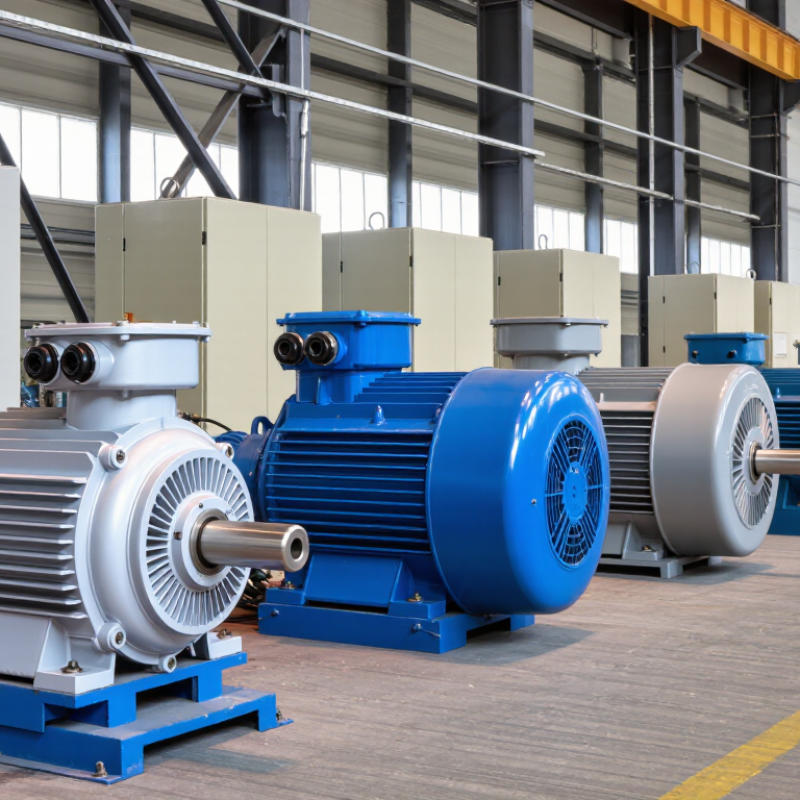
What Are the 7 Best High Voltage Motors IC611?

What IC611 Means in High-Voltage Motor Design

What IC611 Means in High-Voltage Motor Design

IC611 describes a high-voltage motor’s cooling arrangement, not its voltage rating or efficiency class. Under IEC 60034-6, the code identifies an air-to-air heat exchanger and two separate cooling-air circuits. Internal air circulates through the motor, while external air removes heat across the exchanger. The separation helps keep dust and moisture from entering the winding space. That matters.

In practice, a plant engineer may see the exchanger mounted above a motor, with fan guards and ducts shaping airflow. The arrangement suits enclosed motors in demanding industrial settings, but it needs clear airflow and regular inspection. Blocked fins can trap heat; damaged seals can undermine the separation. IC611 alone does not reveal the motor’s duty, insulation limits, or site suitability, so the full datasheet matters.

The International Energy Agency’s report, Energy-Efficiency Policy Opportunities for Electric Motor-Driven Systems, estimates that motor-driven systems use about 45% of global electricity. That broad figure shows why cooling performance deserves attention, though it is not an IC611-specific measurement. Actual temperature rise depends on load, ambient conditions, exchanger cleanliness, and installation. One detail is easy to miss: a cooler can look clean from outside while deposits build inside. Regular temperature and airflow checks help reveal that gap.

How to Evaluate High-Voltage Motors with IC611 Cooling

An IC611 high-voltage motor uses an air-to-air heat exchanger to remove heat while keeping the motor’s internal air enclosed. Internal air carries heat from the windings and rotor to the exchanger; a separate airflow cools its outer surfaces. Check the cooler’s position, fan arrangement, and airflow direction against the installation drawings. Small layout changes matter.

Evaluate the motor against its actual duty, not just its nameplate rating. Compare rated output and temperature rise with the load profile, starting frequency, ambient temperature, and site altitude. Confirm that the winding insulation class and protection features suit the operating environment.

Check the exchanger for accessible cleaning surfaces, since dust buildup can reduce cooling even when the motor remains enclosed. Check the cooling path.

Ask for temperature-rise test data and defined alarm or shutdown limits. During commissioning, record winding and bearing temperatures under a representative load, then compare readings with the supplier’s limits. Look for uneven temperatures, unusual vibration, or a falling temperature difference across the cooler.

Listen, too. Noise alone proves little, but a new fan sound deserves investigation.

One detail is easy to overlook: a motor may pass a brief test yet overheat during sustained heavy loading. Selection should reflect real operating conditions, even when those conditions are inconvenient to specify.

Seven High-Voltage IC611 Motor Types and Their Key Features

IC611 describes a totally enclosed motor cooled through an air-to-air heat exchanger; it is a cooling arrangement, not an electrical design. IEC 60034-6 classifies cooling methods, while motor construction determines torque, speed, and starting behavior. The IEA’s 2011 report, Energy-Efficiency Policy Opportunities for Electric Motor-Driven Systems, estimates motor-driven systems use about 46% of global electricity. Efficiency and correct sizing matter.

Seven designs can use IC611 cooling: squirrel-cage induction motors are rugged and low-maintenance; wound-rotor induction motors offer controlled starting torque; cylindrical-rotor synchronous motors suit steady, high-speed loads; salient-pole synchronous motors fit lower-speed duties; synchronous-reluctance motors avoid rotor magnets; permanent-magnet synchronous motors can deliver high efficiency in compact packages; and pole-changing induction motors provide discrete speed options. Not every option fits. Large high-voltage versions of some designs are less commonly available, so verify supplier capability and operating limits.

Selection should start with the driven load, starting frequency, supply conditions, and required speed control. Check the heat-exchanger airflow and ambient temperature; blocked fins or dust can reduce cooling. Review insulation class, temperature rise, vibration limits, and efficiency at the actual load, not only the nameplate rating. There is a trade-off: a specialized rotor may improve performance, but maintenance and repair can become harder. Allow for that.

What Are the 7 Best High Voltage Motors IC611? - Seven High-Voltage IC611 Motor Types and Their Key Features

Motor Type Operating Principle Key Features Typical Applications IC611 Cooling Considerations
Squirrel-Cage Induction Motor A rotating magnetic field induces current in a short-circuited rotor cage, producing torque. Rugged rotor construction, straightforward operation, and relatively low routine maintenance. Starting current and starting torque depend on the motor design and starting method. Pumps, fans, compressors, conveyors, and other continuous-duty industrial equipment. A common high-voltage motor configuration. IC611 uses a closed internal air circuit and an air-to-air heat exchanger; a separate external airflow cools the exchanger.
Wound-Rotor (Slip-Ring) Induction Motor A wound rotor connects through slip rings, allowing external resistance to be used during starting or speed control. Can provide high starting torque with controlled starting current when used with suitable external equipment. Slip rings and brushes require inspection and maintenance. Applications with demanding starts, such as some mills, crushers, hoists, and large conveyors. IC611 can be used where the complete machine design supports it. The heat exchanger and airflow arrangement must be sized for the motor’s losses and duty.
Cylindrical-Rotor Synchronous Motor A DC-excited rotor locks in step with the stator’s rotating magnetic field once synchronized. Runs at synchronous speed under steady conditions and can provide adjustable power-factor operation with an appropriate excitation system. Large compressors, process drives, and other applications requiring constant-speed operation. IC611 describes the cooling arrangement, not the excitation or rotor design. Excitation equipment and thermal limits are specified separately.
Salient-Pole Synchronous Motor Projecting rotor poles are magnetized by field windings and operate in synchronism with the stator field. Designed for synchronous operation, often at lower speeds with multiple poles. Starting and synchronization arrangements depend on the design. Low-speed industrial drives, including certain mills, compressors, and process machines. An air-to-air IC611 heat exchanger may be specified for suitable designs. Confirm cooling capacity at the site’s ambient temperature and operating conditions.
Variable-Frequency-Drive-Fed Induction Motor A variable-frequency drive adjusts the supply frequency and voltage to control motor speed and torque. Enables adjustable-speed operation. Low-speed cooling, harmonics, insulation stress, and bearing-current risks should be assessed for the complete drive system. Variable-flow pumps, process fans, compressors, and applications requiring speed control. At reduced speed, shaft-mounted fans may provide less external airflow. The IC611 cooling performance must be checked across the specified speed range.
Multi-Speed Pole-Changing Induction Motor Changing the stator winding connection changes the number of poles and therefore the motor’s synchronous speed. Provides discrete speed steps without a variable-frequency drive. Available speed ratios and starting characteristics depend on the winding design. Equipment needing a limited number of fixed operating speeds, such as selected fans, pumps, and machinery. IC611 can be applied when designed for the motor’s operating speeds. Verify adequate heat-exchanger airflow and cooling at each speed.
Permanent-Magnet Synchronous Motor Permanent magnets on the rotor provide the magnetic field; the stator is typically supplied by a suitable electronic drive. Can offer high efficiency and power density in appropriate designs. Drive compatibility, magnet temperature limits, and fault protection require careful consideration. Specialized high-performance industrial drives where the motor and drive are designed as a system. IC611 availability is design-specific. Confirm that the manufacturer’s thermal design, heat exchanger, and drive operating envelope suit the intended duty.

Note: IC611 is a cooling-method designation for an air-to-air cooled machine with a heat exchanger; it does not define the motor’s electrical or rotor type. Voltage ratings, output, efficiency, enclosure details, and suitability vary by design and operating conditions.

Where IC611 Motors Are Used in Industry

IC611 high-voltage motors are used where equipment must deliver steady power under demanding industrial loads. Their air-to-air heat exchanger circulates internal cooling air while transferring heat to outside air. This arrangement helps limit dust and moisture entering the motor’s internal cooling circuit, though it does not make the motor suitable for every harsh environment. Check the site conditions.

In cement plants, these motors can drive large fans, crushers, and kiln-related equipment. Mining operations use them for ventilation fans, conveyors, and pumps that run for long shifts. At water-treatment facilities and power stations, they may drive high-capacity pumps and air-handling systems. A motor room can be hot, noisy, and crowded; clear airflow around the exchanger matters. So does regular inspection.

IC611 motors are often selected for fixed installations with continuous or frequent operation. Engineers should match voltage, output, speed, starting method, and load characteristics to the driven machine. Dust buildup on the exchanger can reduce heat transfer, even when the motor appears to run normally. That detail is easy to miss. I would also review maintenance access before installation, because a technically suitable motor can become awkward to service once pipes and cable trays are in place.

How to Match an IC611 Motor to an Application

IC611 identifies a cooling method, not a complete motor rating. The motor’s internal air transfers heat through an air-to-air heat exchanger, while the enclosure keeps the cooling circuit closed. That arrangement can suit dusty industrial sites, but it does not automatically make a motor suitable for every harsh environment. Check the specified protection rating and site conditions.

Start with the driven load. Record its torque and speed across the full operating range, not just at the normal running point. A crusher, pump, and conveyor place different demands on starting torque and acceleration. Include starts per hour, duty cycle, load inertia, supply voltage, and frequency. Details matter. For variable-speed operation, confirm cooling capacity at low speed; the shaft-mounted fan may move less air, depending on the design.

Then check practical fit: mounting position, shaft dimensions, bearing loads, ambient temperature, altitude, and available space around the cooler. Restricted airflow or clogged heat-exchanger surfaces can undermine thermal performance. A catalogue match can still miss the real operating pattern. Compare the motor’s temperature-rise and starting data with measured site conditions, and ask for engineering review when assumptions remain uncertain. Measure twice. IC611 is a useful clue, not a shortcut.

Use pole count as an initial application match: higher-speed motors suit many pumps and fans, while lower-speed motors can suit direct-drive, high-torque loads. Bars show synchronous speed calculated as 120 × frequency ÷ pole count; an induction motor’s actual rated speed is lower because of slip. IC611 identifies a cooling arrangement, not a speed or power rating. Confirm load torque, duty, starting requirements, enclosure and the motor datasheet before selection.

FAQS

What does IC611 cooling mean?

Internal air carries heat from the windings and rotor to an air-to-air heat exchanger. Outside airflow cools the exchanger while the internal cooling circuit stays enclosed. Dust can still collect.

Where are IC611 motors commonly used?

They can drive large fans, crushers, conveyors, and pumps in cement plants, mines, water-treatment facilities, and power stations. These applications often involve long operating shifts.

What should I check when matching an IC611 motor to a load?

Compare output, speed, torque, starting needs, and duty cycle with the driven machine. Include starts per hour, load inertia, supply conditions, and the full operating range. Details matter.

Is IC611 suitable for every dusty or harsh site?

No. The enclosed cooling circuit can help limit dust and moisture entering the motor, but it does not guarantee suitability. Check the protection rating and actual site conditions.

What installation details affect cooling?

Confirm the cooler’s position, fan arrangement, airflow direction, and clearance against the installation drawings. Keep access available for cleaning. Pipes and cable trays can make later servicing awkward.

What should I inspect on the heat exchanger?

Check that its surfaces are accessible and free from dust buildup. Blocked surfaces can reduce heat transfer even when the motor seems to run normally. I would verify cleanliness rather than assume it.

What test information should I request?

Ask for temperature-rise data and clear alarm or shutdown limits. During commissioning, record winding and bearing temperatures under a representative load, then compare them with the specified limits.

Can a motor pass a short test and still overheat later?

Yes. A brief test may not reveal problems during sustained heavy loading. Watch for uneven temperatures, unusual vibration, or a falling temperature difference across the cooler. Listen, too.

Conclusion

This guide explains what IC611 means in high-voltage motor design: an air-to-air cooling arrangement that transfers heat from the motor’s internal air to external air through a heat exchanger. It outlines how to evaluate High Voltage Motors IC611 by considering power and speed requirements, duty cycle, efficiency, insulation, temperature rise, operating environment, and maintenance access. It also compares seven common motor configurations, highlighting differences in starting behavior, speed control, operating performance, and suitability for specific loads.

IC611 motors are used in demanding industrial settings such as power generation, water treatment, mining, cement production, and process manufacturing, where reliable operation and effective cooling are important. The guide concludes with practical advice for matching a motor to its application, including assessing the driven equipment, site conditions, control method, installation constraints, and expected service demands. These considerations help narrow the options and support a safe, dependable, and efficient motor selection.


Evelyn

Evelyn

Evelyn is a dedicated marketing professional with a strong understanding of the company’s products, services, and the needs of the customers they support. With a thoughtful, research-driven approach, Evelyn regularly contributes expert articles to the company’s professional blog, sharing practical......