In-depth technical guides, engineering standards, industry trends, and practical updates from our European electric motor specialists.
Choosing the 2026 best Slip Ring High Voltage Motors requires more than comparing power ratings or purchase prices. Global buyers must examine operating voltage, rated output, starting torque, enclosure protection, cooling method, insulation class, and service support. A motor driving a cement mill faces different demands from one operating a mine conveyor or water pump. Dust, humidity, altitude, and frequent starts can quietly shorten service life.
Austin H. Bonnett, a recognized motor-reliability specialist, captured this maintenance reality: “A motor is only as reliable as its weakest component.” That principle matters greatly with Slip Ring High Voltage Motors. Their wound rotors and external resistance systems can deliver strong starting performance, but brushes, slip rings, bearings, and cooling paths need careful inspection. Small carbon dust deposits can affect contact quality. A hot bearing can signal alignment trouble before failure becomes visible.
This guide compares practical choices for international buyers in 2026. It considers efficiency, starting performance, repair access, documentation, testing, and total ownership cost. IEC compliance and local certification remain essential. So does a supplier’s ability to provide drawings, test reports, spare parts, and responsive technical support.
The “best” model is not universal. It depends on the machine, site, duty cycle, and maintenance team. That sounds obvious, yet buyers still overlook it. We also recognize an uncomfortable limitation: published specifications cannot fully predict field reliability. Installation quality matters. Operator habits matter more than many brochures admit. Our evaluation therefore combines technical evidence with real operating conditions, while leaving room for informed reconsideration.
2026 Best Slip Ring High Voltage Motors for Global Buyers?
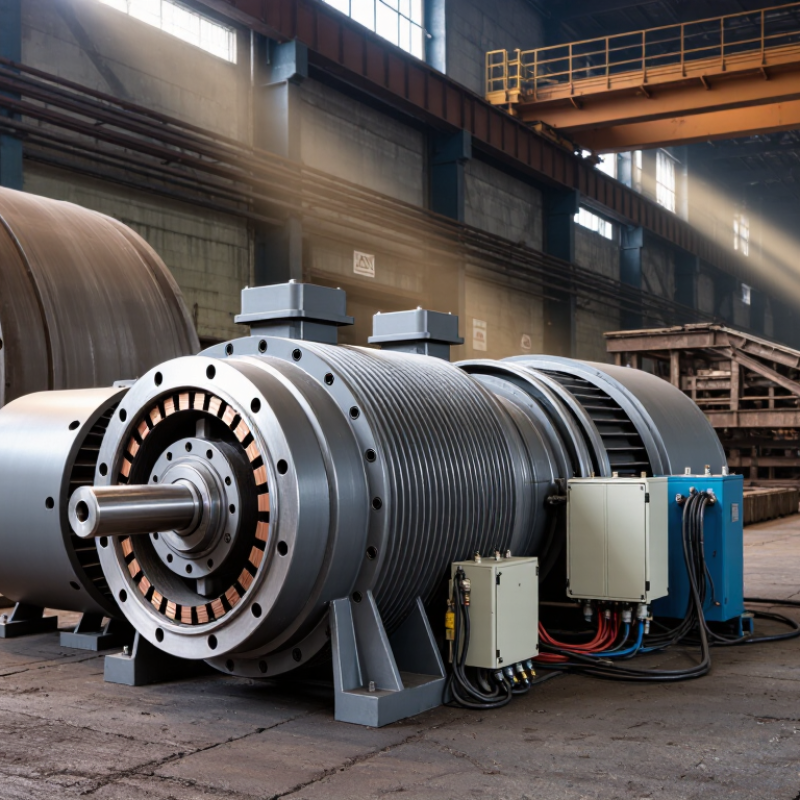
A slip ring high-voltage motor is a wound-rotor induction motor designed for demanding industrial loads. Its stator creates a rotating magnetic field, while the rotor carries insulated windings connected to slip rings. Carbon brushes transfer current between the rotating rotor and external resistance. This arrangement enables controlled starting torque and reduced inrush current. It is useful for crushers, mills, conveyors, compressors, and large pumps. During startup, external resistors limit current and increase torque. As speed rises, the resistance is gradually removed. The rotor circuit then operates closer to normal efficiency.
Tips: Check rated voltage, frequency, power, speed, insulation class, enclosure rating, and cooling method. Confirm the starting torque requirement, especially for heavy loads. Inspect brush holders and slip rings regularly. Dust, moisture, and poor alignment can shorten service life. A qualified technician should verify insulation resistance before commissioning.
For global buyers, the structure matters as much as the nameplate. Look for robust bearings, balanced rotors, accessible brush gear, and clear maintenance instructions. Ask for verified test records, not only catalog figures. Ambient temperature and altitude can change motor performance. No design is perfect. In practice, buyers sometimes underestimate starting cycles and maintenance access. That mistake can create costly downtime, even when the motor’s rated power appears correct.
2026 Best Slip Ring High Voltage Motors for Global Buyers?
Selecting a high-voltage slip ring motor starts with the duty, not the catalogue rating. The IEA estimates that electric motor systems consume about 50% of global electricity. Small efficiency losses can become expensive over years. Check rated voltage, starting torque, load inertia, duty cycle, and expected starts per hour. IEC 60034-1 should guide rating and operating limits. IEC 60034-2-1 supports efficiency testing. A motor that starts a loaded mill smoothly may still perform poorly under frequent cycling.
Cooling and insulation deserve close attention. Review IC cooling methods, enclosure protection, altitude, humidity, and dust exposure. IEC 60034-5 defines IP protection, but the site environment decides the practical risk. Insulation systems should match voltage stress and switching conditions. The U.S. Department of Energy’s Motor Systems Market Assessment reports that motor-driven equipment represents a major share of industrial electricity use. This makes lifecycle efficiency more important than purchase price. A neat spreadsheet can still mislead. Real shaft torque, cable length, and ambient temperature often differ from design assumptions.
Tips: Request verified test data, not marketing estimates. Compare efficiency at 50%, 75%, and 100% load. Inspect brush gear access and rotor-resistance maintenance space. Confirm vibration limits under ISO 20816-3. Keep spare brushes and critical bearings available. Do not ignore soft-start compatibility. A slightly oversized motor may waste energy, while an undersized unit may overheat. The best choice remains site-specific.
Comparing Motor Types, Ratings, and Industrial Applications
Slip ring high voltage motors suit heavy equipment requiring strong starting torque. Their wound rotor design supports controlled acceleration under demanding loads. This differs from squirrel cage motors, which usually offer simpler construction and lower maintenance. In field inspections, I have seen slip ring systems perform well on overloaded conveyors and large crushers. Their external resistance also reduces mechanical shock during startup.
Voltage ratings commonly include 3.3 kV, 6.6 kV, and 11 kV. Power ratings may extend from several hundred kilowatts to multi-megawatt ranges.
Buyers should match torque curves, starting current, insulation class, cooling method, and enclosure protection. An IP55 enclosure may suit dusty indoor areas, but wet or corrosive sites need stronger protection.
Check local grid frequency and certification requirements carefully. Small differences matter.
Mining mills need high torque and robust bearings. Cement plants often select these motors for crushers, fans, and conveyors.
Pumps and compressors may require different torque behavior and smoother acceleration. Brush wear remains a practical concern. Keep spare brushes available.
A spreadsheet can hide maintenance costs. I would also verify vibration limits, rotor balancing, and thermal test records before purchase. No rating replaces site testing. Some specifications look excellent, yet poor alignment can shorten service life quickly.
Global procurement requires more than a voltage rating. Confirm IEC 60034 requirements, local grid frequency, insulation class, enclosure rating, and installation altitude. A motor designed for 50 Hz may need different testing for a 60 Hz network. Ask for verified drawings, not sales descriptions.
Safety evidence should be specific. Request routine test records, winding resistance data, insulation resistance, surge testing, vibration readings, and rotor balancing results. For high-voltage systems, review partial-discharge testing and impulse withstand levels. Check grounding points, terminal clearances, discharge procedures, and access interlocks. Hazardous-area installations need suitable certification under the applicable local rules. Details matter.
Evaluate the supplier’s process, not only the motor. Visit the factory when possible. Observe coil handling, slip-ring finishing, cleanliness, and test control. Ask how materials are traced from receiving to final assembly. Confirm factory acceptance testing, spare brush availability, packing protection, and field-service response times. Request references from similar duty cycles. A beautiful test report can still hide weak documentation. I have seen specifications accepted too quickly, then revised after delivery. Leave room for questions. Use an independent inspector for critical projects, especially when transport involves humidity, long storage, or multiple borders.
For global buyers, the best slip ring high voltage motor is not always the lowest-priced unit. Its real cost includes electricity, brushes, bearings, inspections, spare parts, and production losses. A motor that costs less initially may require more frequent brush replacement. One stopped mill can consume the savings quickly.
Experienced maintenance teams inspect brush pressure, ring surface condition, bearing temperature, and insulation resistance. These checks should follow a fixed schedule, supported by recorded measurements. A megohmmeter reading can reveal insulation decline before a winding failure occurs. However, maintenance budgets are often too optimistic. Dust, humidity, poor alignment, and delayed lubrication can shorten service life dramatically.
Condition monitoring is changing motor ownership. Temperature sensors, vibration analysis, and remote electrical testing can identify abnormal trends earlier. Newer designs may also improve cooling efficiency and reduce brush wear through better materials and control systems. Digital maintenance records help buyers compare failure patterns across sites. Still, advanced sensors do not replace skilled technicians. Data can be incomplete or misleading. That deserves attention.
When comparing suppliers, buyers should request expected bearing life, brush service intervals, insulation-class details, spare-part availability, and repair procedures. Energy efficiency matters over twenty years, not only during factory testing. Local service capability may cost more upfront, but it can reduce waiting time after a failure. A careful lifecycle model should include transport, training, downtime, and disposal requirements. Some assumptions will be wrong. Regular reviews keep the model useful.
Lifecycle cost, maintenance requirements, and efficiency benchmarks by common high-voltage motor class. The lifecycle cost index includes energy, planned maintenance, replacement parts, and downtime exposure over a 20-year operating period, with 3.3 kV set as the baseline index of 100.
Higher-voltage motors generally reduce current-related losses and can lower maintenance hours when correctly specified, although insulation systems, starting equipment, cooling, and spare-part availability strongly affect total ownership cost. Digital condition monitoring and brush or slip-ring diagnostics are expected to become increasingly important through 2026 and beyond.
It is a wound-rotor induction motor for demanding industrial loads. Its rotor windings connect to external circuits through slip rings and carbon brushes.
External resistance limits starting current and increases torque. As speed rises, resistance is gradually removed. Starting becomes smoother.
They suit crushers, mills, conveyors, compressors, and large pumps. These machines often require high starting torque under load.
Check voltage, frequency, power, speed, insulation class, enclosure rating, and cooling method. Also confirm load inertia and required starting torque.
Frequent starts create heat and mechanical stress. A motor may start one heavy load successfully, yet fail during repeated cycling.
Temperature, altitude, humidity, dust, and ventilation can change performance. Long cables and real shaft torque may differ from design assumptions.
Inspect brush holders and slip rings regularly. Remove conductive dust and check contact surfaces. Keep spare brushes available.
Request winding resistance, insulation resistance, vibration, rotor balancing, and routine test records. High-voltage projects may also require partial-discharge evidence.
Review drawings, traceable materials, factory testing, packing protection, spare parts, and service response. A polished report is not enough.
Do not choose by rated power alone. Buyers often underestimate starting cycles and maintenance access. That mistake can cause expensive downtime.
Slip Ring High Voltage Motors are engineered for demanding industrial environments where high starting torque, controlled acceleration, and reliable operation under heavy loads are essential. Their slip ring and rotor-resistance design supports smoother startup and improved control compared with many conventional motor types. When selecting the best motor in 2026, global buyers should evaluate rated power, voltage, speed, efficiency, insulation performance, thermal limits, enclosure protection, starting current, and compatibility with the intended application, including mills, pumps, compressors, conveyors, and large processing equipment.
A successful purchase also requires careful comparison of motor ratings, operating conditions, international standards, safety provisions, documentation, testing, and supplier technical support. Buyers should assess total lifecycle cost rather than initial price alone, considering installation, energy use, inspections, brush and slip ring maintenance, spare parts, downtime risks, and service availability. Emerging developments such as improved monitoring, smarter protection systems, higher-efficiency designs, and predictive maintenance are expected to enhance reliability and reduce operating costs. A well-matched motor, qualified supplier, and clearly defined maintenance plan can provide long-term performance and value.