
1. Executive Overview & Strategic Procurement Context in Oil & Gas
In the global energy infrastructure—spanning offshore drilling platforms, Floating Production Storage and Offloading (FPSO) vessels, cross-continental natural gas pipelines, liquefied natural gas (LNG) export terminals, and complex petrochemical refineries—the operational reliability of Oil and Gas Electric Motors is non-negotiable. Electric motors account for over 68% of total electrical energy consumed across upstream, midstream, and downstream facilities. They drive mission-critical rotating machinery including high-pressure crude export pumps, gas reinjection compressors, boiler feed water pumps, cooling tower axial fans, and refining agitators.
Unlike standard industrial applications, operating environments in the oil and gas sector present extreme electromechanical stress. Motor drive systems are continuously exposed to volatile hydrocarbons, corrosive hydrogen sulfide ($H_2S$), marine salt spray (C5-M environments), severe ambient thermal swings (ranging from arctic -50°C to desert +60°C), and non-sinusoidal voltage stress induced by Variable Frequency Drives (VFDs). A single unplanned shutdown of an offshore main oil line pump caused by electrical insulation breakdown or bearing failure can result in operational losses exceeding $500,000 per day.
Consequently, modern procurement decisions led by EPC contractors (such as Saipem, Technip, and Samsung Engineering) and major operators (including Shell, Eni, TotalEnergies, and Mobil) require strict adherence to international safety certifications (ATEX, IECEx, NEC/UL/CSA, GOST), advanced thermal management, and ultra-high efficiency standards (IE3, IE4, IE5). OME Motors (O.M.E. Motori Elettrici s.r.l.), drawing upon over 50 years of Italian engineering excellence, manufactures tailored electromechanical drive solutions designed to withstand these hostile environments while optimizing Total Cost of Ownership (TCO).
Semantic Information Gain: Beyond Standard Datasheets
Why Standard Motors Fail in Oil & Gas Service: Standard industrial motors suffer premature failure in petrochemical environments due to three main micro-phenomena: (1) Bearing Fluting & Electrical Discharge Machining (EDM): High-frequency common-mode voltage from VFDs arcs across fluid film bearings. (2) Dielectric Breakdown of Stator Windings: Steep voltage rise rates ($dV/dt$) from long cable runs on offshore rigs create micro-partial discharges. (3) Environmental Breath-In & Internal Condensation: Thermal cycling ingresses moisture and corrosive gases ($H_2S$/$SO_2$), deteriorating slot insulation. OME Motors engineers custom solutions explicitly designed to neutralize these failure modes.
2. Technical Evaluation & Hazardous Area Engineering Standards
Specifying Oil and Gas Electric Motors requires a deep understanding of explosive atmosphere standards, enclosure protection methodologies, and thermal design limits. Global regulations categorize hazardous locations into specific zones based on the probability and duration of explosive gas or dust presence.
2.1 Hazardous Area Zoning & Protection Concepts
Under European ATEX directives (2014/34/EU) and global IECEx frameworks, hazardous gas environments are divided into Zone 0, Zone 1, and Zone 2. Electric motors are primarily specified for Zone 1 and Zone 2 applications:
-
Zone 1 (Category 2G): Explosive gas atmosphere likely to occur in normal operation. Requires Flameproof / Explosion-Proof
Ex db(formerly Ex d) or PressurizedEx pbenclosure protection. The enclosure must contain any internal explosion without propagating flames to the surrounding atmosphere. -
Zone 2 (Category 3G): Explosive gas atmosphere not likely to occur in normal operation, and if it occurs, exists for a short period only. Employs Increased Safety
Ex eb, Non-sparkingEx ec(formerly Ex nA), or PressurizedEx pcconcepts. - North American Standards (NEC 500 / NEC 505): Class I, Division 1 (equivalent to Zone 0/1) and Class I, Division 2 (equivalent to Zone 2) utilizing Gas Groups A, B, C, and D (covering acetylene, hydrogen, ethylene, and propane/methane).
2.2 Explosion Protection Methodologies Comparison
| Protection Code | Design Principle | Standard | Typical Oil & Gas Equipment | Key Engineering Advantage |
|---|---|---|---|---|
| Ex db (Flameproof) | Withstands internal explosion; quenches flame path. | IEC/EN 60079-1 | Refinery pumps, valve actuators, gas compressors | Highest structural integrity; no purging gas required. |
| Ex eb / Ex ec | Prevents arcs, sparks, and hot surfaces in normal/abnormal duty. | IEC/EN 60079-7 | Cooling tower fans, offshore water injection pumps | Lighter weight, efficient thermal dissipation, cost-effective. |
| Ex pxb / Ex pyb | Maintains internal positive pressure of inert gas/air. | IEC/EN 60079-2 | Large High Voltage motors (>2 MW) on FPSO topsides | Allows large HV motors in Zone 1 without massive cast enclosures. |
| Ex tb / Ex tc | Dust explosion protection by tight enclosure (IP6X). | IEC/EN 60079-31 | Sulfur handling plants, coke processing units | Complete prevention of conductive/non-conductive dust ingress. |
2.3 Gas Groups, Temperature Classes & Surface Thermal Limits
Motors must be matched to the auto-ignition temperature of the specific atmospheric gas present. Temperature Classes range from T1 (450°C) down to T6 (85°C). In offshore crude and refining facilities containing hydrogen or acetylene gases, equipment must satisfy Gas Group IIC and Temperature Class T4 (135°C) standards. OME Motors designs OMEX series explosion-proof units with low-temperature rise margins (Class B rise with Class H insulation materials), ensuring surface temperatures remain far below ignition thresholds even during temporary overload conditions.
3. Top Product Recommendations for Oil and Gas Applications
Selecting the correct electric drive system depends directly on system power requirements, operational duty cycles, site ambient temperatures, and structural installation constraints. OME Motors provides a specialized portfolio engineered specifically for petroleum and chemical processing environments.
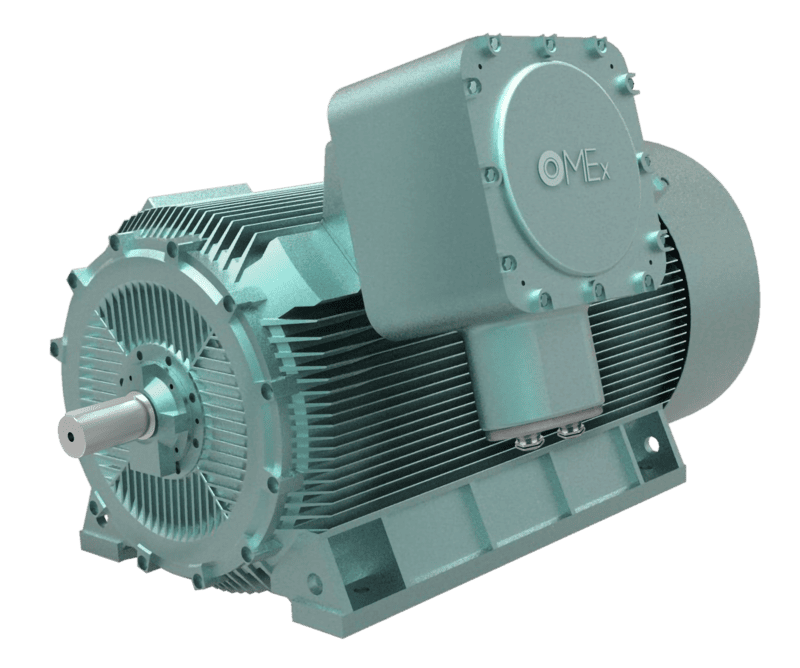
OMEX Series Explosion-Proof High Voltage Motors
Designed for extreme medium and high-voltage duty in Zone 1 & Zone 2 offshore platforms and refineries. Built with heavy-duty cast iron or reinforced welded steel frames to contain internal explosion pressures without structural deformation.
- Power Output: 220 kW to 15,000 kW
- Voltage Range: 3.3 kV, 6.6 kV, 10 kV, 11 kV, 13.8 kV
- Explosion Rating: ATEX / IECEx Ex db IIC T4 Gb
- Cooling Methods: IC511 (Air-to-Air), IC81W (Water-to-Air)
- Enclosure Rating: IP55 / IP56 / IP66
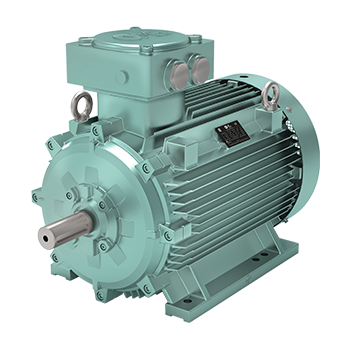
OMEX LV Explosion-Proof Low Voltage Motors
Compact, highly robust low-voltage flameproof motors ideal for driving chemical metering pumps, centrifugal fans, process agitators, and air cooled heat exchangers across downstream petrochemical plants.
- Power Output: 0.18 kW to 1,000 kW
- Frame Sizes: IEC 80 to IEC 450 (Cast Iron)
- Efficiency Class: IE3 Premium / IE4 Super Premium
- Protection Standard: Ex db / Ex db eb IIC T4 / T5 / T6
- VFD Compatibility: Class H Insulation, VPI Treated
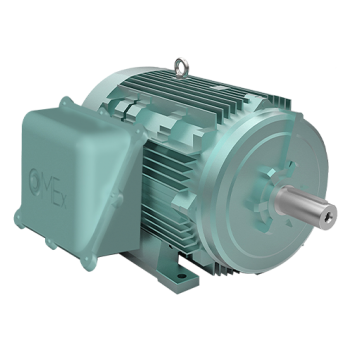
OMNEX Series Explosion-Proof NEMA Motors
Fully compliant with North American IEEE 841 and NEMA MG-1 Part 31 standards. Purpose-built for onshore drilling rigs, North American oil fields, and offshore topside modules requiring UL and CSA hazardous location listings.
- Power Output: 1 HP to 1,500 HP
- Frame Compliance: NEMA 143T to NEMA 5810
- UL/CSA Listing: Class I Div 1 / Div 2 Groups C, D
- Service Factor: 1.15 Continuous (1.0 on VFD)
- Features: Inverter Duty, Cast Iron Endshields
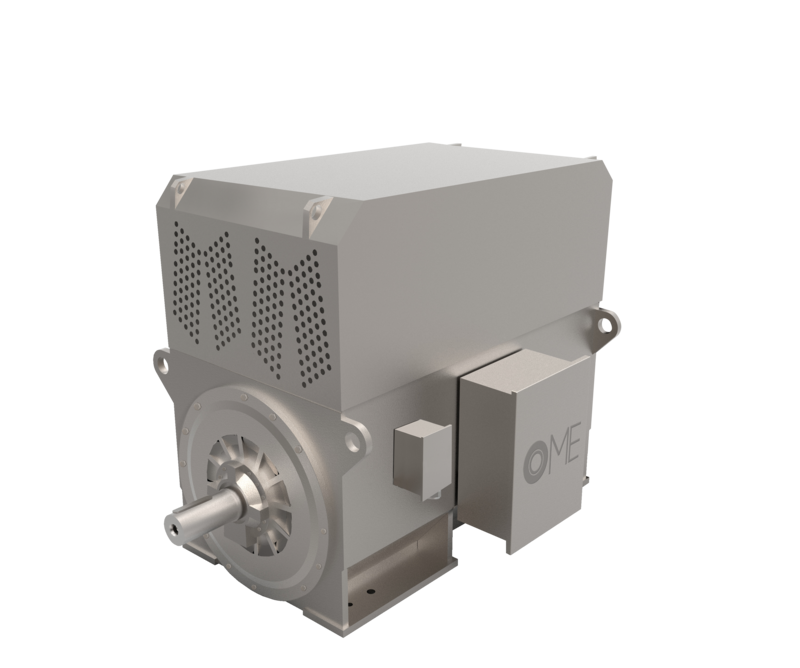
OMVKS Series Water-Cooled High Voltage Motors
Equipped with an integral air-to-water heat exchanger (IC81W). Ideal for space-constrained FPSO engine rooms, acoustic-sensitive urban refineries, and high-ambient desert pipeline pump stations.
- Power Output: 500 kW to 25,000 kW
- Cooling Concept: IC81W (Closed Circuit Air Water)
- Noise Level: Ultra-Low Acoustic Noise (<75 dBA)
- Bearing Types: Sleeve Bearings with Forced Lubrication
- Hazardous Certs: Ex ec / Ex pxb / Non-hazardous
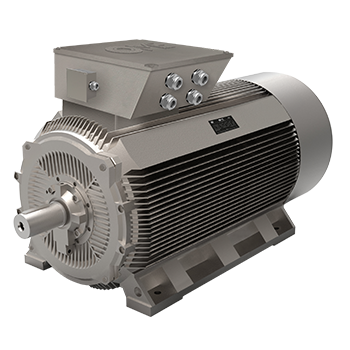
OMPM Series Permanent Magnet Motors (IE4 / IE5)
Next-generation synchronous permanent magnet motors offering ultra-high torque density. Eliminates gearbox requirements in direct-drive mud pumps, artificial lift systems (ESP/PCP), and subsea fluid extraction.
- Efficiency Class: IE4 Super / IE5 Ultra Premium
- Magnet Type: NdFeB (Neodymium Iron Boron) High Temp
- Torque Profile: Constant Full Torque from 0 to Base Speed
- Weight Saving: Up to 35% lighter than induction motors
- Applications: Artificial Lift, Subsea Pumping, Compressors
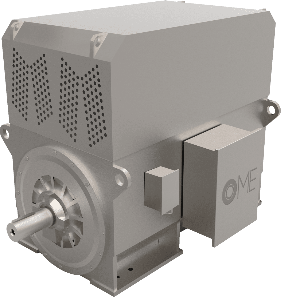
OMA Series High Voltage Slip Ring (Wound Rotor) Motors
Engineered for heavy continuous starting under extreme load inertia without causing grid voltage dips. Perfectly suited for heavy crude oil pipeline booster stations, gas lift compressors, and refinery crushers.
- Power Output: 315 kW to 10,000 kW
- Rotor Type: Wound Rotor with Heavy Duty Slip Rings
- Starting Capability: High Starting Torque with Low Current
- Enclosure Class: IP55 / IP56 Weatherproof Enclosure
- Certifications: IEC, CE, GOST-R, ATEX Zone 2
4. Future Procurement Trends & Technological Developments in Oil & Gas Motors
The global energy transition, coupled with strict ESG (Environmental, Social, and Governance) targets, is rapidly reshaping the procurement criteria for Oil and Gas Electric Motors. Operators are transitioning from traditional fossil-fueled gas turbines to grid-connected electric drive systems. Technical procurement managers must prepare for five pivotal industry trends over the coming decade:
4.1 Decarbonization & Complete Rig / Topside Electrification
Historically, offshore drilling rigs and remote pumping stations relied on open-cycle gas turbines or diesel generator sets to drive pumps and compressors directly. Modern offshore projects are electrifying these prime movers using high-efficiency electric motors powered either by subsea power cables linked to shore or offshore floating wind power. Electrifying a typical offshore platform with OME High Voltage Ex-proof motors can reduce platform $CO_2$ emissions by over 45%, while dramatically reducing maintenance costs associated with gas turbine hot gas path overhauls.
4.2 Advanced VFD Inverter-Duty Insulation Systems
Over 80% of new oil and gas electric motors are specified for operation with Variable Frequency Drives to control process flow rates without energy-throttling valves. However, modern IGBT-based VFDs generate high frequency, high peak voltage spikes ($dV/dt$ rates exceeding 10 kV/µs) and reflected waves along long motor leads.
To prevent premature winding insulation failure, future motor specifications mandate:
- Vacuum Pressure Impregnation (VPI): Utilizing solventless epoxy resins and double-wrapped mica tape for corona-free insulation up to 13.8 kV.
- Hybrid Ceramic Bearings & Shaft Grounding: Installing insulated NDE (Non-Drive End) bearings and electro-conductive micro-fiber shaft grounding rings to divert bearing-damaging circulating currents safely to earth.
4.3 Predictive Maintenance 4.0 & Integrated IoT Diagnostics
Procurement teams are increasingly requesting smart motors equipped with pre-installed condition monitoring packages. OME Motors integrates multi-sensor IoT modules into junction boxes and frame structures, enabling real-time cloud analytics for:
- 3-Axis Vibration Analysis: Early detection of mechanical unbalance, shaft misalignment, or bearing raceway spalling.
- Stator Winding Thermal Profiling: Continuous RTD (Pt100) monitoring across all stator slots and bearing housings.
- Online Partial Discharge (PD) Sensors: Continuous dielectric insulation degradation monitoring on 6.6kV+ high voltage motors, allowing maintenance managers to schedule interventions during planned plant turnarounds rather than experiencing catastrophic failures.
4.4 Transition to IE4 Super Premium & IE5 Ultra-Premium Efficiency
With electricity accounting for over 90% of an industrial motor’s total life-cycle cost over a 20-year lifespan, upgrading from an IE2 to an IE4 Super Premium motor yields a full payback within 12 to 18 months under continuous S1 operation. OME Motors' permanent magnet (OMPM) and specialized induction ranges allow petrochemical plants to lower operational expenditure (OPEX) while directly contributing to corporate carbon neutral goals.
4.5 Modular & Plug-and-Play Custom Replacement Motors
As brownfield refineries age, original motors installed in the 1970s or 1980s reach the end of their operational lifecycle. Obtaining identical replacement units from legacy OEMs is often impossible due to obsolete frame sizes. A major procurement trend is selecting specialized custom motor manufacturers capable of 3D laser-scanning existing foundations and engineering custom drop-in replacement motors that match legacy shaft heights, foot-hole dimensions, and terminal box locations—eliminating costly civil foundation or pipework modifications.
5. Frequently Asked Questions (FAQ) for Oil & Gas Motor Procurement
Below are authoritative answers to the most frequent technical and commercial questions posed by global procurement managers, EPC engineers, and plant maintenance directors when sourcing oil and gas electric motors:
ATEX is mandatory within the European Union and based on EU directives (e.g., 2014/34/EU). It combines technical standards with mandatory third-party quality assurance audits for Category 2G (Zone 1) products. IECEx is a global certification scheme recognized in over 35 countries, focusing strictly on international IEC standards (IEC 60079 series) to facilitate international trade without re-testing. NEC (National Electrical Code) is used in North America, dividing hazardous areas into Class/Division (Class I Div 1 / Div 2) or Class/Zone systems. OME Motors manufactures motor lines certified concurrently under ATEX, IECEx, UL, and CSA, enabling global deployment for multinational EPC projects.
Ex db (Flameproof) motors are designed such that if an explosive gas penetrates the housing and ignites internally, the heavy cast iron or steel enclosure will contain the explosion pressure without rupturing, and cool the escaping hot gases so they cannot ignite the external ambient atmosphere. They are required in high-risk Zone 1 applications with heavy gas concentrations. Ex eb (Increased Safety) motors prevent any internal spark, arc, or excessive temperature from occurring in the first place through enhanced clearance, special windings, and strict thermal limits. Ex eb motors are lighter, often more cost-effective, but require strict thermal overload protection systems.
Variable Frequency Drives utilize fast-switching IGBT transistors that generate common-mode voltage relative to earth ground. This voltage induces shaft voltages that seek a path to ground through the motor bearings. When the voltage exceeds the dielectric breakdown strength of the bearing grease film, micro-arcs occur (Electrical Discharge Machining / EDM), causing pitting, frosting, and fluting grooves in bearing raceways, ultimately leading to catastrophic bearing seizure. OME Motors mitigates this by equipping inverter-duty motors with insulated NDE bearings (or ceramic bearings) and shaft grounding brushes or rings that safely bypass currents away from bearing surfaces.
Offshore motors require Class H insulation systems utilized with a conservative Class B thermal rise limit (80 K), providing a 45°C thermal safety margin to handle ambient spikes and voltage unbalance. Mechanical protection requires IP66 total enclosure protection to prevent high-pressure sea waves from penetrating terminal boxes. Paint systems must meet ISO 12944 Category C5-M (Offshore/Marine) standards, utilizing zinc-rich epoxy primers, intermediate epoxy tie-coats, and polyurethane topcoats with a total dry film thickness (DFT) exceeding 300 microns to withstand continuous salt fog and UV exposure.
Tier-1 oil companies require full traceability and testing verification. OME Motors provides complete documentation packages including:
- Type Test Reports & Routine Test Certificates according to IEC 60034-1 / IEEE 112.
- ATEX / IECEx / UL Notified Body Certificates issued by accredited bodies (TÜV, CESI, LCIE, UL).
- Material Traceability Certificates (EN 10204 3.1 / 3.2) for shafts, frames, and flameproof enclosures.
- Vibration & Noise Test Data, Full-Load Temperature Rise Test Reports, and Hydrostatic Pressure Test Certificates for Ex db housings.
- Witnessed Factory Acceptance Testing (FAT) in OME’s state-of-the-art testing facilities in Italy.
Yes. Custom engineering for brownfield replacement is one of OME Motors' core strengths. Our engineering division utilizes 3D CAD modeling and precise dimensional laser scanning to reproduce exact mechanical interfaces—including custom shaft extensions, non-standard mounting foot hole centers, specific terminal box angles, and specialized cooler orientations. This allows rapid replacement of 30+ year old legacy motors with modern IE3/IE4 explosion-proof motors without costly pipework or foundation alterations.
6. Enterprise Advantages: Why Global Energy Leaders Partner with OME Motors
For over half a century, OME Motors (O.M.E. Motori Elettrici s.r.l.) has established itself as an elite Italian manufacturer of custom industrial electric motors. Combining deep technical expertise inherited from Elettrotecnica H. Orsatti with modern automated manufacturing plants in Gussago and Nuvolera (Brescia, Italy), OME delivers uncompromised reliability to the energy sector.
50+ Years Italian Engineering
Built upon half a century of electro-mechanical research and manufacturing precision in Brescia, Italy—the heartland of European industrial machinery.
Global Certifications
Comprehensive portfolio of international certifications: ISO 9001, ISO 14001, ATEX, IECEx, UL, CSA, GOST-R/EAC, and Marine approvals (DNV, ABS, Lloyd’s Register).
100% Tailored Customization
Every motor is customized to specific project datasheets—offering bespoke mechanical frames, special voltages up to 15kV, and extreme temperature options (-50°C to +60°C).
Trusted by Tier-1 Energy Giants
Proven track record supplying critical equipment to world leaders: Shell, Eni, TotalEnergies, Mobil, KSB, Samsung Engineering, Fincantieri, and ArcelorMittal.
High-Efficiency Innovation
Pioneering IE4 Super Premium and IE5 Permanent Magnet synchronous technologies that reduce operational power consumption and carbon footprints.
Global Service Network
24/7 technical assistance, worldwide commission support, local spare parts inventory, and rapid-response field service engineers on all 5 continents.